

Picture an octopus gliding across the seafloor, moving almost like liquid poured between rocks. It looks graceful, almost gentle. Then, in an instant, one arm shoots out and wraps around an unsuspecting crab, and that gentle appearance disappears completely.
That contrast is part of what makes octopuses so fascinating. They’re soft-bodied, intelligent, and surprisingly patient hunters, using a mix of strength, stealth, and problem-solving that few other ocean animals can match.
Understanding what octopuses eat means looking at how they hunt, what tools their bodies give them, and how their diet shifts dramatically from the moment they hatch to the day they reach full size.
Quick Answer
Octopuses are carnivores that primarily eat crabs, shrimp, clams, mussels, and small fish. Larger species occasionally eat other octopuses, small sharks, or birds. They use venom, sharp beaks, and drilling techniques to break through shells and paralyze prey before eating.
Key Takeaways
✔ Octopuses are strictly carnivorous, never eating plants or algae
✔ Crabs, shrimp, and shellfish make up the bulk of most octopus diets
✔ A hard, parrot-like beak lets them crack through shells and exoskeletons
✔ Venomous saliva helps subdue prey before it’s eaten
✔ Diet changes dramatically between hatchling and adult octopuses
✔ Some larger species are capable of hunting small sharks or birds
Table of Contents
- The Main Diet of an Octopus
- How an Octopus Actually Catches Its Food
- The Role of Venom in Hunting
- Cracking Open Shells: The Drilling Technique
- How Diet Changes From Hatchling to Adult
- Do Octopuses Ever Eat Other Octopuses?
- Did You Know?
- Myth vs Fact
- Frequently Asked Questions
The Main Diet of an Octopus
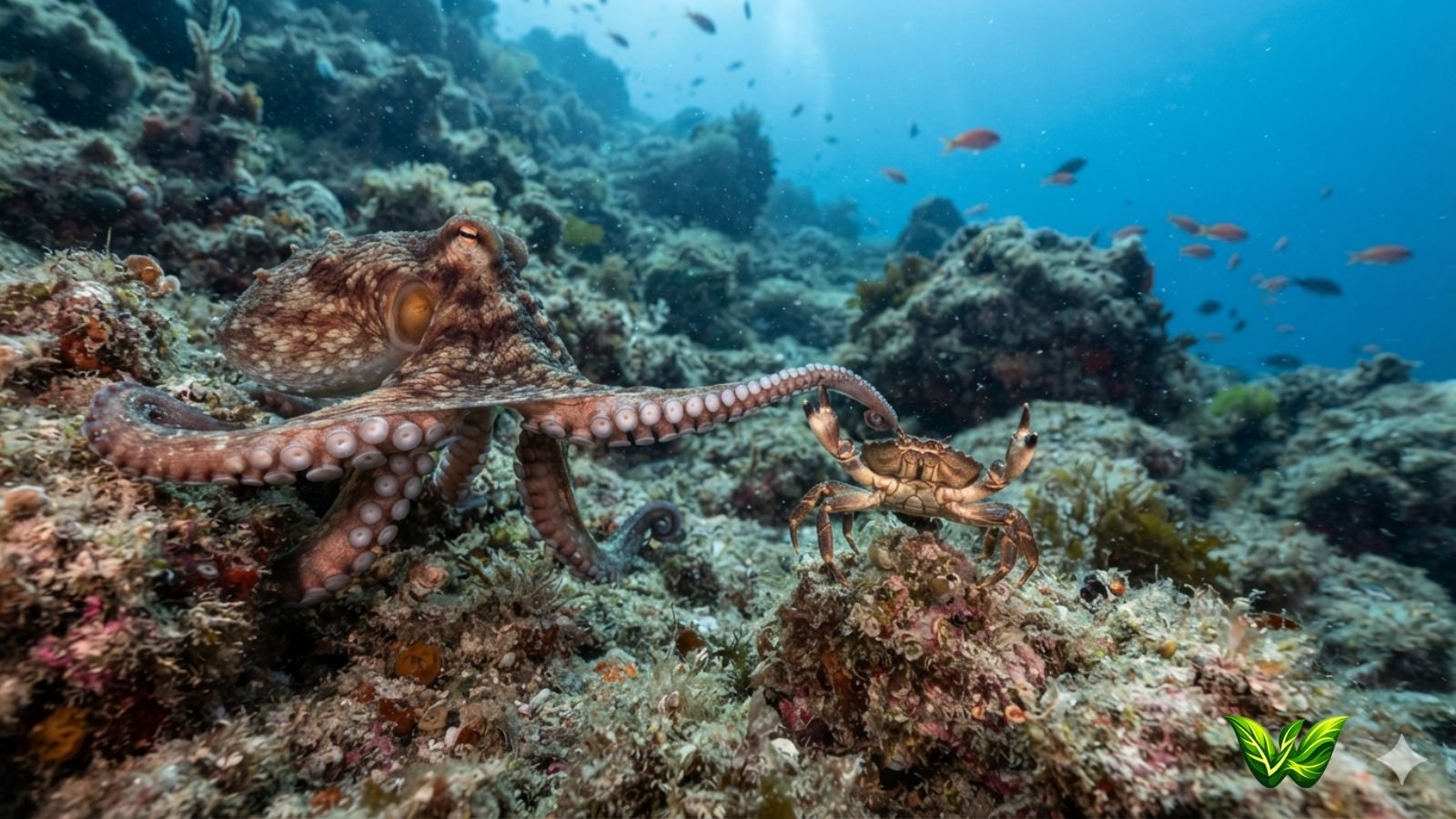
Most people assume octopuses eat mainly fish, but the truth is a little more specific than that. Their diet leans heavily toward slow-moving, shelled prey rather than fast swimmers.
Crabs sit near the top of the list for most octopus species, along with shrimp, clams, mussels, and various types of snails. Small fish do show up in an octopus’s diet, but they’re usually opportunistic catches rather than a primary food source, since fish are faster and harder to corner than bottom-dwelling shellfish.
Marine biologists have found that the exact menu depends heavily on habitat. A reef-dwelling octopus might rely more on crabs and small fish, while one living on a sandy seafloor often specializes in digging up clams and other buried mollusks.
read this How Long Do Octopuses Live? A Surprising Look at Their Short Lifespan
How an Octopus Actually Catches Its Food
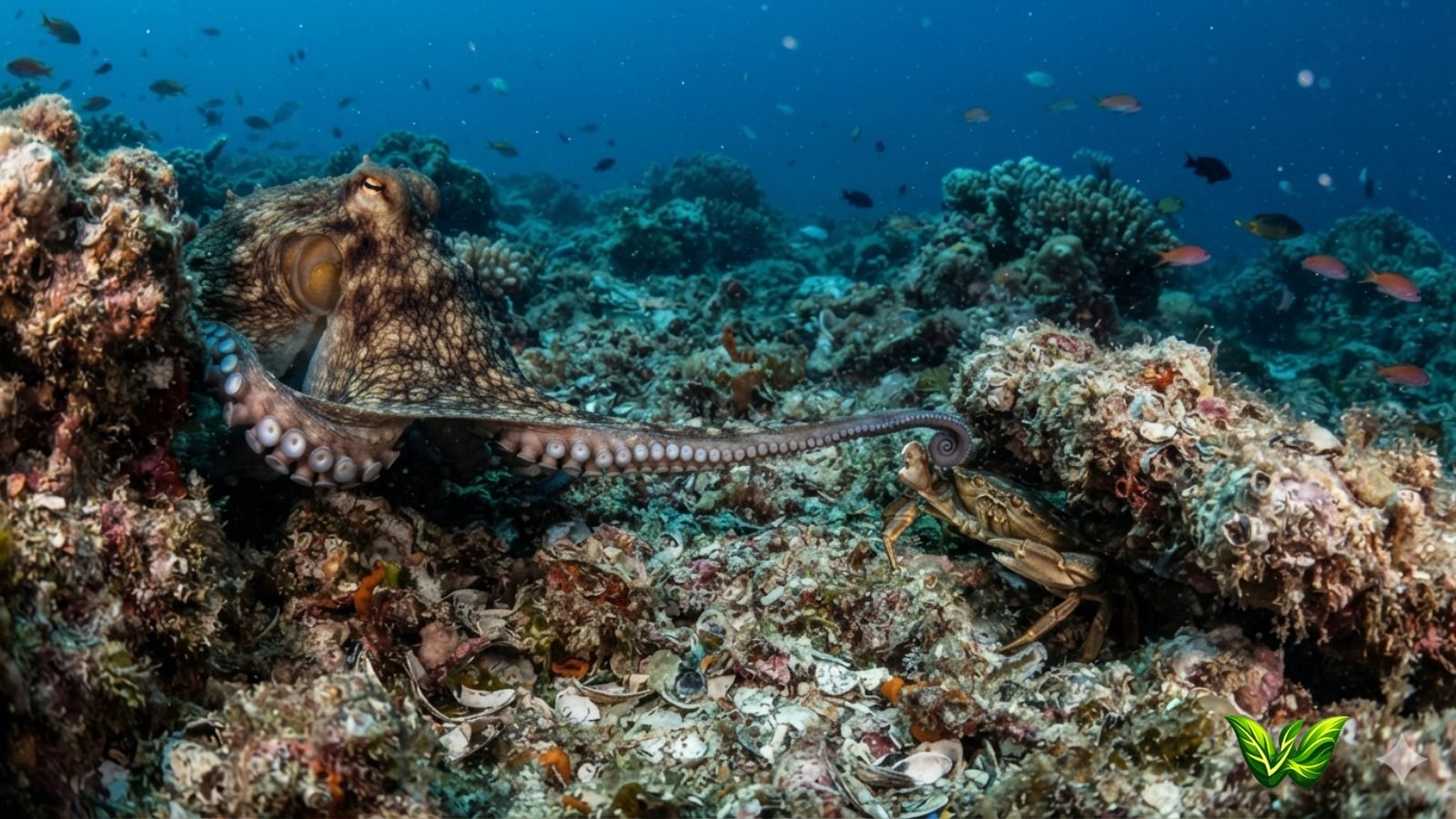
Here’s where things get genuinely impressive. An octopus doesn’t chase prey the way a fish or shark might. Instead, it relies on stealth, patience, and one of the most flexible bodies in the animal kingdom.
Octopuses often stalk prey slowly across the seafloor, using their arms and the light-sensitive skin covering their bodies to detect movement and texture. Once close enough, they pounce, using their webbed arms to trap prey against their body in what looks almost like an underwater ambush.
Their suckers aren’t just for gripping. Each one contains chemoreceptors that let the octopus taste what it’s touching, which means an octopus can identify potential prey hiding in a crevice without even seeing it first.
The Role of Venom in Hunting
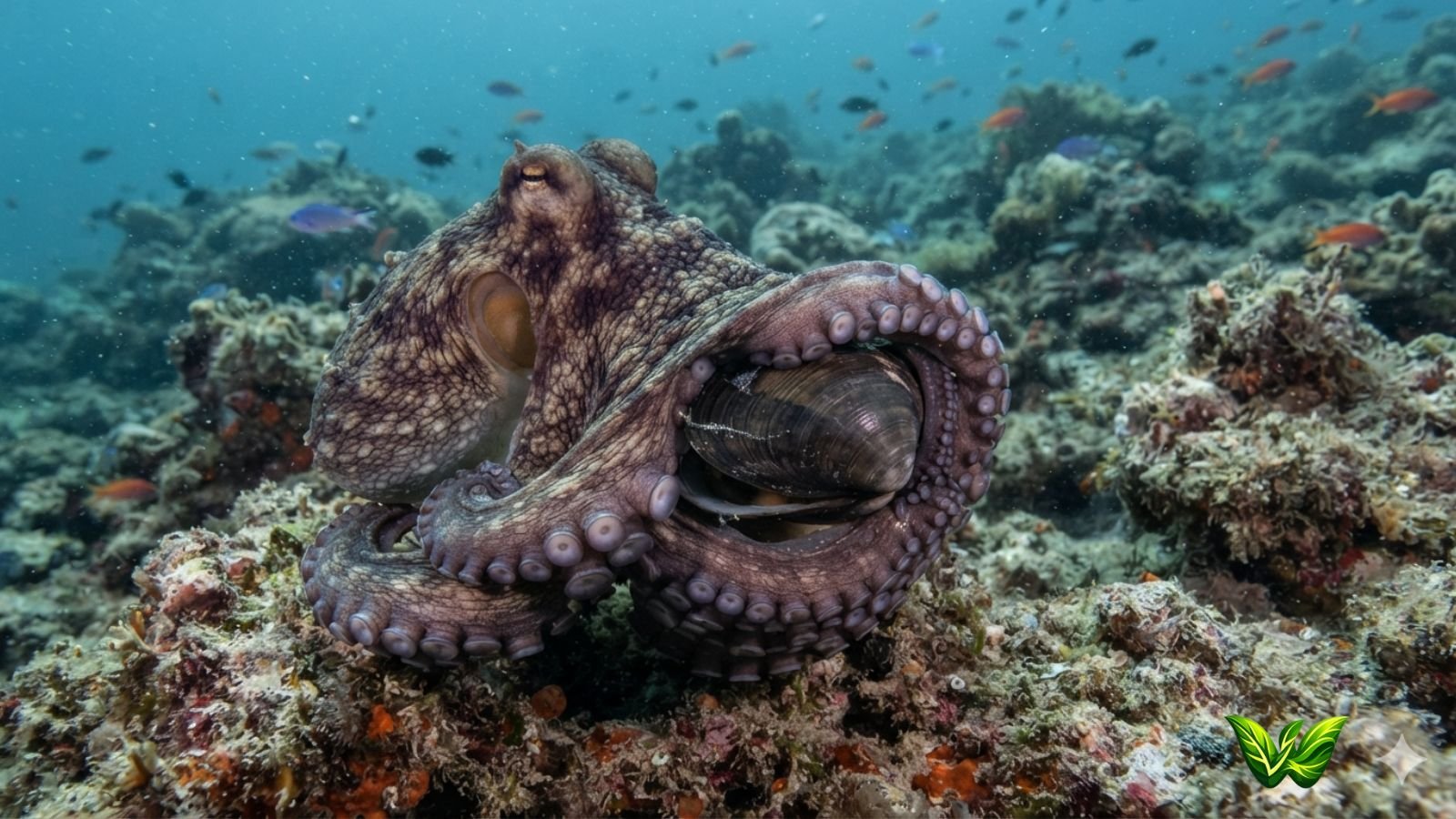
Nearly every octopus species produces venom, though the strength varies enormously between species. For most octopuses, that venom is used specifically for subduing prey rather than for defense against predators.
When an octopus bites down with its beak, it injects venomous saliva that begins paralyzing the prey almost immediately. This is especially useful against crabs and other creatures with strong claws or the ability to fight back, since a paralyzed crab can no longer pinch or scramble away.
The blue-ringed octopus is the most well-known exception here, carrying venom powerful enough to be dangerous to humans, though even in that species, the venom evolved primarily as a hunting tool rather than a weapon aimed at large predators.
Cracking Open Shells: The Drilling Technique
Shellfish present a unique problem for any predator. A clam or mussel can simply clamp shut and wait out most threats. Octopuses solved this problem in a remarkably clever way.
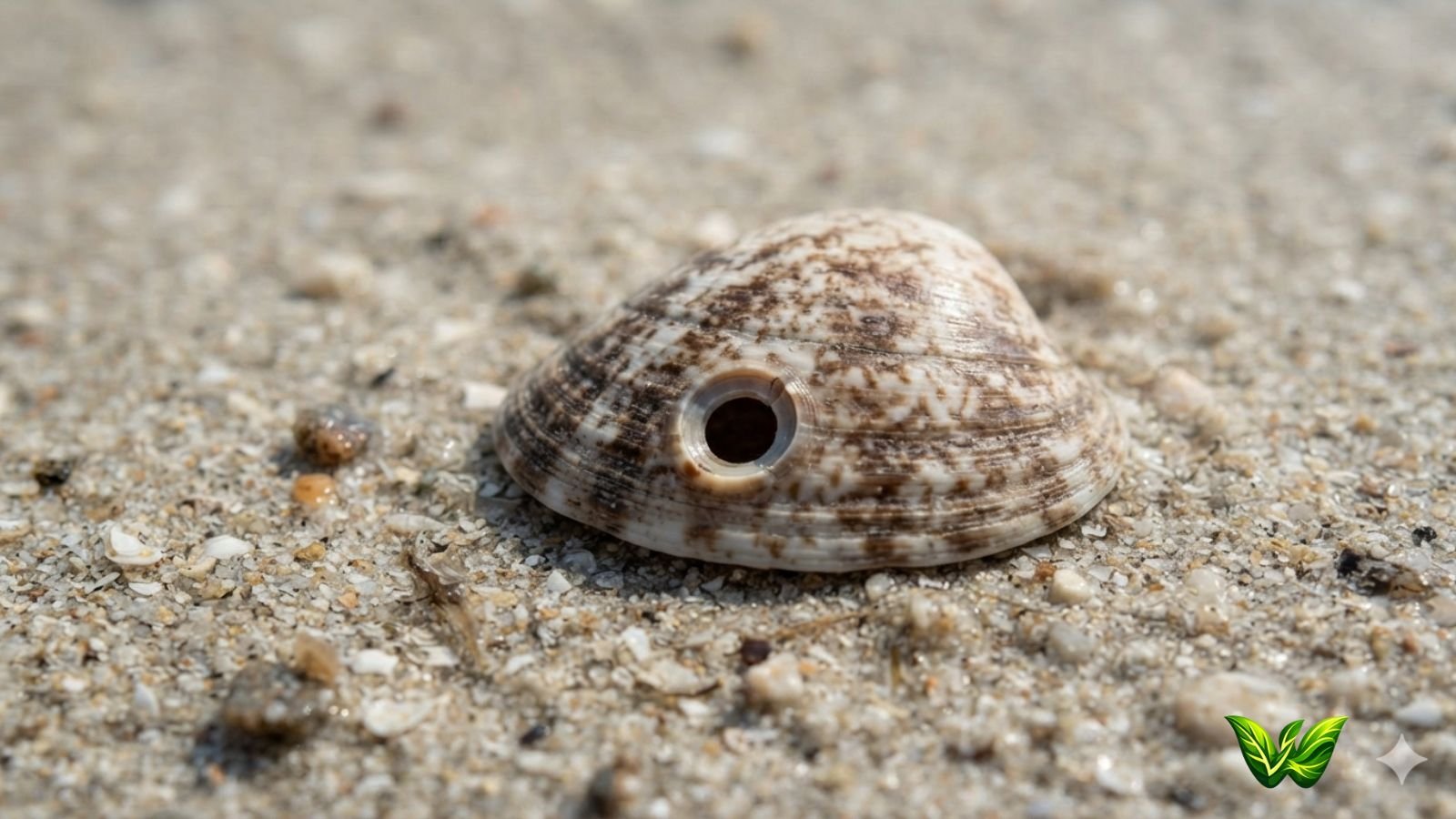
Using their radula, a tongue-like structure covered in tiny teeth, an octopus can drill a small hole directly through a shell. Once that hole is made, they inject venom or digestive enzymes through it, which either paralyzes the animal inside or begins breaking down its tissue, making it easier to extract.
This drilling method explains why beachcombers sometimes find empty clam or snail shells with a single small, perfectly round hole. That’s often a telltale sign an octopus was the one responsible.
Learn more about how mollusks defend themselves from predators.
How Diet Changes From Hatchling to Adult
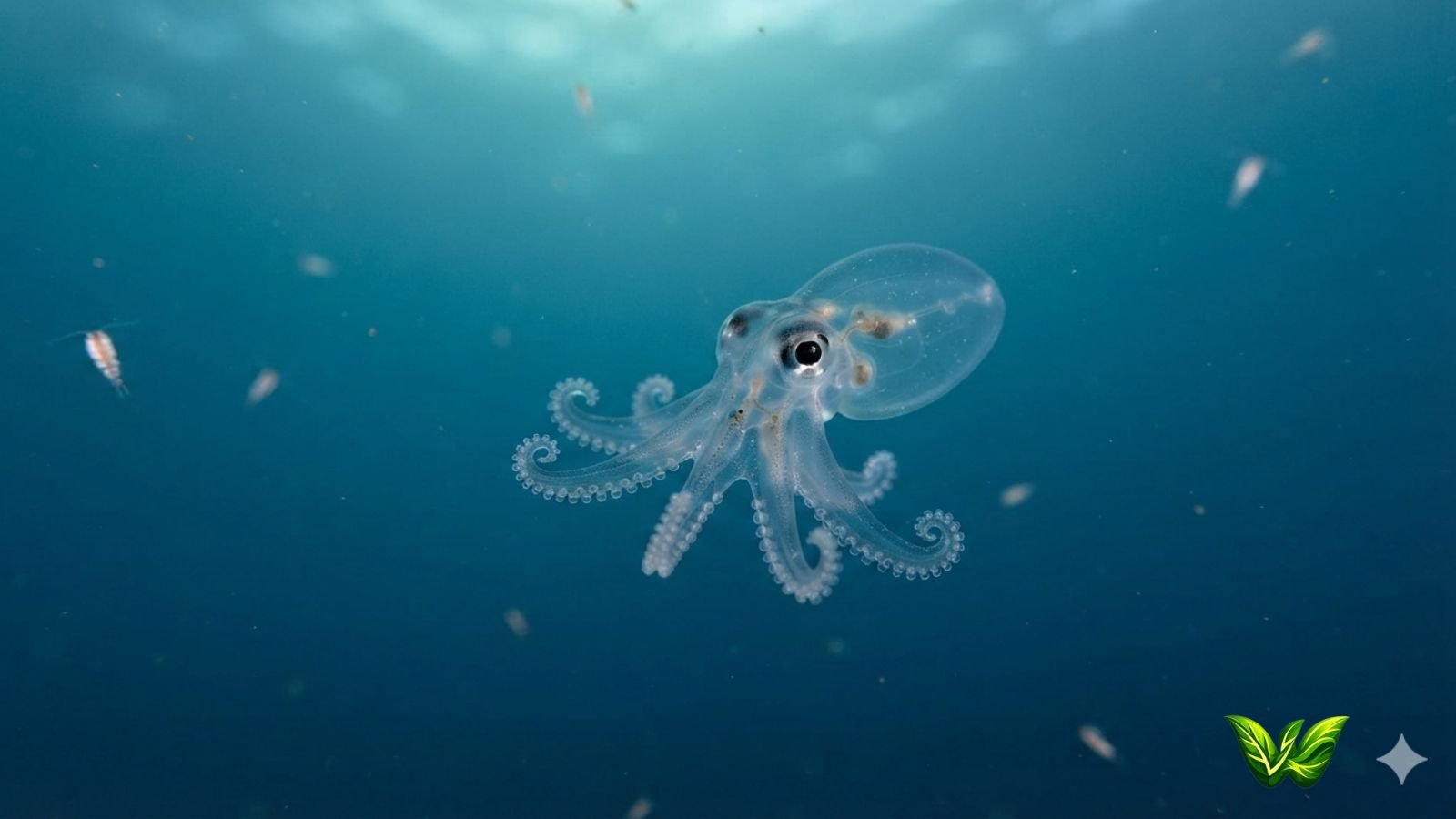
An octopus’s diet doesn’t stay the same throughout its life. What a newly hatched octopus eats looks almost nothing like what it eats as an adult.
Most octopus species begin life as tiny, free-floating larvae called paralarvae, drifting in open water and feeding on plankton and other microscopic organisms. As they grow and eventually settle onto the seafloor, their diet shifts toward the crabs, shrimp, and shellfish typically associated with adult octopuses.
This transition matters more than it might seem. Octopuses generally have short lifespans, often living only one to two years, which means this dietary shift from planktonic feeding to active hunting has to happen quickly for the animal to reach reproductive maturity in time.
💡 Did You Know?
Some octopus species have been observed using tools while hunting or protecting captured prey, including carrying coconut shells or shells from previous meals to use as portable shelters. This kind of tool use is rare among invertebrates and highlights just how advanced octopus problem-solving really is.
read this Why Do Octopuses Squirt Ink? The Real Science Behind This Defense
Do Octopuses Ever Eat Other Octopuses?
It might sound unusual, but cannibalism does occur among certain octopus species, particularly when food is scarce or when a larger individual encounters a smaller, weaker one.
Researchers studying octopus behavior have documented this most commonly in captivity, where limited space and competition for food increase encounters between individuals. In the wild, it happens too, though less frequently, since octopuses are largely solitary and tend to avoid each other outside of mating.
This behavior isn’t considered a primary feeding strategy. It’s more of an opportunistic response when an easy meal happens to present itself, similar to how some other predator species will eat smaller members of their own kind under the right circumstances.
Myth vs Fact
| Myth | Fact |
|---|---|
| Octopuses mainly eat fish | Most octopuses rely primarily on crabs, shrimp, and shellfish rather than fish |
| All octopus venom is dangerous to humans | Most octopus venom only affects small prey and poses little risk to people, with the blue-ringed octopus being a notable exception |
| Octopuses can’t eat prey with hard shells | Their drilling radula and venomous saliva allow them to break into shells other predators can’t open |
| Baby octopuses eat the same food as adults | Hatchlings typically drift and feed on plankton before transitioning to hunting shellfish as they mature |
Frequently Asked Questions
What do octopuses eat in the wild versus in captivity?
In the wild, octopuses primarily hunt crabs, shrimp, and shellfish native to their habitat. In captivity, their diet is usually supplemented with a wider variety of seafood, including fish, squid, and mussels, chosen to match their natural nutritional needs while keeping them mentally engaged during feeding.
Do octopuses eat every day?
Octopuses don’t necessarily need to eat daily, and their feeding frequency depends on prey availability and their current size. Larger octopuses can go a day or two between substantial meals, especially after consuming a particularly large crab or shellfish.
Can octopuses eat seaweed or algae?
No, octopuses are obligate carnivores, meaning their digestive systems are built entirely around processing animal protein. Any seaweed or plant matter found in an octopus’s stomach is typically incidental, swallowed along with prey rather than eaten intentionally.
How much food does an octopus eat compared to its body size?
Octopuses generally need to eat a significant amount relative to their body weight to fuel their rapid growth and high metabolism, particularly earlier in life. Estimates suggest some species may consume close to their own body weight in food over a period of just a few weeks during active growth phases.
Conclusion
An octopus’s diet reveals just how much strategy goes into surviving on the seafloor, from the venom in its bite to the tiny drill it uses on stubborn shells. What looks like a simple predator snatching its next meal is really the result of millions of years of specialized adaptation.
The next time you picture an octopus gliding across the ocean floor, you’ll know there’s a lot more happening beneath that graceful movement, a hunter perfectly built for cracking open the ocean’s toughest packaging.
References
- Smithsonian Ocean
- Monterey Bay Aquarium
- National Oceanic and Atmospheric Administration (NOAA)
Related Article
Why Do Octopuses Squirt Ink? The Real Science Behind This Defense
How Long Do Octopuses Live? A Surprising Look at Their Short Lifespan

Ethan Carter is a nature enthusiast and educational writer at Wonderexplained. He creates well-researched articles about animals, oceans, weather, and the natural world, making complex topics easy to understand. His goal is to provide accurate, engaging, and reader-friendly content that inspires curiosity and lifelong learning.

3 thoughts on “What Do Octopuses Eat? A Complete Look at Their Diet”