

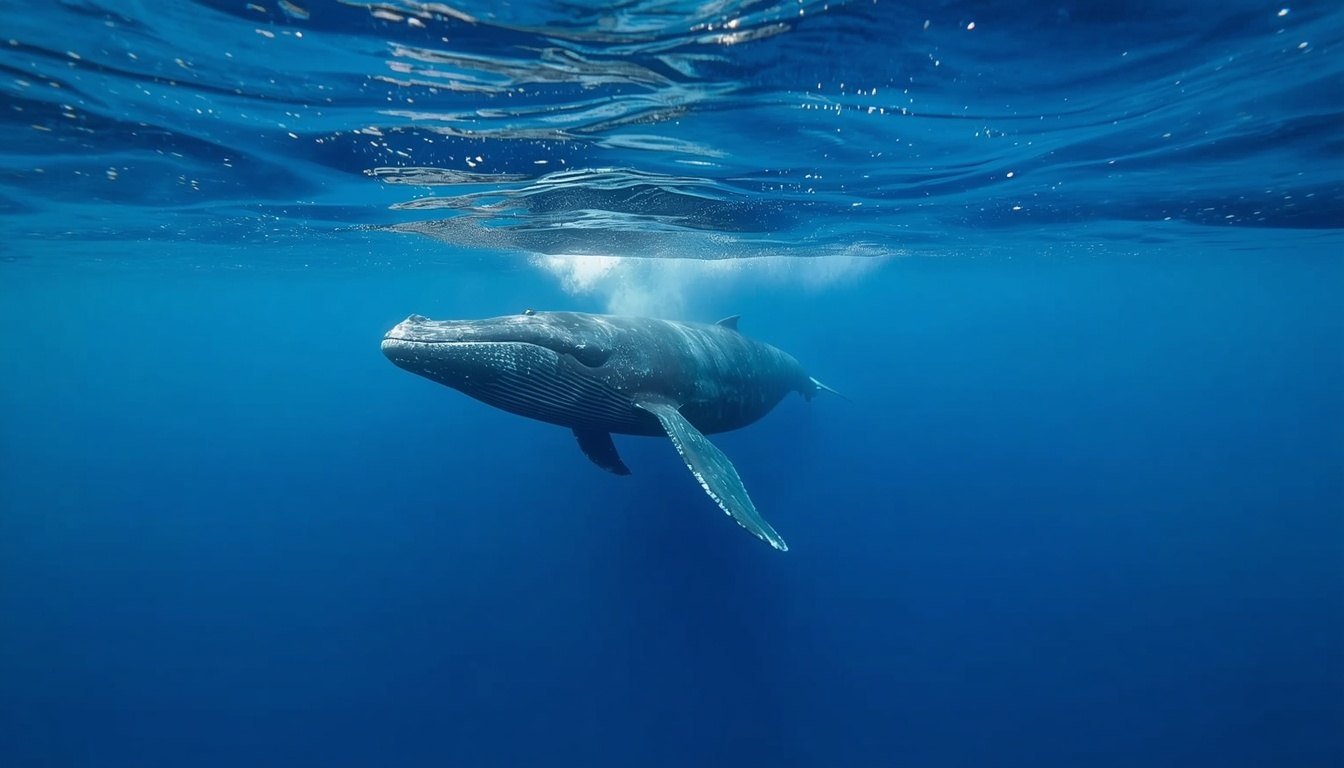
The blue whale is widely regarded as the largest animal known to have ever existed, surpassing even the biggest dinosaurs in mass. Despite this enormous size, blue whales feed almost entirely on some of the ocean’s smallest creatures, tiny shrimp-like animals called krill.
These blue whale facts cover their anatomy, feeding behavior, communication, migration, and conservation status, based on current scientific understanding of this remarkable baleen whale species.
Quick Facts About Blue Whales
- Scientific name: Balaenoptera musculus
- Classification: A baleen whale, part of the order Cetacea
- Habitat: Found in oceans worldwide, though most populations favor deep offshore waters
- Diet: Almost exclusively krill, filtered from the water using baleen plates
- Size: Generally considered the largest animal known to have existed, though exact maximum size figures vary by source and individual
- Conservation status: Listed as Endangered by the IUCN, following severe declines from 20th-century commercial whaling
Read This 45+Whale Facts: Interesting Facts About Whales[2026]
Anatomy and Physical Features
Blue Whales May Be the Largest Animals Ever Known to Exist
Based on current scientific and fossil evidence, the blue whale is generally considered larger than any known dinosaur or other animal in Earth’s history. Exact length and weight figures vary between individuals and reported measurements, so specific numbers should be treated as general ranges rather than fixed records.
A Blue Whale’s Heart Is Exceptionally Large
Studies of blue whale anatomy have found their hearts to be enormous compared to most animals, reflecting the demands of pumping blood through such a massive body. Reported heart size and weight figures can vary between individual studies and measurement methods.
Blue Whales Have a Mottled Blue-Gray Coloration
Their skin typically appears blue-gray with a mottled pattern, which can look lighter or darker depending on lighting conditions underwater. This distinctive coloring is part of how researchers can sometimes identify individual whales through photo identification.
Baleen Plates Allow Blue Whales to Filter Feed
Instead of teeth, blue whales have comb-like baleen plates made of keratin hanging from the upper jaw. These plates strain krill and small prey from large mouthfuls of water, letting the whale feed efficiently despite its size.

Diet and Feeding Behavior
Blue Whales Feed Almost Exclusively on Krill
Unlike many other large predators, blue whales specialize heavily in krill, tiny shrimp-like crustaceans that gather in dense swarms in certain ocean regions. This specialized diet is a defining feature of the species, distinguishing it from baleen whales that feed on a broader range of small fish and invertebrates.
Blue Whales Use Lunge Feeding to Capture Prey
To feed, a blue whale accelerates toward a dense patch of krill and opens its mouth wide, engulfing an enormous volume of water and prey in a single motion. The whale then uses its tongue and throat muscles to expel the water through its baleen plates, trapping the krill inside.
Blue Whales Consume Large Amounts of Food During Feeding Seasons
During peak feeding periods in nutrient-rich waters, blue whales are believed to consume substantial quantities of krill each day to build up the energy reserves needed for migration and breeding. Exact daily intake figures vary by source and are difficult to measure precisely in the wild.

Habitat and Range
Blue Whales Are Found in Oceans Around the World
Blue whale populations exist in the Atlantic, Pacific, Indian, and Southern Oceans, though they are generally considered uncommon compared to some other whale species due to their historically reduced numbers. Different populations tend to occupy distinct regions and may not mix extensively.
Blue Whales Migrate Between Feeding and Breeding Grounds
Many blue whale populations migrate seasonally between cold, nutrient-rich feeding areas, often in polar or subpolar waters, and warmer waters used for breeding, though migration patterns can vary by population and are not fully understood for every group.
Blue Whales Generally Prefer Deep Offshore Waters
Blue whales are typically found in deep offshore waters rather than shallow coastal areas, following the movement and concentration of krill swarms, which can shift based on ocean currents and seasonal conditions.
Communication and Senses
Blue Whale Calls Are Among the Loudest Sounds Produced by Any Animal
Blue whales produce very low-frequency vocalizations that are considered among the loudest sounds in the animal kingdom, capable of traveling long distances through the ocean under favorable conditions. Researchers believe these calls may help whales communicate over large distances, though the noisier modern ocean may limit how far calls travel in practice.
Blue Whale Calls Have Changed Over Recent Decades
Long-term acoustic monitoring has found that the pitch of blue whale calls has gradually lowered over several decades in some populations, a trend researchers are still working to fully explain. Proposed explanations include population recovery and changes in ocean noise, though the exact cause remains under study.
Blue Whales Likely Rely Heavily on Sound Rather Than Sight
Given the vast distances and often murky or deep waters blue whales inhabit, researchers believe sound plays a more central role than vision in how these whales navigate and stay in contact with others, though exact sensory hierarchies are difficult to measure directly.
Reproduction and Calves
Blue Whale Calves Are Large at Birth
Blue whale calves are already quite large compared to the newborns of most other animals, reflecting the enormous size of the mother, though exact birth size figures vary between reported studies and individual whales.
Calves Nurse on Extremely Rich Milk
Blue whale milk has a notably high fat content compared to the milk of most land mammals, supporting the rapid growth calves undergo during their first months of life. The exact duration of nursing varies and is not fully documented for every population.
Mother-Calf Bonds Last Through Early Development
Blue whale calves generally remain closely associated with their mothers for an extended period after birth, during which they nurse and begin to develop the swimming and feeding skills they will need as they mature.
Read This 40+Shark Facts: Interesting Facts About Sharks[2026]
Conservation
Blue Whales Are Listed as Endangered
The IUCN currently lists the blue whale as Endangered, reflecting the species’ historical population decline from commercial whaling in the 19th and 20th centuries. Because population assessments are periodically updated, current status and population estimates should be checked against the latest IUCN listings.
Commercial Whaling Caused Severe Historical Declines
Industrial whaling dramatically reduced blue whale populations worldwide before international regulation, including the International Whaling Commission’s moratorium on commercial whaling, helped curb further losses. Recovery has been slow and uneven across different populations.
Ship Strikes and Ocean Noise Remain Ongoing Threats
Modern threats to blue whales include collisions with large vessels, particularly in areas where shipping lanes overlap with feeding or migration routes, as well as increasing ocean noise that may interfere with communication. Conservation efforts in some regions include adjusting shipping lanes to reduce these risks.
Interesting and Lesser-Known Facts
Blue Whale Population Estimates Remain Uncertain
Because blue whales are widely dispersed across the ocean and historically depleted, precise global population estimates are difficult to obtain, and figures reported by different research groups can vary considerably depending on methodology and region surveyed.
Blue Whales Have Few Natural Predators
Due to their immense size, adult blue whales have very few natural predators, though there have been documented instances of orca attacks on blue whales, particularly targeting calves or weakened individuals. Such events appear to be relatively uncommon.
Blue Whale Subspecies Differ Somewhat by Region
Scientists generally recognize a few blue whale subspecies or populations that differ somewhat in size and range, such as those found in the Northern Hemisphere versus the Southern Ocean. Classification details continue to be refined as genetic research advances.
Read This 30+Dolphin Facts: Interesting Facts About Dolphins[2026]
Frequently Asked Questions
What do blue whales eat?
Blue whales feed almost exclusively on krill, filtering large quantities of these tiny crustaceans from the water using their baleen plates during lunge feeding.
How big do blue whales get?
Blue whales are generally considered the largest animals known to have existed, though exact size figures vary by individual and measurement method, so specific numbers should be treated as general ranges.
Are blue whale facts endangered?
Yes, blue whales are currently listed as Endangered by the IUCN, a status reflecting their significant historical decline from commercial whaling, with recovery remaining slow in many regions.
Do blue whales migrate?
Many blue whale populations migrate seasonally between nutrient-rich feeding grounds and warmer breeding waters, though specific migration patterns vary by population and are not fully understood for every group.
How do blue whales communicate?
Blue whales produce very low-frequency calls considered among the loudest sounds in the animal kingdom, which researchers believe may help them communicate over long distances underwater.
Conclusion
Blue whales combine record-breaking size with a surprisingly specialized diet built almost entirely around tiny krill, filtered through baleen plates in dramatic lunge-feeding events. Their extremely loud, low-frequency calls and long migrations reflect adaptations suited to life in the open ocean. At the same time, the species’ Endangered status is a reminder that even the largest animal on Earth remains vulnerable to human activity, from historical whaling to modern threats like ship strikes and ocean noise.

Ethan Carter is a nature enthusiast and educational writer at Wonderexplained. He creates well-researched articles about animals, oceans, weather, and the natural world, making complex topics easy to understand. His goal is to provide accurate, engaging, and reader-friendly content that inspires curiosity and lifelong learning.
