

Cheetahs are best known as the fastest land animals on Earth, but their speed is only part of a much larger story. Built for short, explosive bursts rather than endurance, cheetahs have a distinct body plan, hunting style, and social structure that sets them apart from other big cats.
These cheetah facts cover their anatomy, hunting behavior, habitat, cubs, and conservation status, based on current scientific understanding of this specialized predator.
Quick Facts About Cheetahs
- Scientific name: Acinonyx jubatus
- Classification: A big cat, though genetically and physically distinct from lions, tigers, and leopards
- Habitat: Open grasslands and savannas, mainly in sub-Saharan Africa, with a small critically endangered population in Iran
- Diet: Carnivore; primarily medium-sized antelope such as gazelles and impala
- Social structure: Females are typically solitary except with cubs; males often form small coalitions, frequently with brothers
- Conservation status: Listed as Vulnerable by the IUCN, with the Asiatic cheetah subspecies listed as Critically Endangered
Anatomy and Physical Features
Cheetahs Are Built for Speed, Not Strength
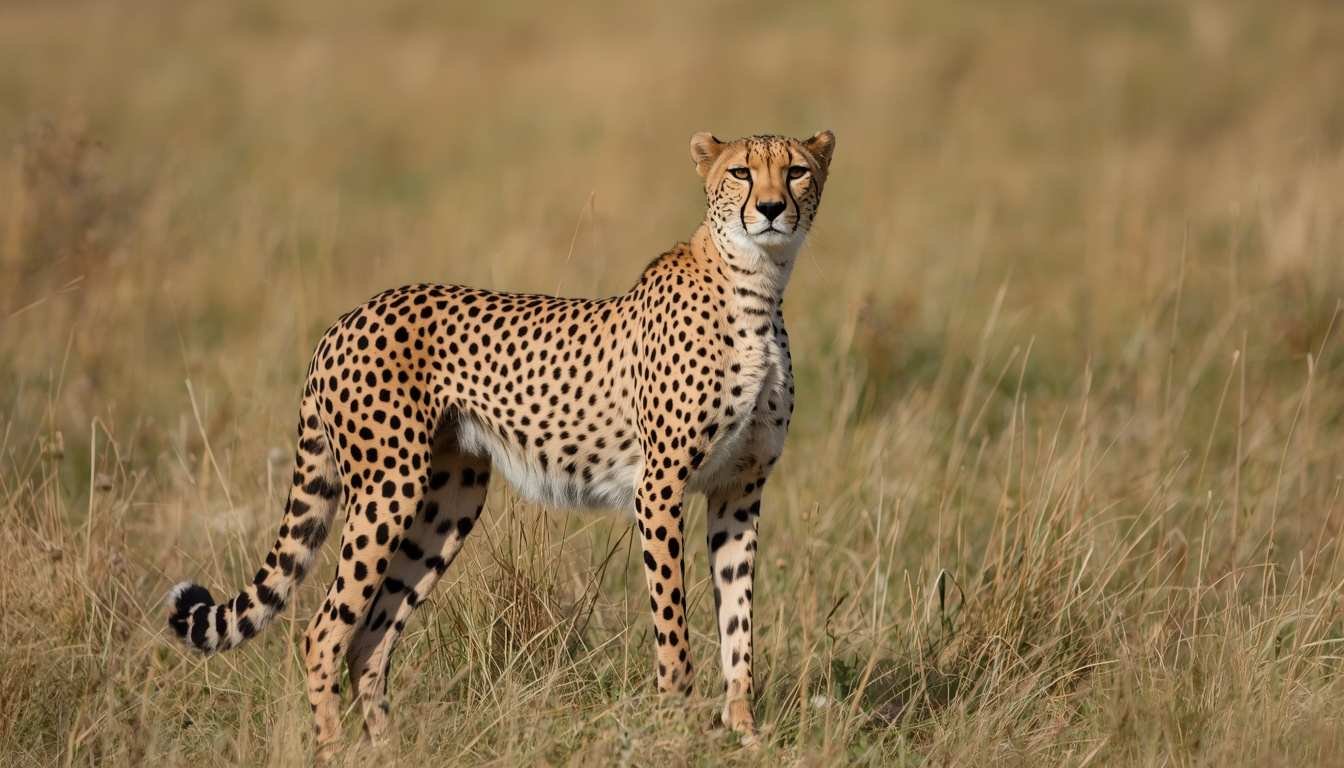
Cheetahs have a lightweight frame, long legs, a deep chest, and a flexible spine that allows an extended stride during a sprint. This body plan trades raw power for speed, which is one reason cheetahs are generally less able to defend a kill against larger competitors like lions and hyenas.
A Cheetah’s Claws Are Only Semi-Retractable
Unlike most cats, cheetahs have claws that stay partially exposed rather than fully retracting, functioning somewhat like the cleats on running shoes to improve traction during a chase. This is a notable anatomical difference from other big cats, whose claws typically retract fully.
The Long Tail Acts as a Rudder
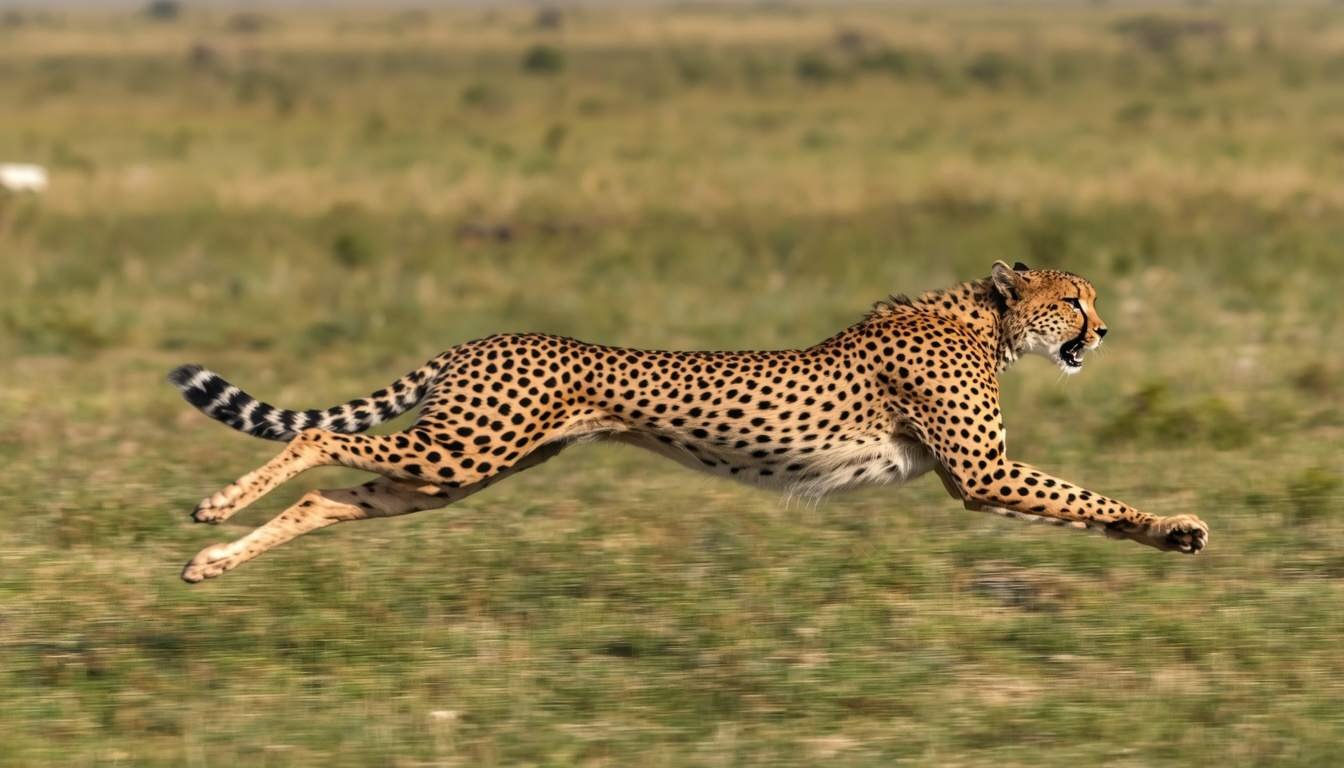
A cheetah’s long, muscular tail helps it maintain balance and change direction quickly while running at high speed, functioning much like a rudder to counteract the momentum of sharp turns during a chase.
Distinctive Facial Markings May Aid Hunting
Cheetahs have black “tear marks” running from the inner corners of their eyes down to the mouth. Some researchers have proposed these markings may help reduce glare from the sun during daytime hunts, similar to the way some athletes use eye black, though this function is not fully confirmed.
Speed and Hunting
Cheetahs Are the Fastest Land Animals
Cheetahs are widely recognized as the fastest land animals, capable of very high sprint speeds over short distances, though exact top-speed figures vary between studies and individual animals, so precise numbers should be treated as general ranges rather than fixed records.
Cheetah Sprints Are Extremely Short and Energetically Costly
A cheetah’s sprint typically lasts only a matter of seconds, since the intense physical demands of running at high speed cause body temperature to rise quickly and require a recovery period afterward. This is very different from the sustained pursuit hunting seen in some other predators.
Cheetahs Rely on Stalking Before the Chase
Before sprinting, a cheetah typically stalks its prey as closely as possible using cover and careful movement, since a shorter final chase distance improves the odds of a successful catch given how quickly a cheetah tires.
Hunting Success Rates Vary by Prey and Conditions
Cheetah hunting success rates vary considerably depending on prey species, terrain, and the presence of other predators nearby, and even skilled hunts frequently fail. After a successful chase, cheetahs may also need to eat quickly, since they are vulnerable to having kills stolen by larger predators.
Habitat and Range
Most Wild Cheetahs Live in Sub-Saharan Africa
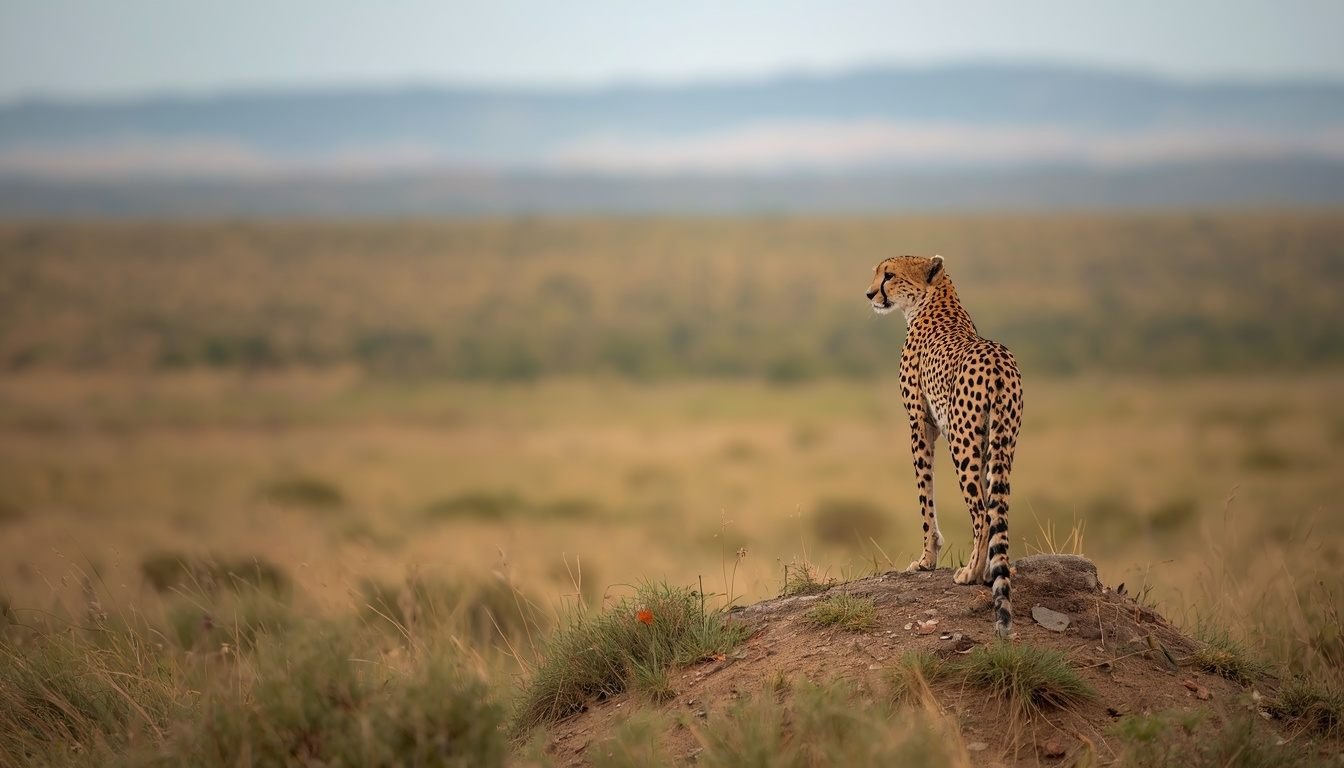
The majority of the world’s cheetah population is found across parts of sub-Saharan Africa, particularly in Eastern and Southern Africa, within open grasslands and savannas that provide the visibility and open ground cheetahs need for high-speed hunting.
A Small, Critically Endangered Population Survives in Iran
The Asiatic cheetah, a subspecies found historically across the Middle East and South Asia, now survives in the wild only in a small population in Iran. This population is considered critically endangered, and it has been the focus of long-term, intensive conservation efforts.
Cheetahs Need Large Territories
Because cheetahs rely on catching prey over open ground and are vulnerable to competition from other predators, they typically require large home ranges to find enough food, which makes habitat fragmentation a significant challenge for the species.
Behavior and Social Life
Female Cheetahs Are Generally Solitary
Adult female cheetahs typically live and hunt alone, except when raising cubs, and generally avoid close contact with other adult females outside of overlapping territories.
Male Cheetahs Often Form Coalitions
Unlike females, male cheetahs frequently form small groups called coalitions, often made up of brothers from the same litter, which can persist for life. These coalitions are thought to improve the males’ ability to defend territory and compete for mates, since a group can outcompete a solitary male in territorial disputes.
Cheetahs Are Mostly Active During the Day
Many cheetah populations are more active during daylight hours than other big cats, which is thought to help them avoid competition and conflict with nocturnal predators like lions and hyenas, though activity patterns can shift somewhat based on local conditions.
Read This 30+Bear Facts: Interesting Facts About Bears[2026]
Reproduction and Cubs
Cheetah Cubs Have Low Survival Rates in the Wild
Cheetah cub mortality is generally considered high compared to many other big cats, largely due to predation by lions, hyenas, and other carnivores. This is one reason female cheetahs are especially vigilant and frequently move their cubs between hiding spots during the first weeks of life.
Cubs Have a Distinctive Mantle of Fur When Young
Young cheetah cubs are born with a long, smoky-gray patch of fur running along their back and neck, called a mantle, which gradually fades as they mature. Some researchers believe this coloring may help camouflage cubs or mimic the appearance of a different, more dangerous animal, such as a honey badger, though the exact purpose remains a topic of scientific discussion.
Mothers Teach Cubs to Hunt Through Practice
As cubs grow, mothers often bring back live prey to give cubs the opportunity to practice chasing and capturing on their own, a critical part of developing the hunting skills they will need once independent.
Read This 25+Wolf Facts: Interesting Facts About Wolves[2026]
Conservation
Cheetahs Are Listed as Vulnerable, With Regional Populations Declining
The IUCN lists the cheetah as Vulnerable, reflecting significant population declines linked to habitat loss, conflict with farmers over livestock predation, and reduced availability of prey. Because population assessments are updated periodically, current figures should be checked against the latest IUCN listings.
Genetic Diversity Is Notably Low in Cheetahs
Studies have found that cheetahs have unusually low genetic diversity compared to many other mammal species, a pattern researchers link to a population bottleneck in the species’ past. This reduced genetic diversity has raised concerns among conservationists about the species’ long-term resilience to disease and environmental change.
Human-Wildlife Conflict Remains a Major Threat
As agricultural land expands into cheetah range, conflicts with farmers over livestock losses have increased in some regions, sometimes resulting in cheetahs being killed. Conservation organizations work on strategies such as livestock guarding animals and community education to help reduce these conflicts.
Interesting and Lesser-Known Facts
Cheetahs Cannot Roar Like Other Big Cats
Unlike lions, tigers, and leopards, cheetahs cannot roar due to differences in the structure of their throat and voice box. Instead, cheetahs communicate using sounds like chirps, purrs, and hisses, some of which can carry surprisingly far.
Cheetahs Are More Closely Related to Cougars Than to Other Big Cats
Genetic studies place cheetahs in a distinct lineage more closely related to cougars (also called pumas or mountain lions) than to lions, tigers, or leopards, despite the cheetah’s classification as a big cat in common usage.
The Cheetah’s Distinctive Spotted Coat Aids Camouflage
A cheetah’s coat, covered in small, solid black spots, helps it blend into the dappled light and grass of open savanna terrain, aiding both stalking prey and avoiding detection by other predators.
Read This 45+Panda Facts: Interesting Facts About Giant Pandas[2026]
Frequently Asked Questions
How fast can a cheetah run?
Cheetahs are the fastest land animals, capable of very high sprint speeds over short distances, though exact top-speed figures vary between studies and individual animals.
What do cheetahs eat?
Cheetahs primarily hunt medium-sized antelope such as gazelles and impala, relying on short, high-speed chases rather than the cooperative hunting seen in some other big cats.
Are cheetah facts endangered?
Cheetahs are currently listed as Vulnerable by the IUCN, while the Asiatic cheetah subspecies in Iran is considered Critically Endangered, reflecting very different population pressures across their range.
Why can’t cheetahs roar?
Cheetahs lack the specific throat and voice box structures that allow lions, tigers, and leopards to roar. Instead, they communicate using chirps, purrs, and other vocalizations.
Do cheetahs live in groups?
It depends on sex. Female cheetahs are typically solitary except when raising cubs, while male cheetahs often form small coalitions, frequently with brothers, that can last for life.
Conclusion
Cheetahs stand out among big cats for their extreme specialization toward speed, from a lightweight frame and semi-retractable claws to a tail that works like a rudder during a chase. Their solitary female social structure and male coalitions reflect a very different social pattern from lions, and their low genetic diversity adds a distinct conservation challenge. At the same time, ongoing threats from habitat loss and human-wildlife conflict continue to shape the species’ Vulnerable status, with the Asiatic cheetah facing an even more precarious future.

Ethan Carter is a nature enthusiast and educational writer at Wonderexplained. He creates well-researched articles about animals, oceans, weather, and the natural world, making complex topics easy to understand. His goal is to provide accurate, engaging, and reader-friendly content that inspires curiosity and lifelong learning.
