

You’ve probably seen an octopus release a dark cloud of ink and disappear almost instantly. It looks like a simple escape trick, but there’s much more happening beneath the surface. If you’ve ever wondered why do octopuses squirt ink, the answer comes down to a clever defense system that can confuse predators, give the octopus time to escape, and even help it hide.
Quick Answer
Octopuses squirt ink to escape predators by confusing their senses. The ink cloud blocks vision, irritates eyes and gills, and even dull smell and taste, buying the octopus a few critical seconds to jet away. In some cases, the ink also forms a fake octopus-shaped blob called a pseudomorph, tricking predators into attacking the wrong target entirely.
Key Takeaways
✔ Ink is a last-resort defense, used mainly when an octopus feels directly threatened
✔ The ink contains melanin, mucus, and enzymes that irritate a predator’s eyes and gills
✔ Some ink clouds form a decoy shape called a pseudomorph, which mimics the octopus itself
✔ Ink can temporarily numb a predator’s sense of smell, which is a serious disadvantage for animals like sharks
✔ Octopuses rarely ink near their own den, since the chemicals can be toxic to them too
✔ Not every octopus species inks the same way — some produce thick clouds, others fine smoky streaks
Table of Contents
- Why Do Octopuses Squirt Ink?
- Where the Ink Actually Comes From
- What’s Inside Octopus Ink
- How Ink Confuses a Predator’s Senses
- The Pseudomorph: A Decoy Made of Ink
- Why Octopuses Don’t Ink All the Time
- Do All Octopus Species Ink the Same Way?
- Did You Know?
- Myth vs Fact
- Quick Tips: Spotting Octopus Ink Behavior
- Frequently Asked Questions
- Conclusion
Where the Ink Actually Comes From
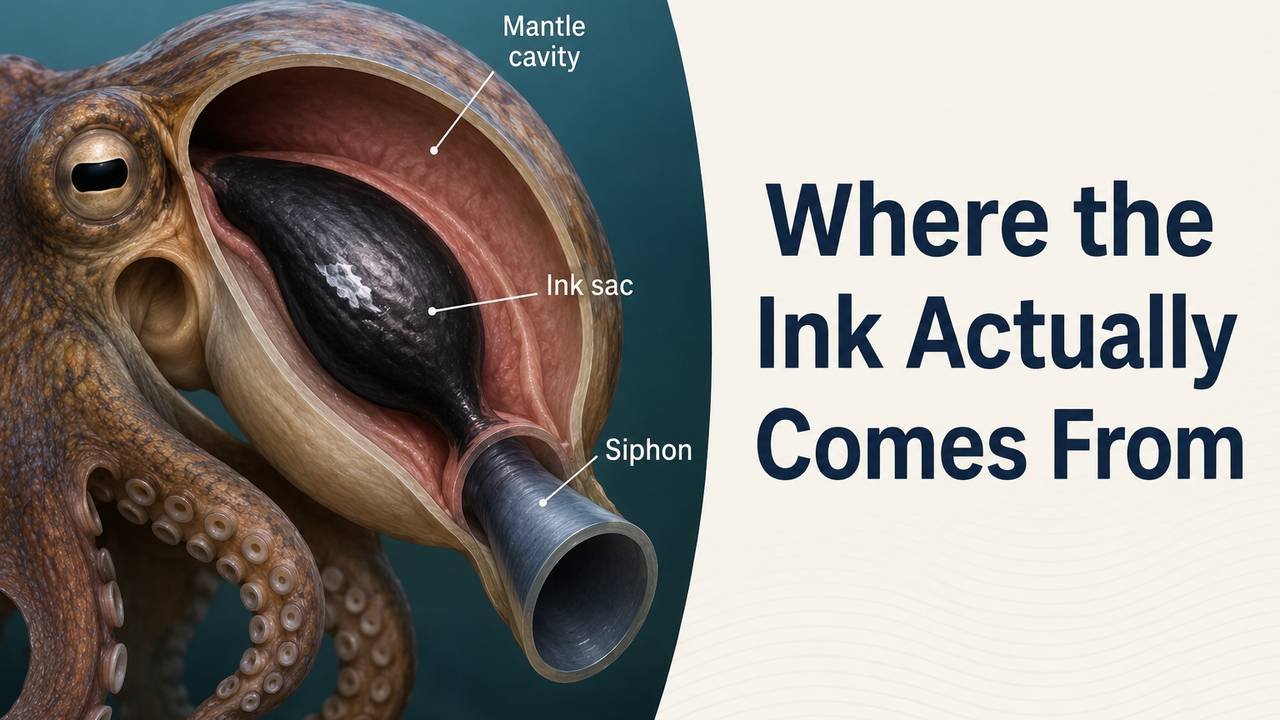
Most people assume the ink just appears out of nowhere, like a magic trick. The real explanation is a lot more mechanical, and honestly more interesting.
Deep inside an octopus’s mantle sits a small, muscular pouch called the ink sac. It connects to the rectum, which sounds strange until you realize how efficient the design is. When the octopus needs to ink, it contracts the sac and forces the fluid out through the same siphon it uses to breathe and jet through water.
That siphon is the key to the whole performance. Because the octopus can aim and control water flow through it, it isn’t just leaking ink into the ocean. It’s directing a cloud exactly where a predator’s eyes or nose will meet it, often while simultaneously jetting itself in the opposite direction.
What’s Inside Octopus Ink
The dark color comes from melanin, the same pigment responsible for human skin and hair color. But melanin is only part of the mixture. Octopus ink also contains mucus, which gives the cloud its thick, lingering texture, along with a cocktail of enzymes and compounds including tyrosinase and dopamine.
That combination isn’t just for show. Tyrosinase in particular is known to irritate soft tissue, which is exactly the kind of tissue found in a predator’s eyes and gills.
Read This What Do Octopuses Eat? A Complete Look at Their Diet
How Ink Confuses a Predator’s Senses
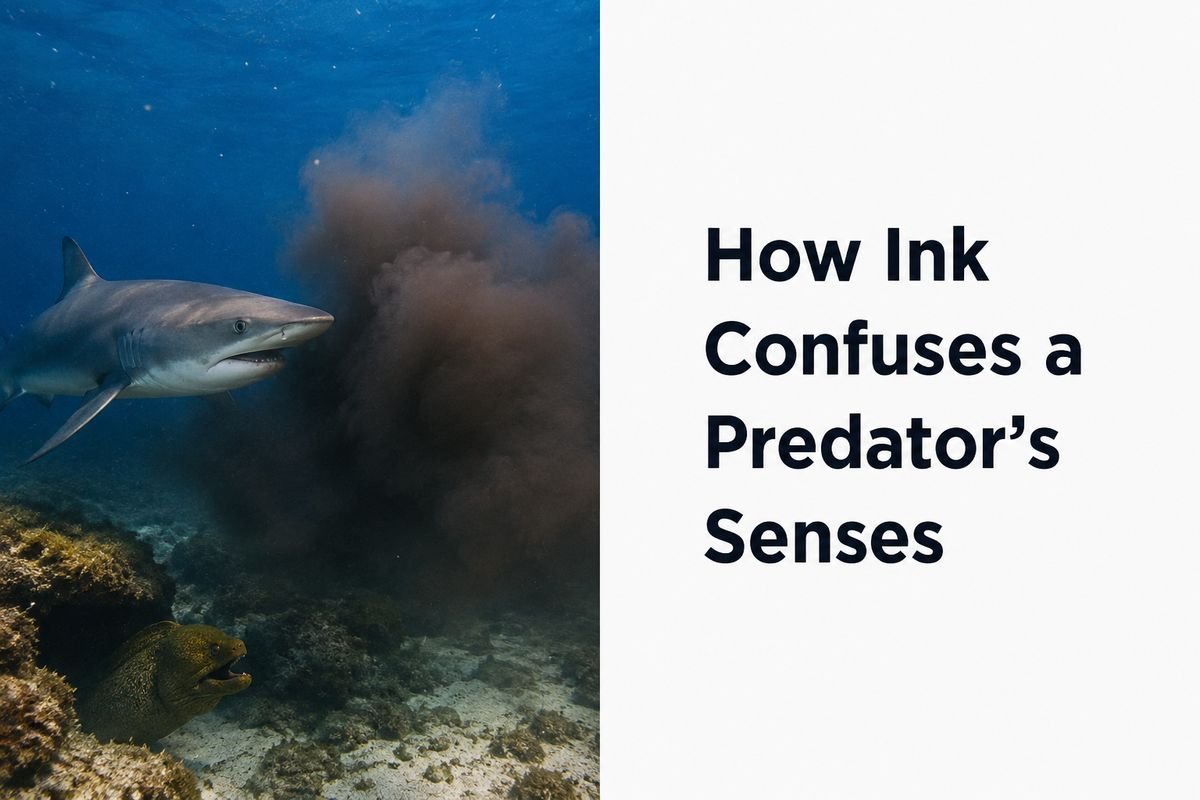
This is where octopus ink becomes genuinely clever, because it doesn’t rely on just one trick.
Vision. The most obvious effect is the simplest one. A dense cloud of ink blocks a predator’s line of sight, and in that half-second of blindness, an octopus can jet away using its funnel for propulsion.
Smell and taste. Marine biologists have found that octopus ink can interfere with chemoreceptors, the sensory structures many predators rely on to smell or taste prey in water. Sharks and eels depend heavily on these senses to track movement and locate food, so a chemical disruption can be just as disorienting as losing their sight.
Irritation. The enzymes in ink can cause a burning or stinging sensation on contact with sensitive gill tissue. A predator dealing with irritated gills is a predator momentarily distracted from the chase.
Stacked together, these three effects explain why ink works so well against such a wide range of ocean predators, from moray eels to reef sharks to larger fish.
The Pseudomorph: A Decoy Made of Ink
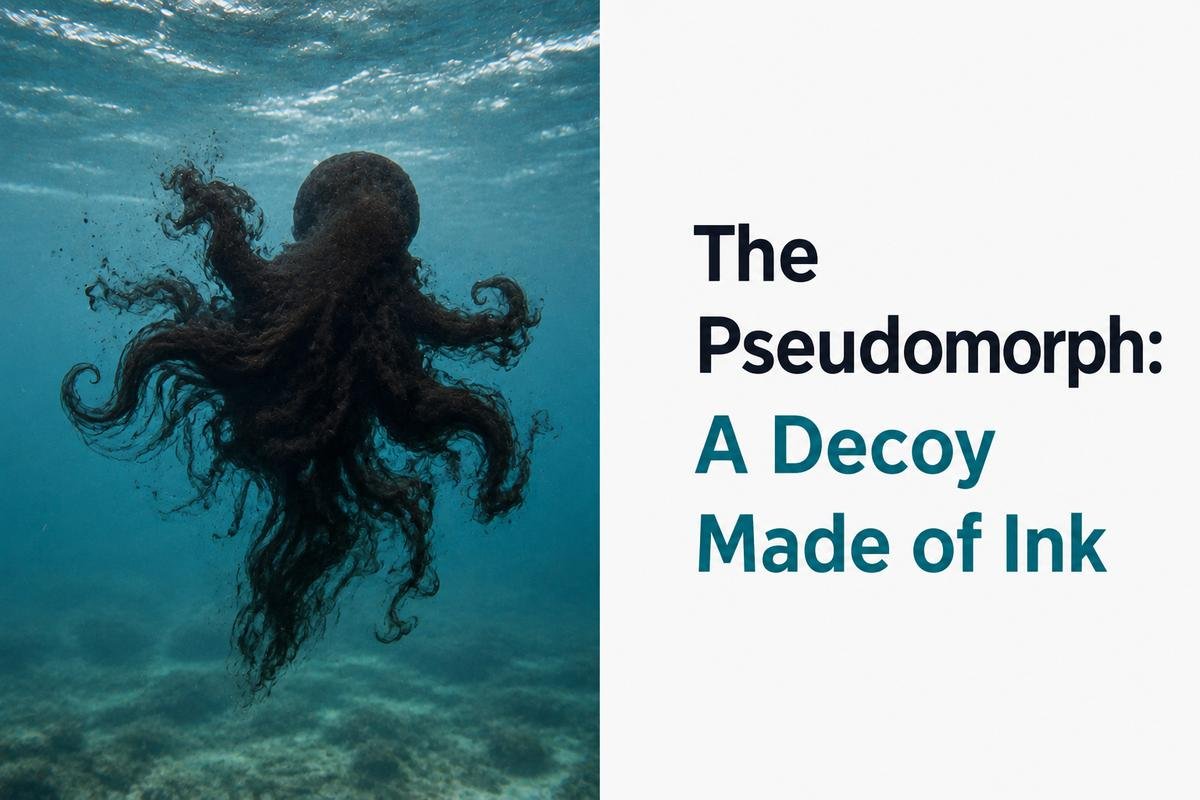
Not all octopus ink behaves the same way, and this is the part most articles skip entirely.
When threatened, some octopus species mix ink with a thick layer of mucus before releasing it, creating a dense, roughly octopus-sized blob that holds its shape in the water for a few seconds. Marine researchers call this a pseudomorph, and it functions almost like a body double.
A predator lunging toward what looks like a slow, soft target suddenly finds mucus and pigment instead of a meal, while the real octopus has already jetted off in another direction. This decoy behavior is often paired with a rapid color change, since octopuses can alter their skin tone almost instantly using specialized cells called chromatophores. The result is a coordinated disappearing act: color change, ink burst, decoy blob, and getaway, all within a couple of seconds.
Why Octopuses Don’t Ink All the Time
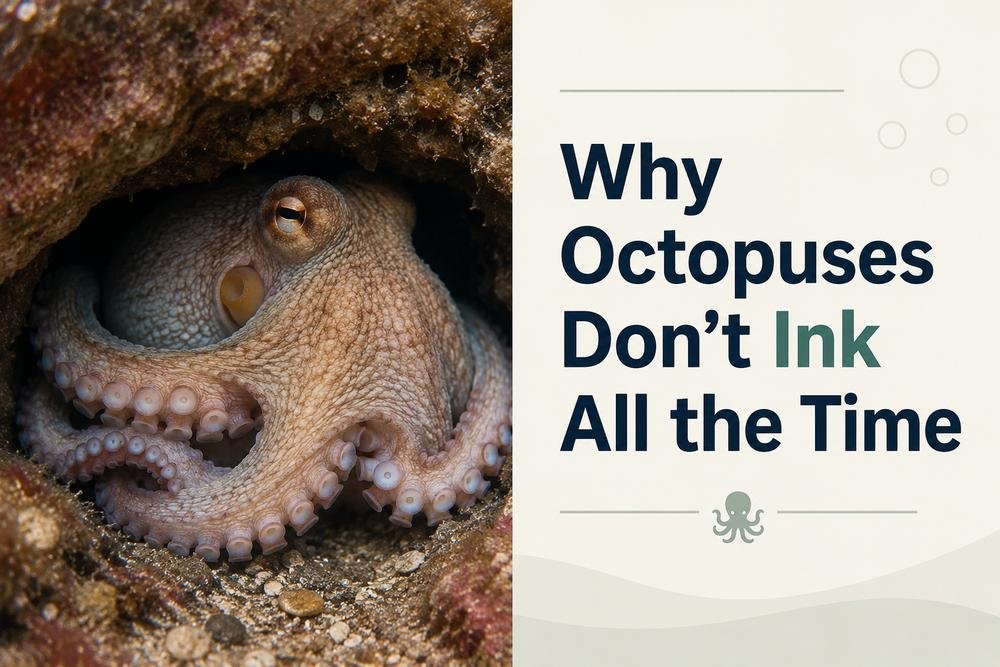
Given how effective ink is, it’s fair to wonder why octopuses don’t use it constantly. The answer comes down to risk and resources.
Producing ink takes energy, and the ink sac needs time to refill after each use. An octopus that inks too often can find itself defenseless when a real threat appears later.
There’s also a more surprising reason. The same compounds that irritate a predator’s gills can be harmful to the octopus itself if the cloud lingers in an enclosed space. Because of this, octopuses are known to avoid inking inside their own den, where the chemicals could become trapped and affect their own breathing. Instead, they save ink for open water, where it can disperse safely once it has done its job.
Do All Octopus Species Ink the Same Way?
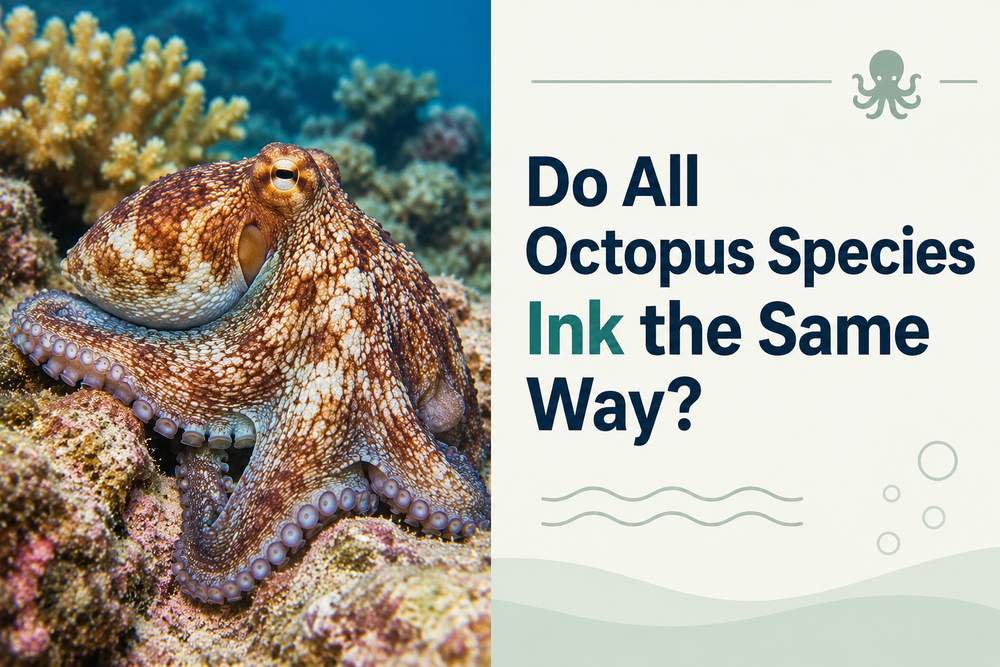
Ink behavior isn’t identical across the octopus family. Reef-dwelling species tend to produce thicker, darker clouds suited to confusing predators in bright, complex environments. Deep-sea and open-ocean species often release a finer, smokier stream, since visibility underwater at depth works differently than it does near a sunlit reef.
Interestingly, a few deep-sea octopus species have lost the ability to ink altogether. In near-total darkness, where vision matters far less to predators, a cloud of pigment offers little advantage, so evolution simply didn’t preserve the trait in those lineages.
Read This How Long Do Octopuses Live? A Surprising Look at Their Short Lifespan
💡 Did You Know?
Octopus ink doesn’t just block sight and confuse smell. Some studies suggest it can temporarily reduce a predator’s ability to detect movement altogether, giving the octopus a rare few seconds where it’s essentially invisible on every sensory level at once.
Myth vs Fact
| Myth | Fact |
|---|---|
| Octopus ink is just colored water for hiding | Ink contains melanin, mucus, and enzymes that actively irritate and disorient predators |
| All octopuses ink the same way | Ink density and behavior vary by species, and some deep-sea octopuses don’t ink at all |
| Ink is completely harmless to the octopus | In enclosed spaces, ink chemicals can be harmful to the octopus itself, which is why they avoid inking near their den |
| Ink only affects a predator’s eyesight | Ink also disrupts smell and taste through chemoreceptor interference |
Quick Tips: Spotting Octopus Ink Behavior
✓ Look for a sudden color flash right before the ink release, as many octopuses briefly darken or pale first
✓ Notice the direction of the jet, since the octopus almost always propels itself opposite to where the ink spreads
✓ Watch for a blob-shaped cloud rather than a scattered puff, which may indicate a pseudomorph decoy
✓ Keep a respectful distance if diving near one, since a threatened octopus may ink as a warning before fleeing
Frequently Asked Questions
Is octopus ink dangerous to humans?
Octopus ink is not considered dangerous to humans in the ocean, though it isn’t meant to be touched or ingested carelessly. Its compounds are designed to irritate the sensory tissue of marine predators like fish and sharks, not human skin.
Can an octopus run out of ink?
Yes. The ink sac holds a limited supply, and once emptied it needs time to refill. This is one reason octopuses use ink sparingly and prefer to rely on camouflage or fleeing whenever possible.
Do baby octopuses ink too?
Many octopus species can ink from a very young age, sometimes even as larvae, though the amount and effectiveness typically increase as the animal matures and its ink sac develops further.
Why does octopus ink look black instead of another color?
The dark color comes from melanin, the same pigment family responsible for dark coloring in human hair and skin, as well as in squid and cuttlefish ink.
Do squid and cuttlefish ink for the same reason?
Yes, squid and cuttlefish belong to the same group of cephalopods and use ink for very similar defensive purposes, though the exact chemical composition and cloud behavior can differ slightly between species.
Conclusion
Octopus ink is far more than a dark cloud in the water. If you’ve wondered why do octopuses squirt ink, it’s because this remarkable defense gives them several ways to confuse predators and create an opportunity to escape. From blocking a predator’s view to masking scent and creating confusion, the ink is one of the octopus’s most effective survival tools.
Related Article
How Long Do Octopuses Live? A Surprising Look at Their Short Lifespan
What Do Octopuses Eat? A Complete Look at Their Diet

Ethan Carter is a nature enthusiast and educational writer at Wonderexplained. He creates well-researched articles about animals, oceans, weather, and the natural world, making complex topics easy to understand. His goal is to provide accurate, engaging, and reader-friendly content that inspires curiosity and lifelong learning.
