

Watch an octopus long enough and you’ll eventually see something strange: a creature that can squeeze through tiny gaps suddenly wrapping itself around an empty shell. Why do octopuses hide in shells? For these soft-bodied hunters, a shell offers protection from predators and can mean the difference between surviving the night and becoming someone else’s dinner.
Quick Answer
Octopuses hide in shells mainly for protection. Their bodies have no bones and almost no natural armor, which makes them easy targets for predators like eels, sharks, and larger fish. A shell acts as a physical barrier, a hiding spot, and sometimes even portable armor that some octopus species carry with them.
Key Takeaways
✔ Octopuses have soft, boneless bodies with almost no natural defenses
✔ Shells provide physical protection from predators
✔ Some octopus species actively collect and carry shells for later use
✔ Shells help octopuses blend into their surroundings
✔ Hiding behavior increases dramatically after dark, when predators are most active
✔ The coconut octopus is famous for turning shells into portable shelter
Table of Contents
- Why Octopuses Need Protection in the First Place
- How a Shell Becomes a Shield
- The Coconut Octopus and Its Famous Shell-Carrying Habit
- Camouflage Versus Physical Defense
- When Octopuses Use Shells the Most
- Do All Octopus Species Do This?
- Did You Know?
- Shell Hiding vs Den Hiding
- Myth vs Fact
- Quick Tips for Spotting Shell-Hiding Behavior
- Frequently Asked Questions
- Conclusion
Why Octopuses Need Protection in the First Place
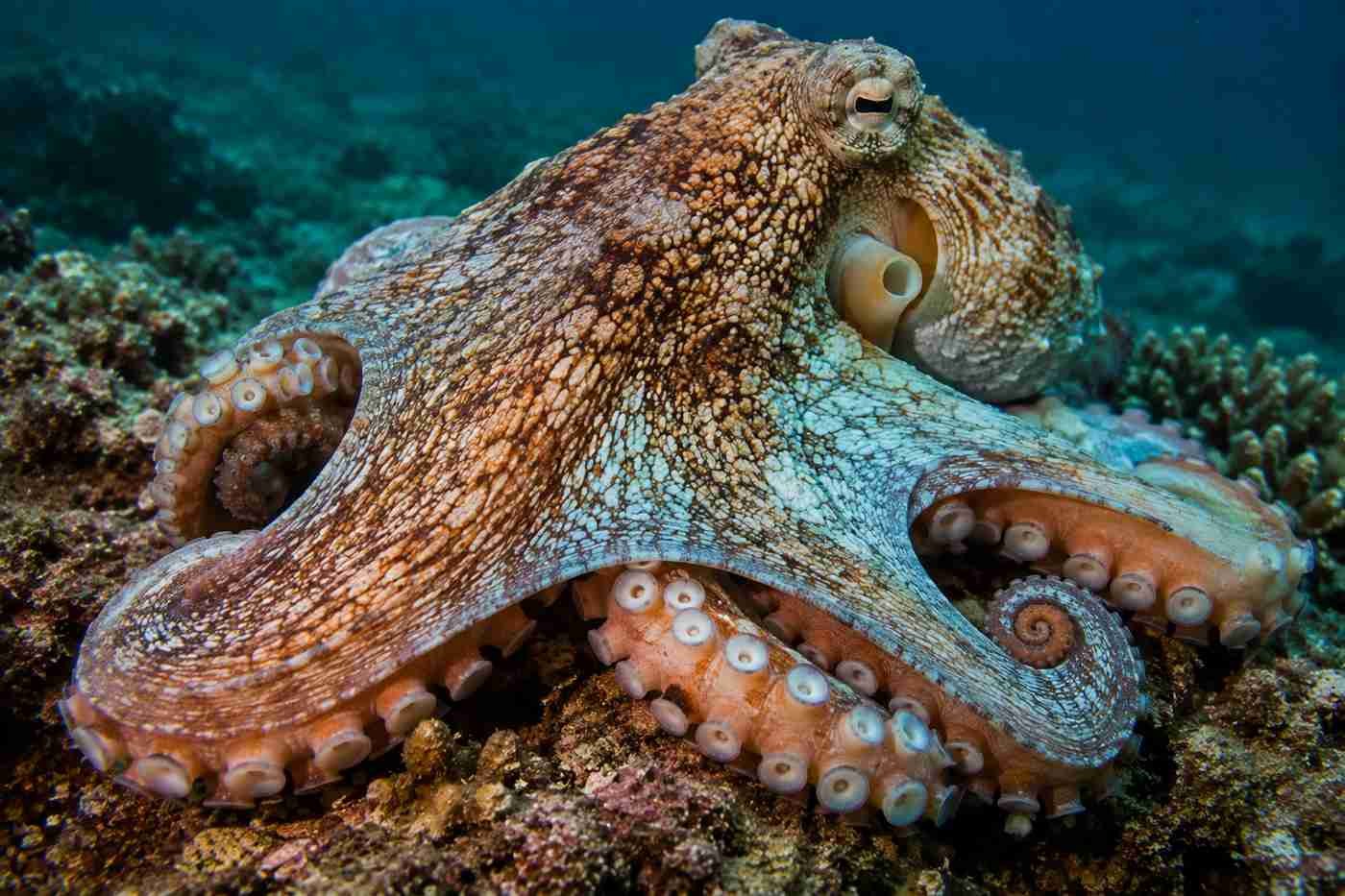
Most predators rely on some kind of built-in defense — thick scales, sharp spines, or sheer size. Octopuses have none of that. Their bodies are almost entirely soft tissue, built around a small, hard beak that’s really the only rigid part of their entire anatomy.
That flexibility is exactly what lets an octopus squeeze through a crack barely wider than its beak. But it comes at a cost. Without a shell, exoskeleton, or thick hide, an octopus is dangerously exposed to almost any predator large enough to grab it.
Eels, sharks, seals, and larger fish all prey on octopuses, and many of these hunters are faster, stronger, or better armed for a direct confrontation. Survival, for an octopus, depends far more on avoiding a fight than winning one.
How a Shell Becomes a Shield
Marine biologists who study octopus behavior describe shell use as a form of environmental tool use — using an object from the surroundings to solve a survival problem. A shell works on two levels at once.
First, it’s a physical barrier. An octopus tucked tightly inside a shell, or wrapped around one with its arms, is far harder for a predator to grab, bite, or pry open than an octopus caught out in the open.
Second, a shell breaks up the octopus’s outline. Predators often hunt by recognizing shape and movement, and a familiar-looking shell resting on the seafloor doesn’t register as prey the way an exposed, soft-bodied animal does.
Read This What Do Octopuses Eat? A Complete Look at Their Diet
The Coconut Octopus and Its Famous Shell-Carrying Habit
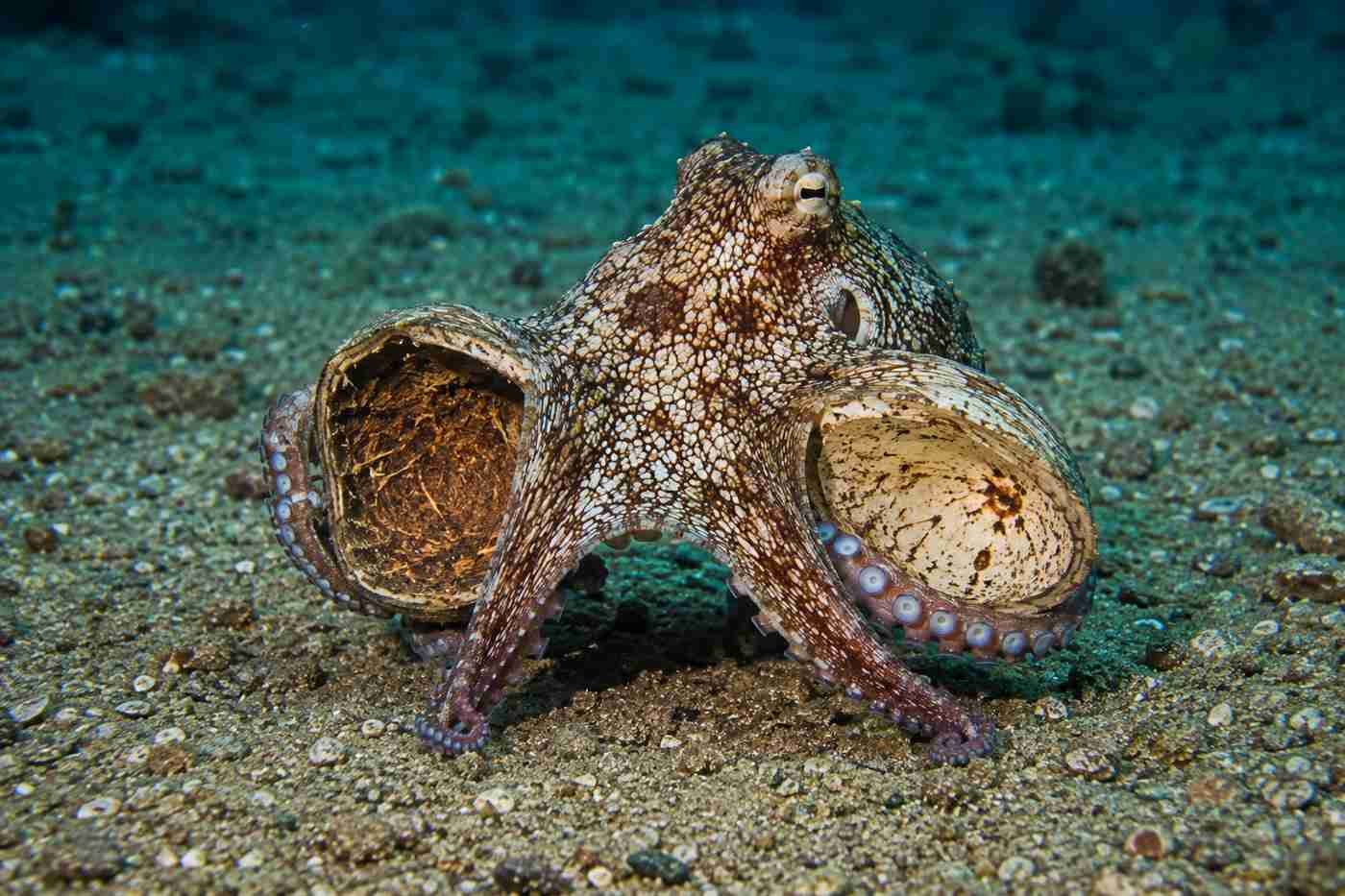
If one species made shell-hiding famous, it’s the coconut octopus (Amphioctopus marginatus), found in the shallow, sandy waters of the Indo-Pacific. Unlike most octopuses, which hide in whatever shelter happens to be nearby, coconut octopuses go a step further — they collect empty coconut shells and bivalve shells, stack them together, and carry them across open sand.
Researchers first documented this behavior in detail in the late 2000s, describing octopuses walking awkwardly on two arms while holding their shell halves against their body with the other six — essentially carrying their own portable armor to use later. When a predator approaches, the octopus simply pulls the shell halves together and disappears inside.
This kind of planning, using an object now for a benefit later, is considered unusually sophisticated for an invertebrate and has made the coconut octopus one of the most studied examples of tool use outside the animal kingdom’s typical toolmakers, like primates and birds.
Read This How Long Do Octopuses Live? A Surprising Look at Their Short Lifespan
Camouflage Versus Physical Defense
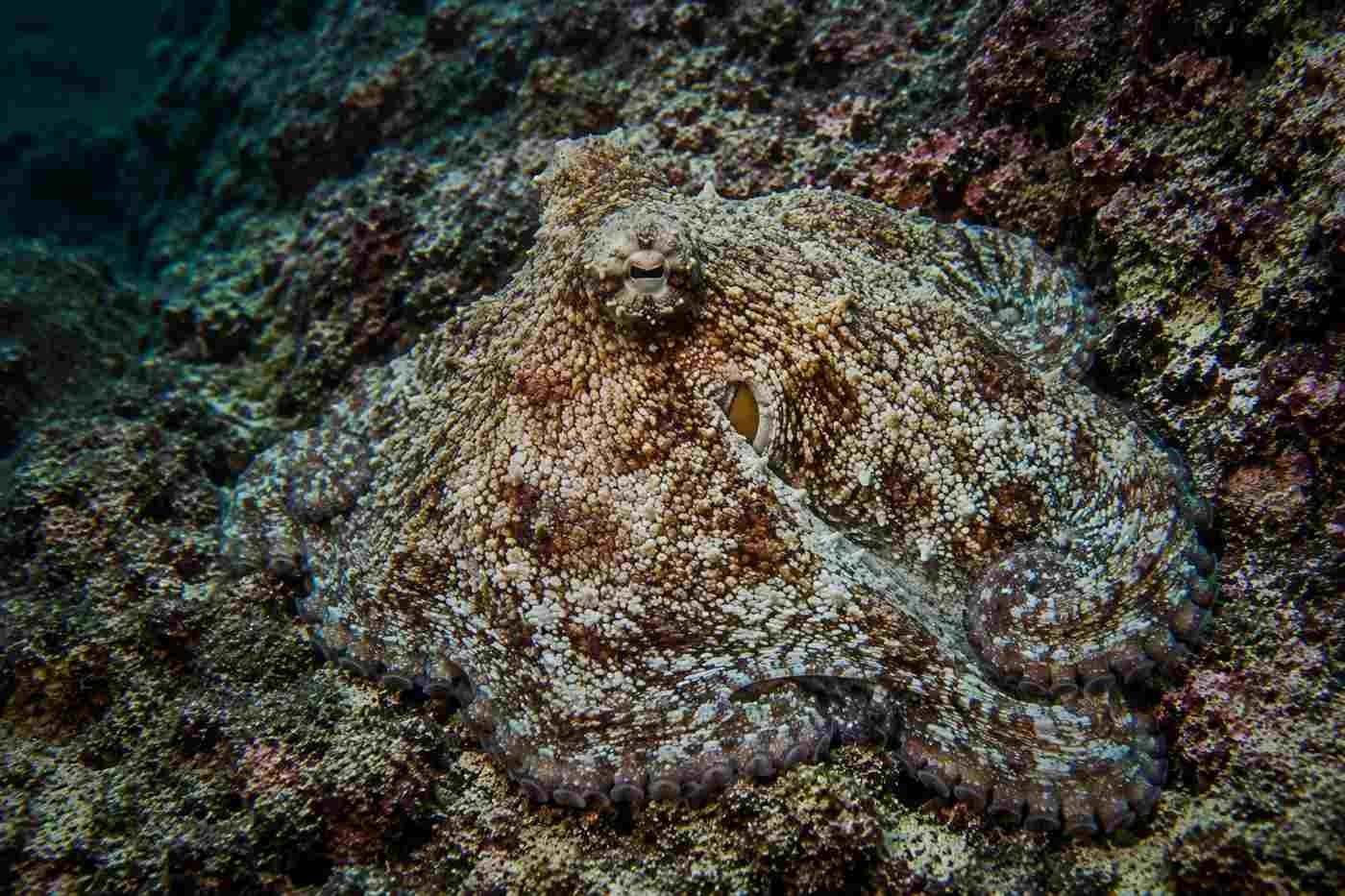
It’s worth separating two ideas that often get blended together: hiding and camouflage. Octopuses are famous for changing color and texture almost instantly, blending into rocks, coral, or sand using specialized skin cells. That’s a different survival strategy from physically hiding inside a shell.
Camouflage works while the octopus is out and exposed. Shell-hiding works when camouflage alone isn’t enough — when a predator is close, or when the octopus needs guaranteed protection rather than just visual trickery. Many octopuses use both strategies together, blending into their surroundings right up until the moment they need a shell’s harder, more reliable defense.
When Octopuses Use Shells the Most
Octopuses are largely nocturnal hunters, which means the most dangerous hours of their day happen after sunset, when many predators are also actively feeding. It’s during this window that shell-hiding and den use spike noticeably.
During daylight hours, an octopus resting in a shell is also less likely to be noticed by daytime hunters like reef fish, giving it a safe place to digest a meal or simply avoid unnecessary risk.
Read This Why Do Octopuses Squirt Ink? The Real Science Behind This Defense
Do All Octopus Species Do This?
Not every octopus species relies on shells specifically. Many prefer rocky crevices, discarded bottles, or dens they dig into sand or mud. Shell use tends to be most common in species living on soft, open seafloors, where natural rock crevices are scarce and a shell might be the only solid shelter around for meters in any direction.
In that sense, shell-hiding isn’t a universal octopus instinct so much as a smart adaptation to a specific kind of habitat — one where soft-bodied animals without natural cover have to get resourceful.
💡 Did You Know?
Coconut octopuses have been observed traveling considerable distances across open sand while carrying stacked shells, a behavior so distinctive that footage of it has been used in scientific discussions about tool use in invertebrates.
Shell Hiding vs Den Hiding
| Behavior | Shell Hiding | Den Hiding |
|---|---|---|
| Shelter type | Portable, carried object | Fixed location (rock crevice, burrow) |
| Common habitat | Open, sandy seafloors | Reefs, rocky coastlines |
| Mobility | Can move while sheltered | Must return to same spot |
| Best-known example | Coconut octopus | Common octopus |
Myth vs Fact
| Myth | Fact |
|---|---|
| Octopuses hide in shells because they’re scared of everything | They hide specifically to avoid real predation risk, not general anxiety |
| Only the coconut octopus uses objects for shelter | Many octopus species use debris, bottles, and shells opportunistically |
| Shell-carrying is just random behavior | Researchers consider it a deliberate, planned survival strategy |
| Octopuses can’t defend themselves at all | Camouflage, ink, and speed are also key defenses alongside shell use |
Quick Tips for Spotting Shell-Hiding Behavior
✓ Look for uneven or “stacked” shells resting oddly on open sand
✓ Watch quietly — sudden movement often makes the octopus retreat inside
✓ Look for a shell that seems to move slightly with no current present
✓ Dive or snorkel during early morning or dusk for the best chance of activity
✓ Never pry a shell open to look inside — it disturbs natural behavior
Frequently Asked Questions
Why don’t octopuses just grow a shell of their own?
Octopuses evolved from ancestors that gradually lost their external shells over millions of years, trading protection for flexibility and speed. That trade-off lets them squeeze into tiny spaces and outmaneuver predators, but it also means they need to find protection elsewhere, which is exactly where shells and dens come in.
Is the coconut octopus the only species that carries shells?
It’s the best-documented example, but it isn’t strictly alone. Some other octopus species opportunistically carry or reuse shells and debris for shelter, though none show the same consistent, deliberate stacking-and-carrying behavior researchers have recorded in coconut octopuses.
Can an octopus fit inside almost any shell?
Not quite. An octopus needs a shell close to its own body size, since its skin has to seal tightly enough to block a predator’s access. Too small, and it won’t fit; too large, and it won’t offer a snug, defensible seal.
Do octopuses ever fight over shells?
Competition for good shelter does happen, particularly in habitats where shells or dens are limited. An octopus that finds a well-sized shell will often defend it, especially if suitable alternatives are scarce nearby.
Conclusion
A shell might look like nothing more than empty debris resting on the seafloor, but for an octopus, it can mean the difference between being hunted and staying hidden. What looks like a simple hiding spot is really a soft-bodied survivor solving one of the ocean’s oldest problems — how to stay safe without any armor of your own.
Related Article
Why Do Octopuses Squirt Ink? The Real Science Behind This Defense
How Long Do Octopuses Live? A Surprising Look at Their Short Lifespan
What Do Octopuses Eat? A Complete Look at Their Diet

Ethan Carter is a nature enthusiast and educational writer at Wonderexplained. He creates well-researched articles about animals, oceans, weather, and the natural world, making complex topics easy to understand. His goal is to provide accurate, engaging, and reader-friendly content that inspires curiosity and lifelong learning.
