

If you’ve ever had a cat climb into your lap, stare at you for a moment, and then start pressing its paws into your legs one after another, you already know the feeling. It’s somewhere between adorable and slightly painful, especially if claws are involved.
That rhythmic paw-pressing motion is called kneading, and most cat owners have a nickname for it: making biscuits. The name comes from the way a cat’s paws push in and out of soft surfaces, almost like a baker working dough.
But why do cats do this at all? The answer goes back further than most people expect, all the way to the earliest days of a kitten’s life.
Quick Answer
Cats make biscuits because kneading is a leftover kitten instinct. Nursing kittens press their paws against their mother to stimulate milk flow. Adult cats keep the behavior because it’s now linked to comfort, safety, and relaxation, especially on soft surfaces like blankets, laps, or stuffed animals.
Key Takeaways
✔ Kneading starts in kittenhood as a way to stimulate milk during nursing
✔ Adult cats continue the behavior because it’s tied to comfort and contentment
✔ A kneading cat is usually showing trust, not distress
✔ Some cats knead harder or longer depending on personality and upbringing
✔ Purring, drooling, or “making biscuits” together are all normal signs of relaxation
✔ Kneading rarely needs to be stopped, only gently managed if claws cause discomfort
Table of Contents
- Where Kneading Actually Begins
- Why Adult Cats Keep Doing It
- What Kneading Says About Your Cat’s Mood
- Why Some Cats Knead Harder Than Others
- Why Cats Often Knead Before Sleeping
- Is Kneading Ever a Problem?
- Did You Know?
- Myth vs Fact
- Quick Tips for Kneading Cats
- Frequently Asked Questions
Where Kneading Actually Begins
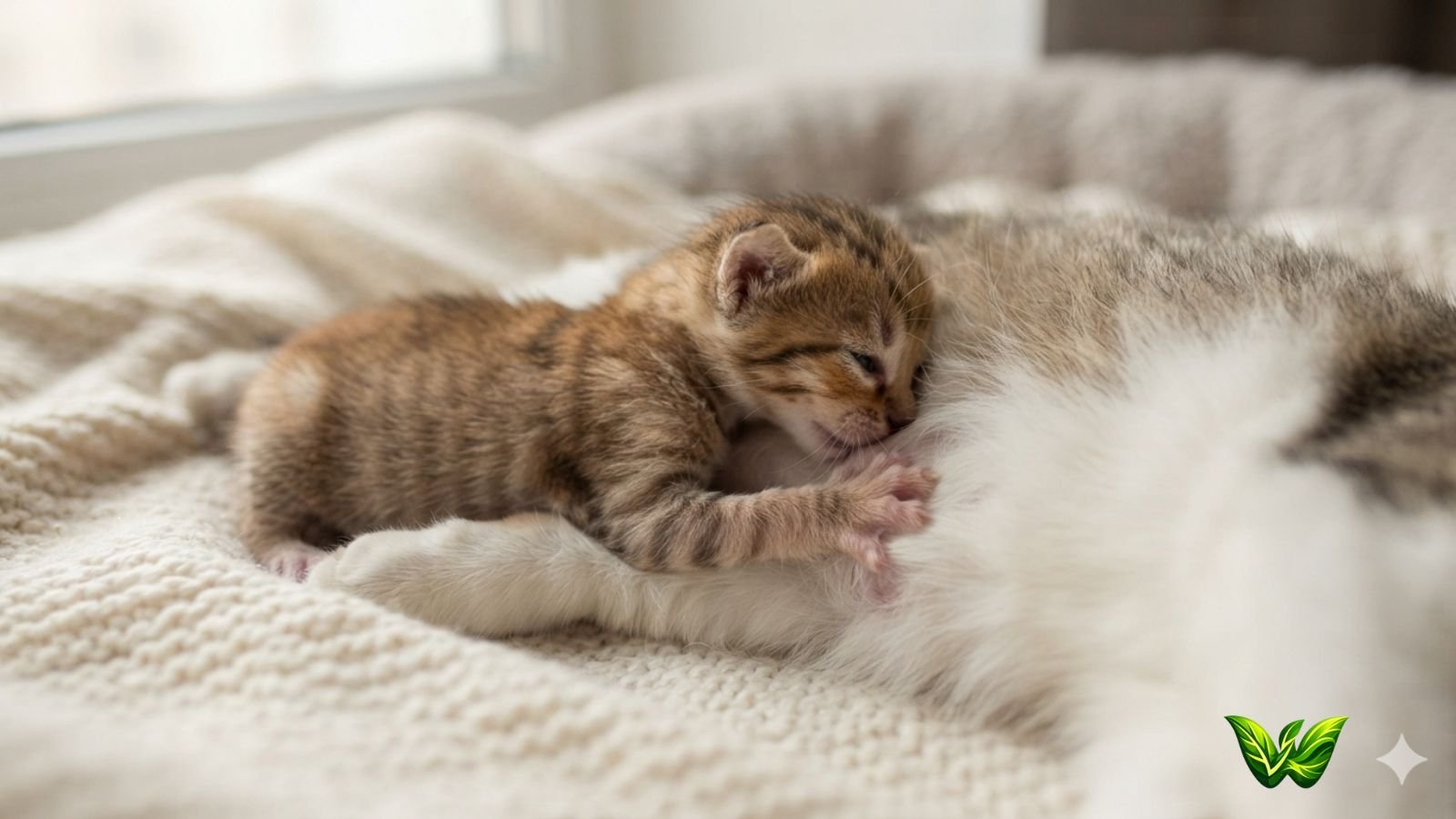
Most people assume kneading is just a quirky adult cat habit. The real story actually starts weeks before a kitten ever opens its eyes.
Newborn kittens are born blind and largely helpless, relying entirely on their mother for warmth, safety, and food. When a kitten nurses, it presses its tiny paws rhythmically against its mother’s belly. That motion helps stimulate milk flow and signals the mother’s body to keep producing it.
This isn’t something kittens are taught. It’s built in, the same way a human newborn instinctively grips a finger placed in its palm. The behavior is so consistent across kittens that veterinary behaviorists consider it one of the clearest examples of an instinctive nursing reflex in cats.
By the time a kitten is weaned, the physical need for kneading disappears. The habit, however, usually doesn’t.
Read this: Why Do Cats Stretch After Sleeping? The Real Reason Explained
Why Adult Cats Keep Doing It
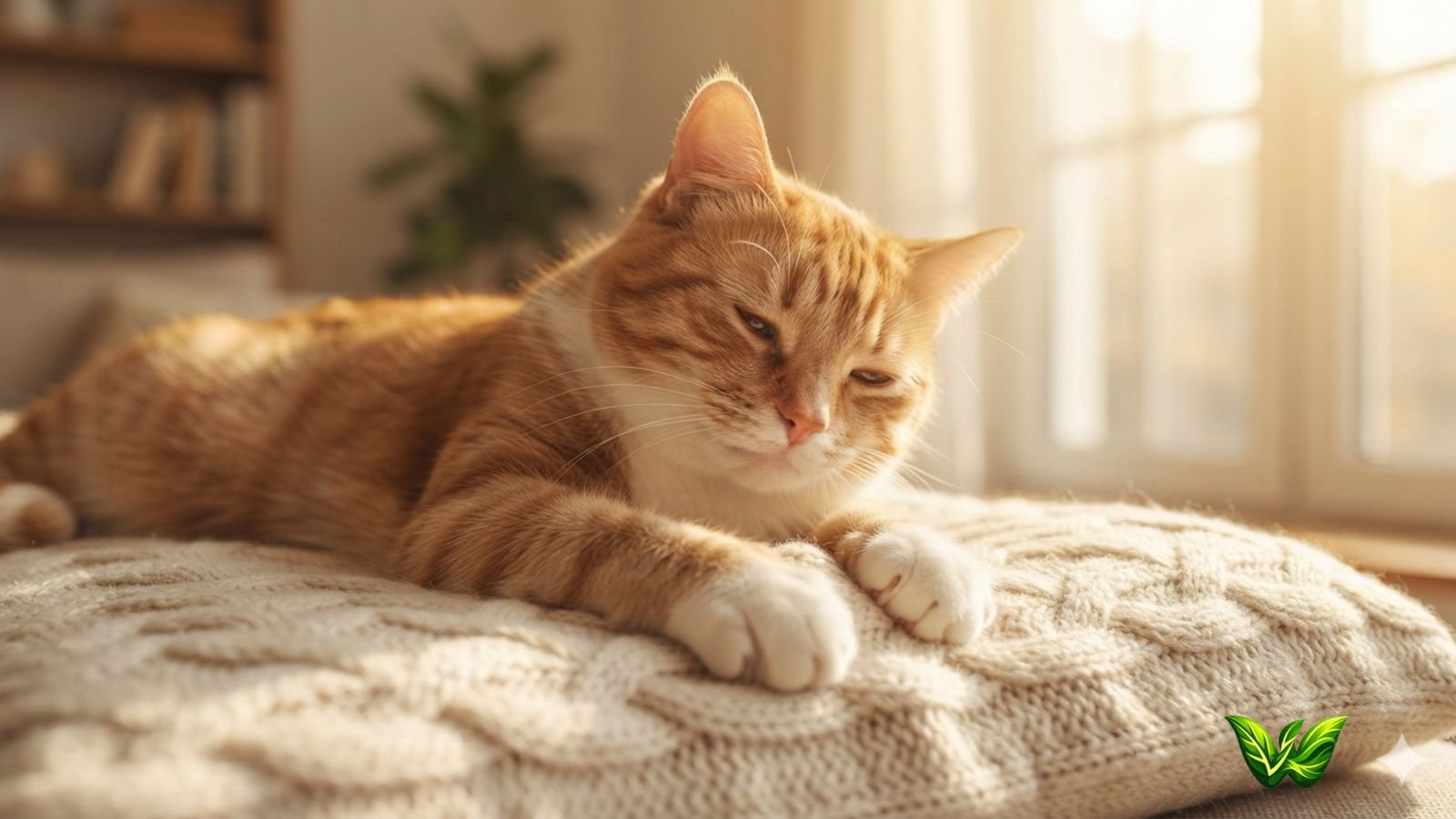
Here’s where things get more interesting. Cats don’t need to knead as adults, yet the vast majority still do it throughout their lives.
Animal behavior experts generally explain this as a conditioned association. Kneading happened during the safest, most comforting moments of a kitten’s early life, feeding, warmth, closeness to its mother. That link between kneading and feeling secure appears to stay wired into the cat’s brain long after nursing ends.
So when an adult cat kneads a blanket, a pillow, or your lap, it’s often recreating that same sense of safety. A relaxed cat slowly pressing its paws into your legs while purring is showing one of the clearest signals of comfort a cat can give.
It’s less about needing something and more about feeling like it’s exactly where it wants to be.
read this: Why Do Cats Groom Each Other? The Real Reasons Behind Allogrooming
What Kneading Says About Your Cat’s Mood
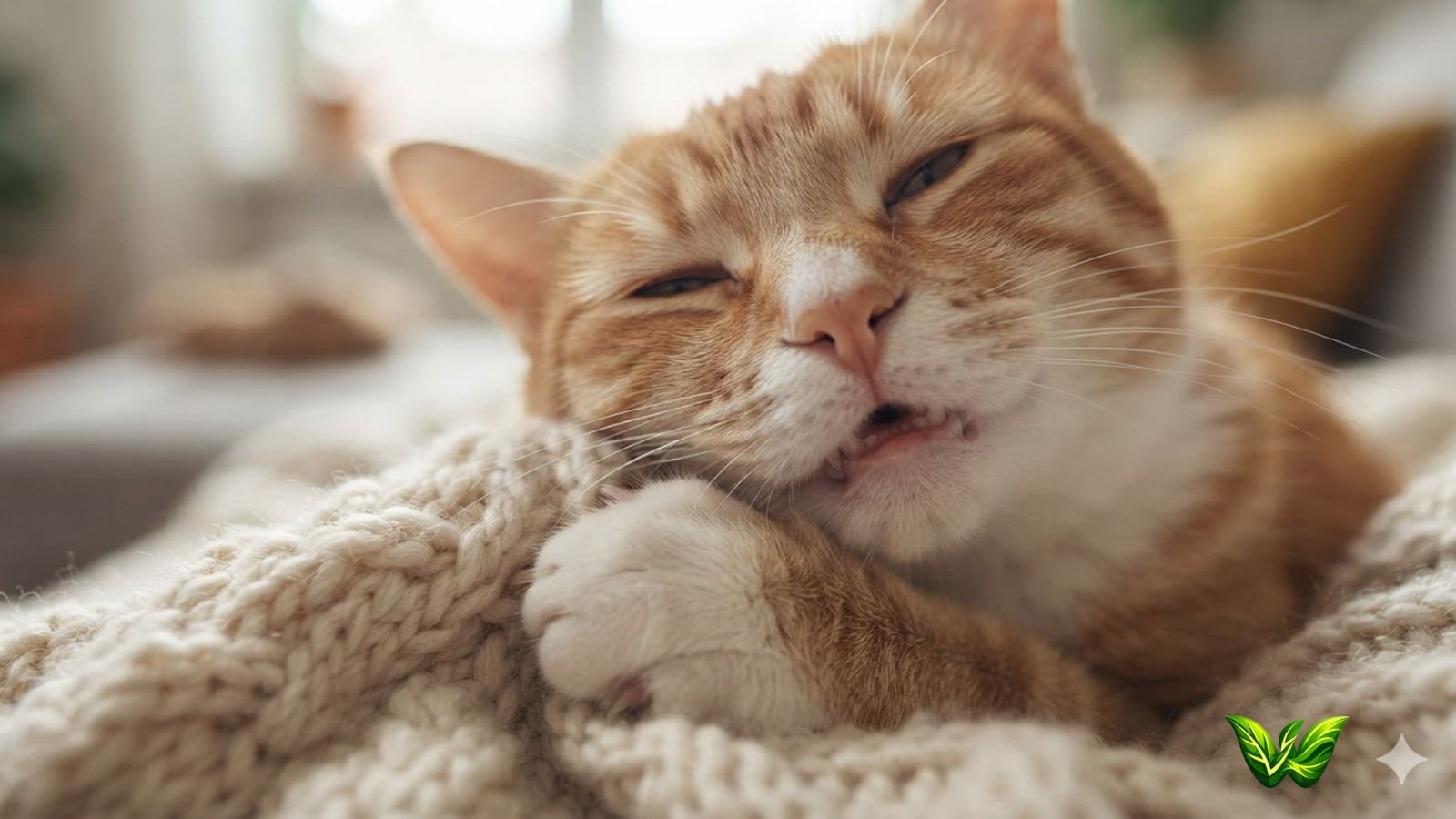
Kneading is almost always a positive sign. Cats tend to do it when they’re calm, content, and comfortable with their surroundings.
You’ll often notice a few things happening at the same time:
- Slow, rhythmic paw movements
- Purring
- Half-closed or fully closed eyes
- Occasional drooling, especially in cats that were weaned very young
- Circling before settling into a spot
That combination is essentially a cat’s version of settling in for a good moment. It’s not a warning sign or a request. It’s closer to a sigh of relief.
Some owners notice their cat kneads right before falling asleep, which lines up with the comfort connection. The behavior seems to help cats transition from an alert state into full relaxation.
Why Some Cats Knead Harder Than Others
Not every cat kneads the same way. Some barely tap their paws against a blanket. Others dig in with real force, claws included.
A few factors seem to influence this:
Weaning age. Kittens separated from their mothers very early sometimes knead more intensely and are more likely to suck on fabric alongside it, a behavior linked to incomplete nursing development.
Individual personality. Just like people have different comfort habits, cats vary in how physically expressive they get when relaxed.
Surface texture. Soft, fabric-like surfaces tend to trigger stronger kneading than firm ones, likely because they more closely resemble the feel of a mother cat’s fur or belly.
None of these variations are considered abnormal. They simply reflect how individual a cat’s early life and temperament can be.
Why Cats Often Knead Before Sleeping
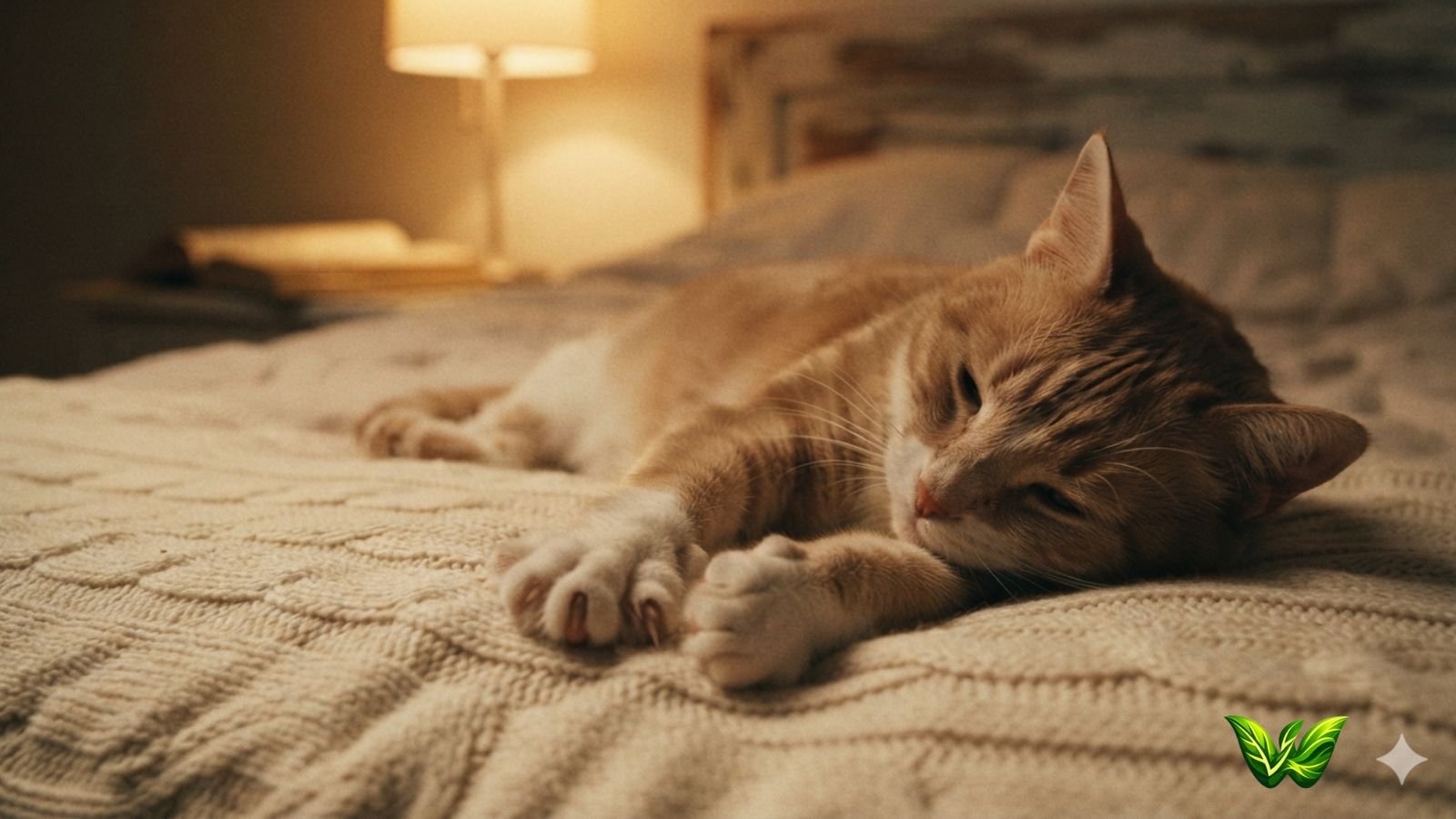
If your cat has a habit of kneading right before curling up for a nap, that’s not a coincidence either.
In the wild, cats’ ancestors would press down grass, leaves, or soft ground before lying down, partly to create a more comfortable resting spot and partly to check the area was safe. Some researchers believe modern kneading before sleep may carry a faint trace of that same instinct, even though today’s version usually plays out on a couch cushion instead of a patch of grass.
Combined with the comfort association from kittenhood, kneading before sleep essentially becomes a two-layered habit: physical nesting instinct on one side, emotional security on the other.
💡 Did You Know?
Some cats never fully outgrow the nursing reflex that goes along with kneading. It’s common for these cats to suck gently on blankets or soft toys while kneading, a leftover habit from kittens who were weaned earlier than usual.
Is Kneading Ever a Problem?
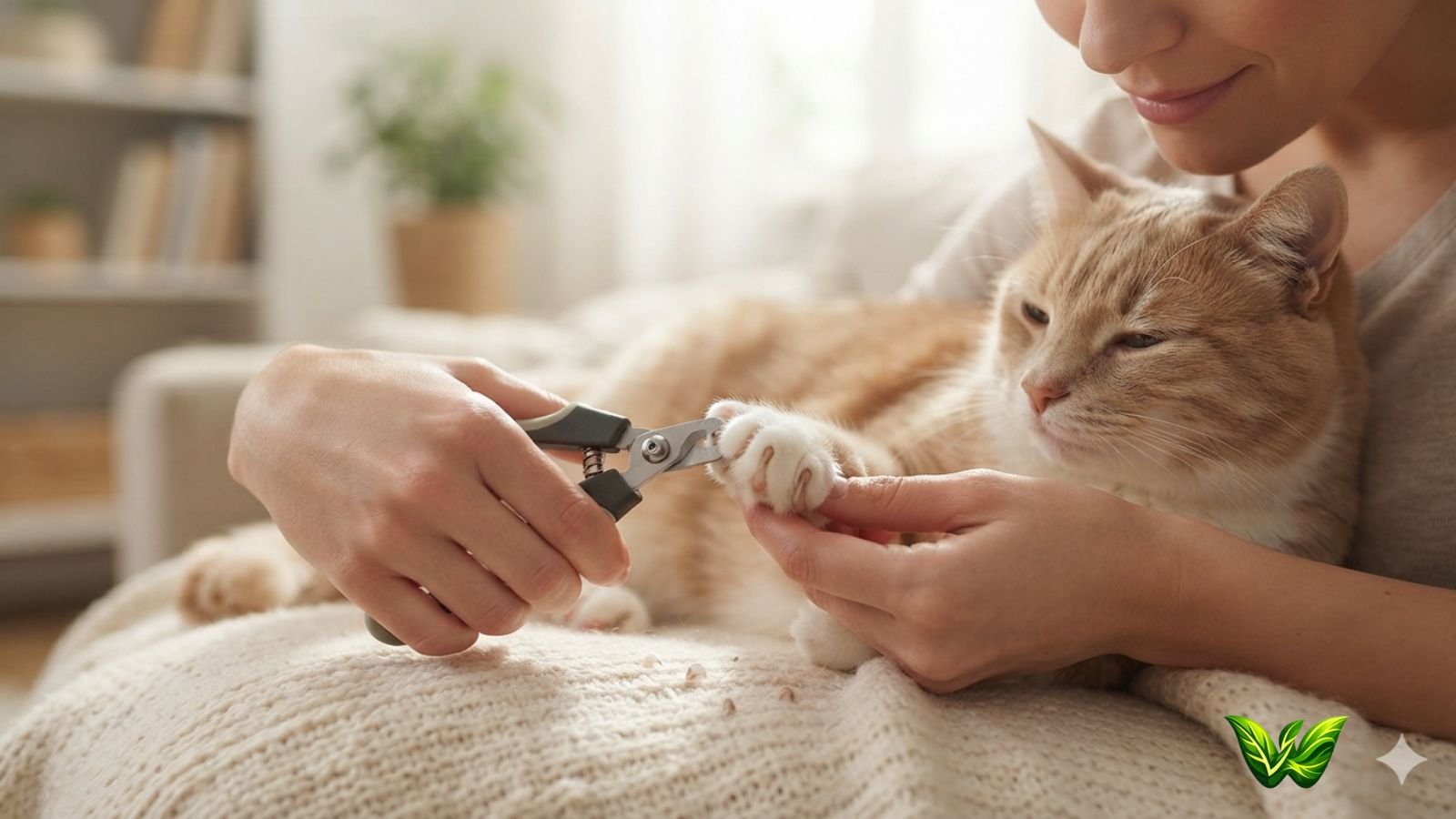
For the overwhelming majority of cats, kneading is completely normal and doesn’t need to be discouraged. It’s simply part of how a contented cat expresses itself.
That said, there are a couple of practical situations worth knowing about:
Claws and comfort. If a cat’s claws dig in during kneading, it can be uncomfortable or even mildly painful, especially on bare skin. Regular nail trims make a noticeable difference here.
Sudden changes in intensity. A cat that starts kneading unusually aggressively, or does it obsessively in a way that seems anxious rather than relaxed, may be worth mentioning to a veterinarian, simply to rule out stress-related causes. This is uncommon, but it’s a reasonable thing to keep an eye on.
Outside of those situations, kneading isn’t something that needs correcting. It’s one of the more harmless habits a cat can have.
Myth vs Fact
| Myth | Fact |
|---|---|
| Kneading means a cat is in pain | Kneading is almost always a sign of comfort and relaxation, not distress |
| Only kittens knead | Most cats continue kneading well into adulthood and old age |
| Kneading is territorial marking | While cats do have scent glands in their paws, kneading is primarily tied to comfort, not marking behavior |
| You should always stop a cat from kneading | Kneading rarely needs to be stopped, only gently managed if claws are an issue |
Quick Tips for Kneading Cats
✓ Keep your cat’s nails trimmed to reduce discomfort during kneading
✓ Offer a soft blanket or cushion your cat can knead instead of bare skin
✓ Let your cat knead undisturbed. It’s a self-soothing behavior, not a request for attention
✓ Watch for sudden changes in intensity, which can be worth mentioning to a vet
✓ Avoid punishing or discouraging kneading. It’s a natural and healthy behavior
Frequently Asked Questions
Why do cats make biscuits with their paws?
Cats make biscuits because kneading is a carryover instinct from nursing as kittens. Pressing their paws rhythmically once helped stimulate milk flow from their mother, and the motion became associated with comfort and safety, a connection that stays with most cats into adulthood.
Do all cats knead?
Most cats knead at some point in their lives, though the intensity and frequency vary quite a bit between individuals. Some cats knead daily, while others do it only occasionally, usually right before settling in to rest.
Why does my cat knead and then bite?
A gentle nip after kneading is usually a sign your cat has reached its comfort threshold rather than a sign of aggression. Cats sometimes shift from relaxed kneading into light overstimulation, especially during long petting sessions, and a soft bite is their way of signaling that.
Why do cats knead before lying down?
This is often linked to a nesting-style instinct passed down from wild ancestors, who would press down grass or soft ground before resting. Paired with the comfort association from kittenhood, many cats use kneading as part of their pre-sleep routine.
Is it bad if my cat kneads too hard?
Hard kneading isn’t harmful to your cat, though it can be uncomfortable for you if claws are involved. Keeping nails trimmed and offering a blanket as a buffer usually solves the issue without needing to discourage the behavior itself.
Conclusion
Kneading might look like a strange little quirk, but it’s really a window into your cat’s earliest experiences. Every gentle paw press carries a bit of kittenhood with it, a habit that once meant survival and now simply means your cat feels safe.
The next time your cat curls up and starts making biscuits on your lap, you’ll know exactly what that means. It isn’t confusion or restlessness. It’s your cat telling you, in the only language it has, that this is exactly where it wants to be.
References
Cornell Feline Health Center
ASPCA
American Association of Feline Practitioners
Related Articles
Why Do Cats Stretch After Sleeping? The Real Reason Explained
Why Do Cats Groom Each Other? The Real Reasons Behind Allogrooming

Ethan Carter is a nature enthusiast and educational writer at Wonderexplained. He creates well-researched articles about animals, oceans, weather, and the natural world, making complex topics easy to understand. His goal is to provide accurate, engaging, and reader-friendly content that inspires curiosity and lifelong learning.

3 thoughts on “Why Do Cats Make Biscuits? The Real Reason Behind Kneading”