

You walk past the couch, glance over, and there’s your cat — tail wrapped around its nose, paws tucked somewhere you can’t quite find, folded into a shape that barely looks like a cat anymore. It’s one of the most familiar sights in any cat owner’s home, yet most people never stop to ask why do cats curl up in a ball while they sleep. The answer isn’t just “cats like being cozy.” There’s real biology behind it, and some of it traces back millions of years before your cat ever curled up on your couch.
Quick Answer
Cats curl up in a ball mainly to conserve body heat and protect vital organs while they sleep. This instinct comes from their wild ancestors, who needed to stay warm and stay safe from predators even during rest. The tucked position shields the belly, minimizes exposed surface area, and helps a cat feel secure enough to fully relax.
Key Takeaways
✔ Curling into a ball helps cats conserve body heat by reducing exposed surface area
✔ The pose protects the stomach and other vulnerable organs from potential threats
✔ This behavior is an inherited survival instinct, not a learned habit
✔ Cats are more likely to curl up in cooler temperatures or unfamiliar environments
✔ A tightly curled cat is usually in a deeper, more relaxed stage of sleep
✔ The position allows for a fast defensive reaction if the cat senses danger
Table of Contents
- The Ancient Instinct Behind the Curl
- How Curling Up Helps Cats Stay Warm
- Protecting Vulnerable Body Parts
- Does Curling Up Mean Your Cat Feels Safe?
- Temperature and Environment Play a Bigger Role Than You’d Think
- Curled Ball vs. Stretched Out: What Each Position Really Means
- Myth vs Fact
- Quick Tips for Reading Your Cat’s Sleeping Position
- Frequently Asked Questions
The Ancient Instinct Behind the Curl
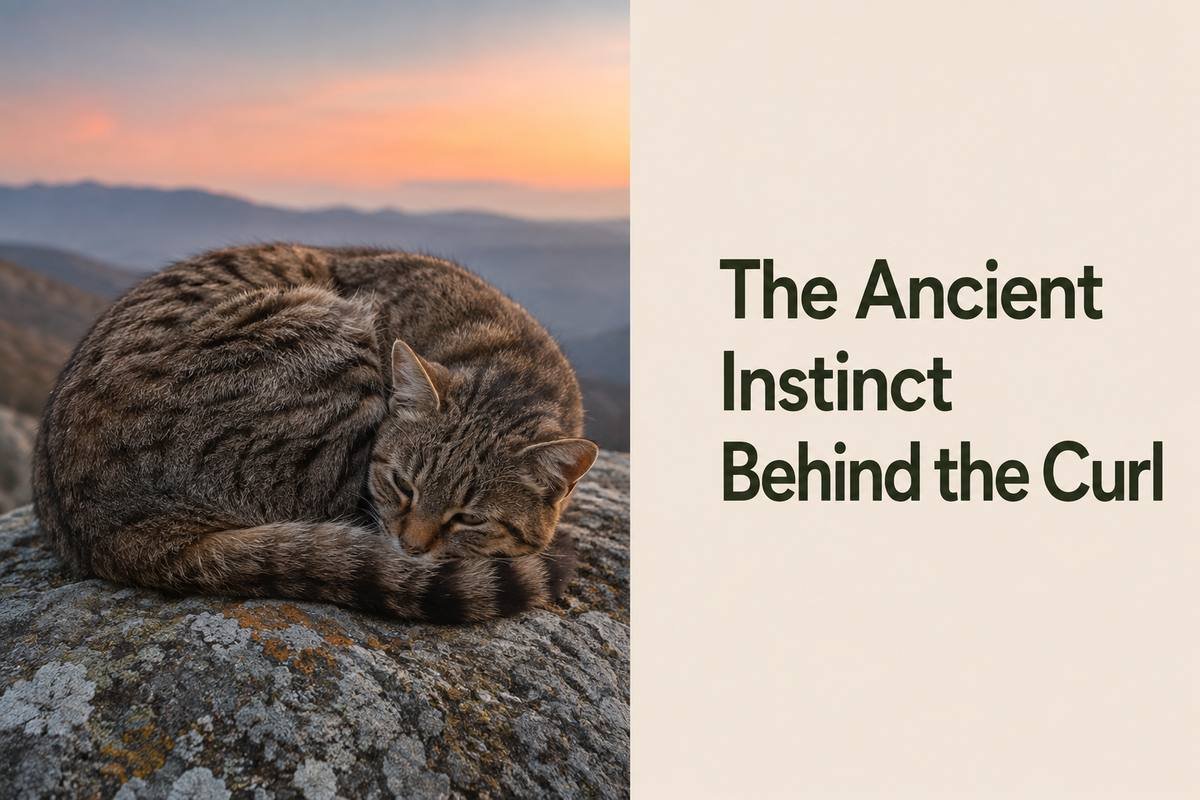
Most people assume this pose is just a comfort thing, something cats picked up because it feels nice. The real story actually begins long before any cat ever curled up on a sofa cushion.
Domestic cats descend from small wild felines that lived in exposed environments with real predators around every corner. Sleep is a vulnerable state for any animal, and a cat sprawled out flat is an easy target. Curling into a tight ball solves two problems at once: it keeps the body warm, and it keeps the soft, unprotected areas tucked out of reach.
This instinct never disappeared, even though most house cats today have nothing to fear from a napping spot on the windowsill. Evolution moves slowly, and behavior shaped over thousands of generations doesn’t vanish just because the environment changed.
Read This Why Do Cats Make Biscuits? The Real Reason Behind Kneading
How Curling Up Helps Cats Stay Warm
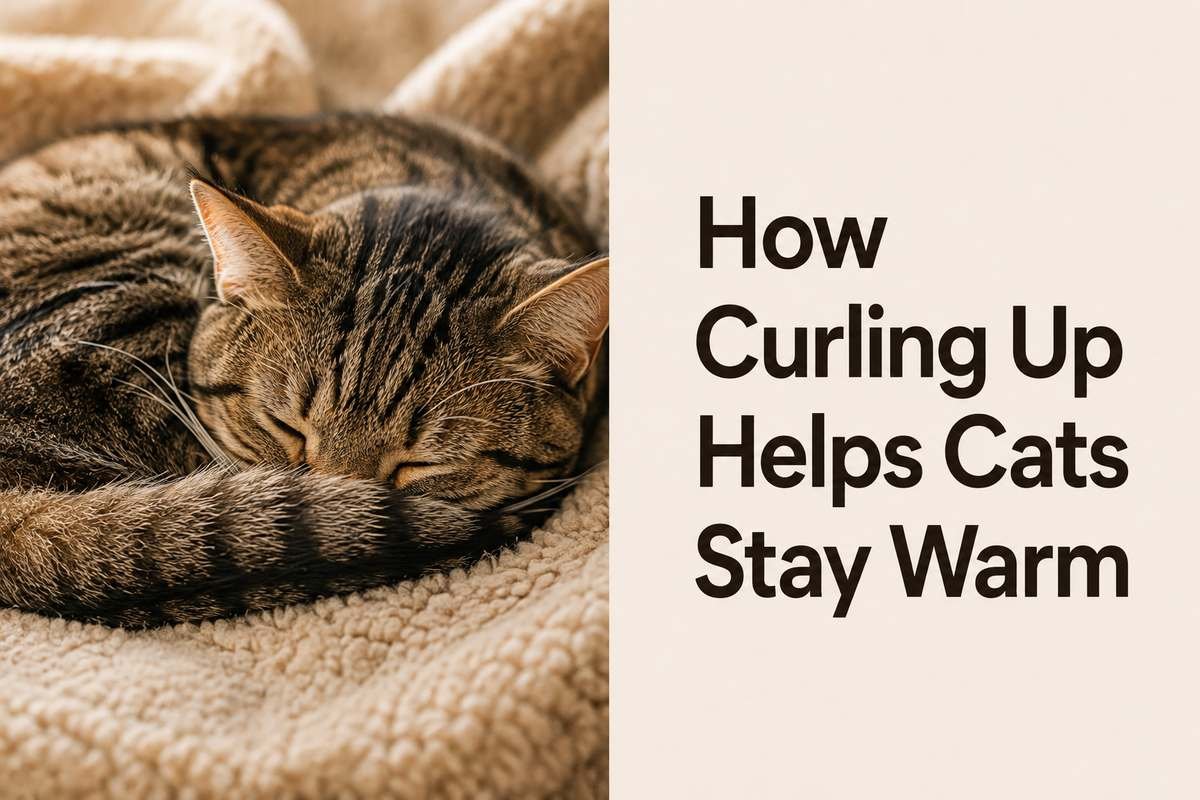
Here’s where things get more interesting. A cat’s body loses heat fastest through areas with the least fur coverage and the most blood flow close to the skin — the belly, the paws, the nose.
When a cat curls into a ball, it dramatically reduces the amount of surface area exposed to the surrounding air. The tail wraps around the face, often covering the nose, which is one of the primary spots where body heat escapes. The paws tuck underneath the body instead of stretching out into cooler air.
Veterinary behaviorists note that this heat-conservation strategy becomes especially noticeable in cooler rooms. A cat sleeping in a warm sunbeam will often stretch out completely, belly exposed, totally relaxed. Move that same cat to a chilly hallway, and within minutes it will likely tighten into a ball instead.
Read This Why Do Cats Groom Each Other? The Real Reasons Behind Allogrooming
Protecting Vulnerable Body Parts
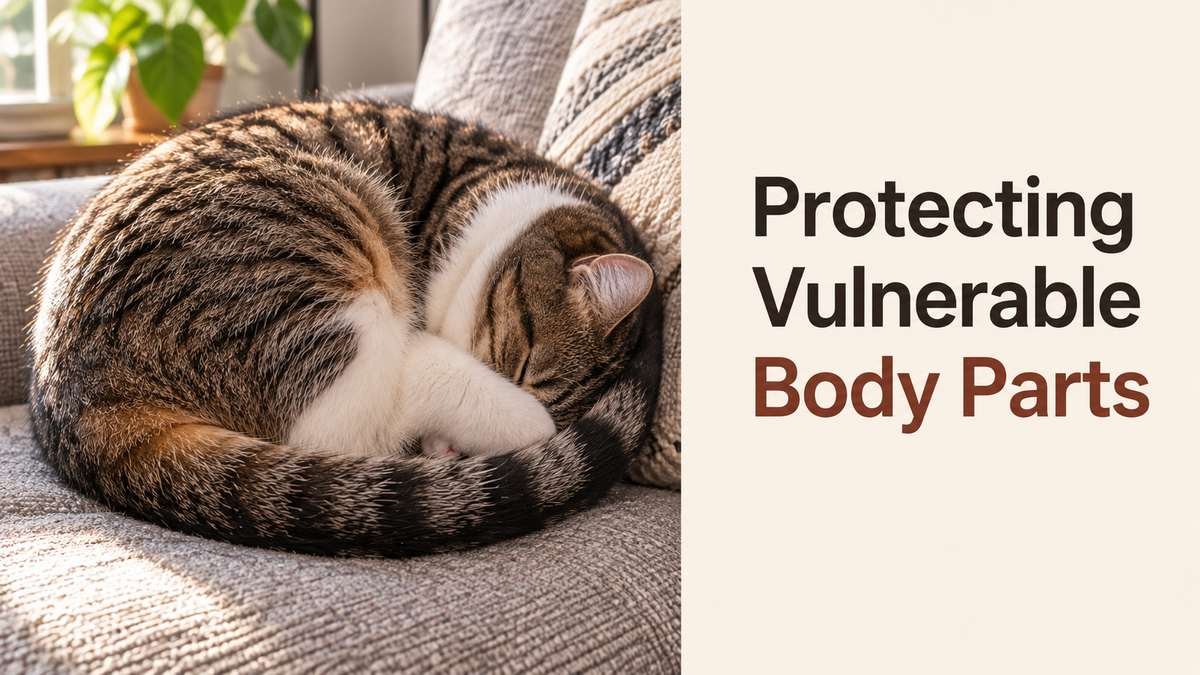
A cat’s stomach isn’t just soft to the touch — it’s also where many of its most important organs sit, largely unprotected by bone or thick muscle. In the wild, an exposed belly is a serious weak point during a fight or a surprise attack.
Curling into a ball tucks the stomach inward and shields it with the cat’s own body. The paws and face, which a cat relies on for fighting, fleeing, or sensing danger, stay protected and ready to move the moment something feels off.
This explains why even the most pampered, entirely indoor house cat still curls up tightly to sleep. The threats that shaped this behavior may be long gone from its daily life, but the wiring behind the instinct hasn’t caught up.
💡 Did You Know?
A cat’s body temperature actually drops slightly during deep sleep, similar to what happens in humans. Curling into a ball helps offset that natural dip, which is part of why cats seek out the position even in a warm house.
Read This Why Do Cats Stretch After Sleeping? The Real Reason Explained
Does Curling Up Mean Your Cat Feels Safe?
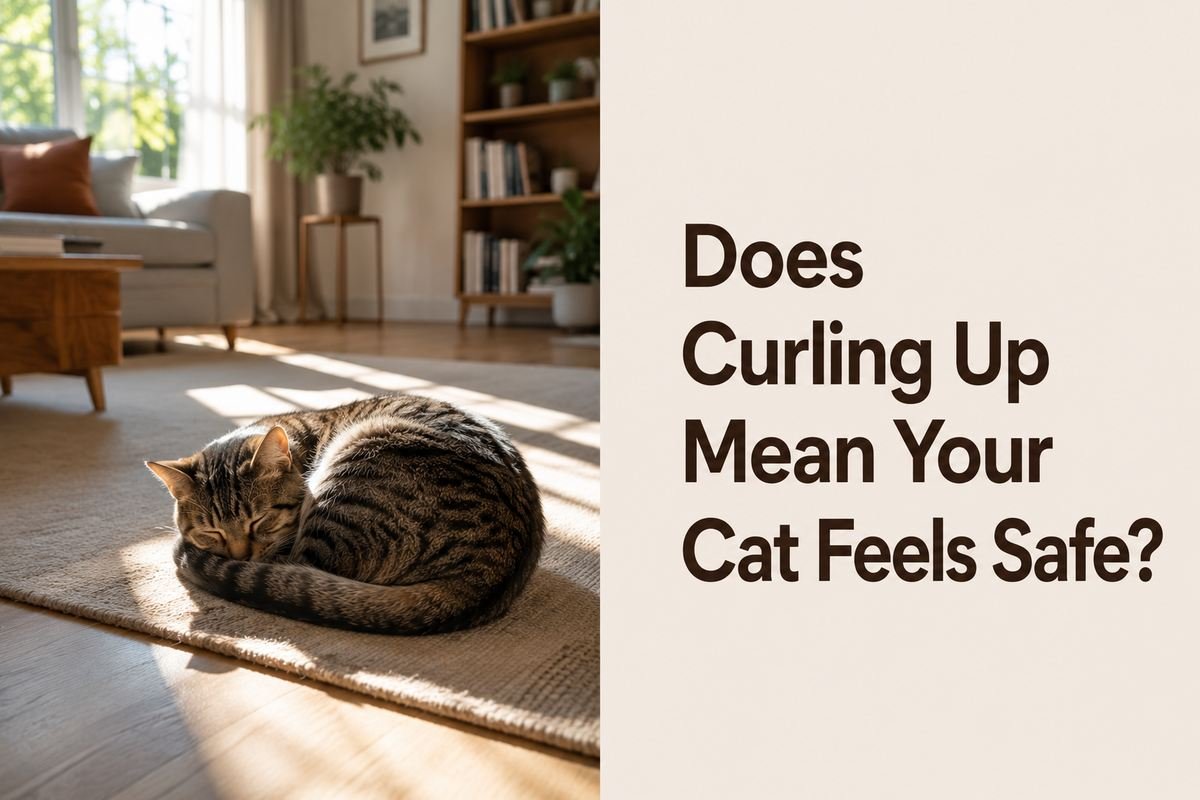
This is where the curled-ball position tells you something a little more personal about your cat’s state of mind. A cat that curls up tightly in the middle of an open room, fully committed to a deep sleep, is usually a cat that feels secure in that space.
Cats rarely enter a vulnerable position unless they trust their surroundings. A curled-up cat with slow, steady breathing and closed or half-closed eyes has typically settled into a lighter or deeper sleep cycle, not just a quick rest. Contrast that with a cat perched upright on a shelf, eyes half open, ears swiveling — that’s a cat monitoring its environment, not fully letting its guard down.
So while the ball shape is largely about temperature and protection, where and how confidently your cat curls up can also reflect how comfortable it feels in that exact moment.
Temperature and Environment Play a Bigger Role Than You’d Think
Many owners assume their cat’s sleeping position is random. It rarely is. Cats are remarkably responsive to subtle shifts in room temperature, and their sleeping posture often shifts right along with it.
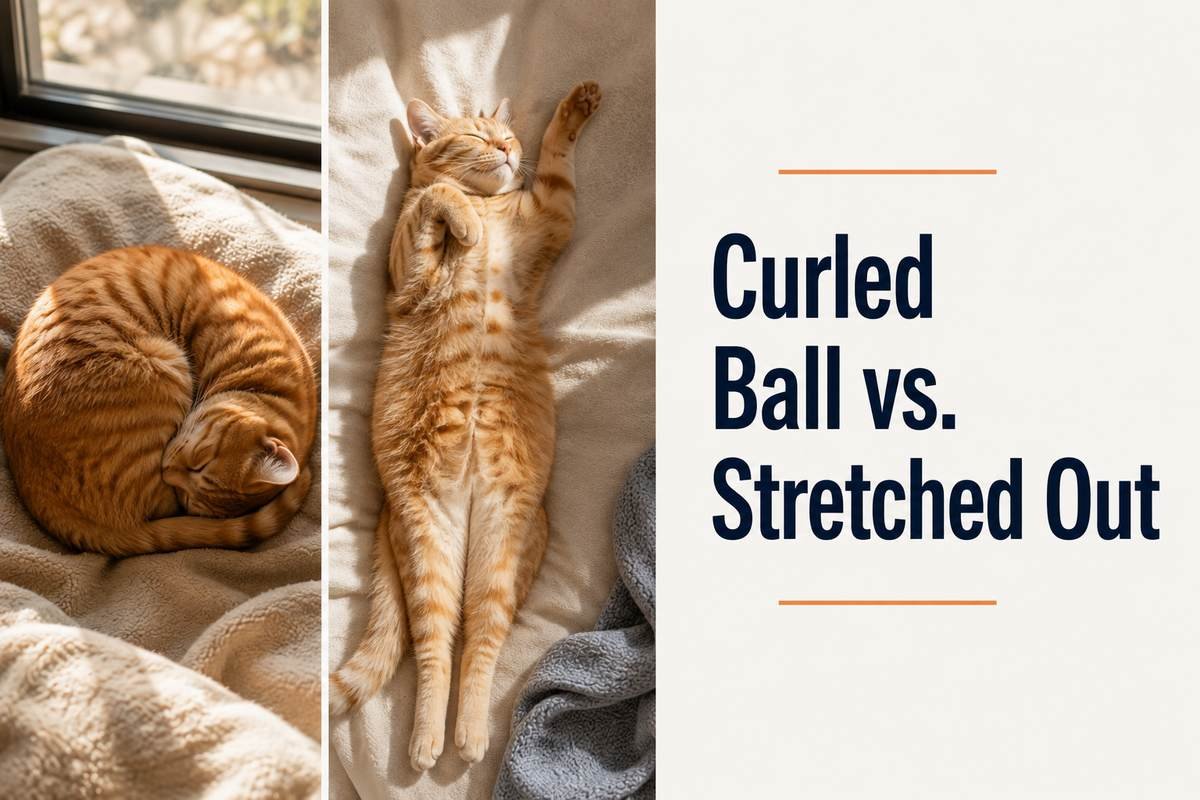
On a cold morning, you’ll likely find your cat wedged into the tightest possible ball, often in a spot that traps warmth, like a folded blanket or a sunlit patch of carpet. On a warm afternoon, that same cat might stretch out fully, paws extended, belly exposed to the air to help release excess heat.
New or unfamiliar environments can trigger the curled position too, even in a comfortably warm room. A cat visiting the vet, adjusting to a new home, or sleeping somewhere unfamiliar will often default to the tucked, protected posture simply because it feels less exposed than sprawling out.
Curled Ball vs. Stretched Out: What Each Position Really Means
| Sleeping Position | What It Usually Means |
|---|---|
| Tight curled ball | Conserving heat, feeling slightly cautious, or in a cooler environment |
| Loose curl (paws visible) | Comfortable and relaxed, but still mildly alert |
| Fully stretched out, belly up | Deep trust, warm environment, complete relaxation |
| Curled with tail over face | Blocking light or cold air, often a deeper sleep stage |
| Upright, “loaf” position | Light rest, ready to react quickly if needed |
Myth vs Fact
Quick Tips for Reading Your Cat’s Sleeping Position
✓ Notice the room temperature — a tighter curl often means your cat is cooler than you’d expect
✓ Watch where your cat chooses to curl up; sunny or enclosed spots suggest a warmth or comfort need
✓ A cat that stretches out fully around you is showing genuine trust
✓ Sudden changes in sleeping posture, especially tighter curling than usual, can be worth mentioning to your vet if paired with other symptoms
✓ Offering a warm, enclosed bed can give an anxious or elderly cat the same security the curled position naturally provides
Frequently Asked Questions
Why does my cat cover its face with its tail while sleeping?
Covering the face with the tail helps block out light and trap warm air near the nose, one of the areas where cats lose heat fastest. It’s largely an instinctive way to stay warmer and slightly shielded while asleep.
Do kittens curl up in a ball more than adult cats?
Kittens often curl up instinctively from a very young age, partly because they have less body fat to retain heat and rely more heavily on this posture for warmth, especially before they’re fully weaned.
Is it bad if my cat never curls up to sleep?
Not necessarily. Some cats simply prefer stretched-out positions, especially in warm homes or if they feel completely secure. However, a noticeable and sudden change in typical sleeping posture is worth monitoring alongside any other behavioral changes.
Why do cats curl up more in winter?
Lower temperatures increase a cat’s need to conserve body heat, so curling tightly into a ball becomes more common as the surrounding air gets colder, even indoors with heating running.
Can stress make a cat curl up more often?
Yes. A cat adjusting to a new environment, a stressful event, or an unfamiliar situation may curl up more frequently, since the position naturally offers a greater sense of protection and reduced exposure.
Conclusion
That tight little ball on the couch isn’t just an adorable coincidence. It’s a habit passed down from ancestors who needed every bit of warmth and protection they could get during a vulnerable moment. Your cat may never face a real predator, but its body still remembers what it once needed to survive.
Related Article
Why Do Cats Groom Each Other? The Real Reasons Behind Allogrooming
Why Do Cats Stretch After Sleeping? The Real Reason Explained
Why Do Cats Make Biscuits? The Real Reason Behind Kneading

Ethan Carter is a nature enthusiast and educational writer at Wonderexplained. He creates well-researched articles about animals, oceans, weather, and the natural world, making complex topics easy to understand. His goal is to provide accurate, engaging, and reader-friendly content that inspires curiosity and lifelong learning.

1 thought on “Why Do Cats Curl Up in a Ball? The Real Reason Behind This Sleeping Position”