

Anyone who’s watched dolphins from a boat or a shoreline has likely seen it: a sleek gray body arcing out of the water, sometimes low and quick, sometimes launching high enough to fully clear the surface before crashing back down. Why Do Dolphins Jump Out of Water is a common question among people who witness this fascinating behavior. It’s one of the most recognizable ocean behaviors there is, and it’s tempting to read a single meaning into it, whether that’s joy, play, or simply showing off. Researchers who study dolphin behavior generally describe it differently: jumping appears to serve several distinct purposes, and the same basic motion likely means different things depending on the situation, the species, and even the individual dolphin involved.
This article breaks down the leading, evidence-supported explanations for why dolphins jump, without assuming that every leap has the same underlying cause.
What Is It Called When Dolphins Jump Out of Water?

Dolphin jumping behavior actually covers a few related but distinct movements, each with its own name among researchers. Porpoising refers to the low, fast, repeated arcing leaps dolphins make while swimming quickly at the surface, and it’s the most commonly observed form of jumping, particularly during travel. Breaching describes a fuller, higher jump in which a dolphin clears most or all of its body from the water before falling back, often with a larger splash.
According to research published on bottlenose dolphin behavior, including a widely cited study examining dolphins in Doubtful Sound, New Zealand, jumping-related behaviors like breaching have been associated with a range of possible functions, including foraging, visual communication, orientation, and social behaviors such as play or courtship, rather than a single uniform purpose.
Why Do Dolphins Jump to Communicate With Each Other?
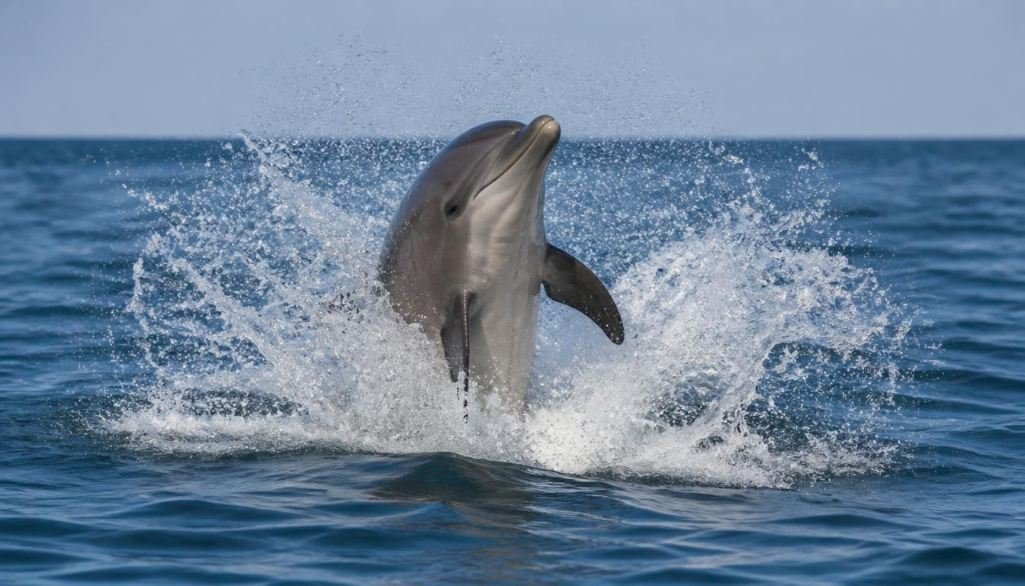
One of the most frequently cited explanations for dolphin jumping, particularly full breaches, involves communication. When a dolphin breaches and lands back in the water, it creates a loud slapping sound that can travel a significant distance both above and below the surface. Some researchers suggest this sound may function as a long-range signal, potentially helping to coordinate the movement of a scattered pod, alert other dolphins to nearby prey, or communicate a change in direction or activity.
It’s important to note that while this communication-related explanation is widely discussed, dolphin breaching hasn’t been definitively linked to one specific, universally agreed-upon message. Researchers generally describe it as a plausible and reasonably well-supported function among several, rather than a confirmed, singular purpose behind every jump.
Read This Why Are Whales Endangered? The Real Reasons Explained
Do Dolphins Jump to Get Rid of Parasites and Dead Skin?
This is a commonly proposed explanation, particularly for higher, more forceful breaches. The idea is that the impact of hitting the water’s surface after a jump may help dislodge external parasites, such as remoras or barnacles, or loose, dead skin from a dolphin’s body, potentially reducing drag and improving swimming efficiency over time.
While this explanation is frequently mentioned by marine biologists and appears biologically plausible, it’s generally considered one of several possible contributing factors rather than a definitively proven primary cause, since isolating parasite removal as the specific motivation behind any individual jump is difficult to confirm through direct observation alone.
Is Jumping Faster for Dolphins Than Swimming?
In a specific sense, yes, jumping can be more energy-efficient than swimming at very high speeds, which is the underlying explanation for porpoising. Water is significantly denser than air, meaning that pushing through water at high speed requires considerably more muscular effort than briefly moving through air during a low leap. When dolphins are swimming quickly, particularly during long-distance travel, porpoising, repeatedly leaping in short, low arcs, allows them to reduce the drag they’d otherwise experience by staying fully submerged at that same speed.
This energy-efficiency explanation is one of the more scientifically well-supported reasons for dolphin jumping specifically related to porpoising, since it’s grounded in straightforward physical principles about the difference in resistance between water and air, rather than behavioral interpretation alone.
Read This How Long Do Whales Live? Lifespan by Species (Full Guide)
Why Do Dolphins Jump to Hunt Fish and Find Prey?

Jumping and leaping behaviors are sometimes associated with hunting and feeding activity, particularly when dolphins are working together to corral fish into a tight group, often called a bait ball, near the surface. In these situations, jumping may help dolphins maintain speed while pursuing fast-moving prey, and the resulting splash or noise may also help disorient or startle fish, making them easier to catch.
Additionally, dolphins hunting cooperatively in a group may use jumping as part of coordinating their movements relative to the prey and to each other, though the specific role jumping plays in coordinating group hunts likely varies depending on the species, environment, and specific hunting strategy being used.
Do Dolphins Jump to See What’s Above the Water?
This is a plausible explanation supported by basic sensory logic, though it’s difficult to confirm with certainty through direct observation. Briefly jumping above the surface gives a dolphin a momentary aerial vantage point it wouldn’t otherwise have while swimming at or below the surface, potentially allowing it to visually locate nearby landmarks, other pods, surface-feeding birds (which can indicate schools of fish below), or the position of boats.
Because dolphins primarily rely on echolocation, using sound to sense their underwater environment, rather than vision as their primary sensory tool, jumping to visually scan the surroundings above water may serve as a supplementary way of gathering information that echolocation alone can’t provide. This remains a reasonable, frequently cited explanation rather than one confirmed through controlled scientific testing.
Read This Why Do Whales Breach? The Leading Theories Explained
Why Do Dolphins Jump Near Boats and Humans?
Dolphins jumping or riding the wake near boats is a commonly observed behavior, particularly among species like bottlenose dolphins. Several explanations have been proposed, including that boat wakes may offer a similar energy-saving benefit to natural wave-riding behavior, allowing dolphins to move through the water with reduced effort by using the pressure wave generated by a moving boat.
It’s also been suggested that this behavior may reflect social or exploratory interest, since dolphins are known to investigate novel objects and situations in their environment. It’s worth being cautious here, though: while dolphins approaching or jumping near boats is common and generally considered normal behavior rather than a sign of distress, attributing specific motivations like “curiosity” or “excitement” to individual dolphins reflects reasonable behavioral interpretation rather than a confirmed internal emotional state, since directly measuring an animal’s subjective experience isn’t something current science can do with certainty.
Frequently Asked Questions
Do all dolphin species jump for the same reasons?
Not necessarily, since jumping behavior and its likely function can vary by species, environment, and individual context, meaning a leap from a bottlenose dolphin traveling in open water may serve a different purpose than a leap from a dolphin herding fish near shore.
Is a jumping dolphin always healthy and not in distress?
Generally, jumping and breaching are considered normal, common behaviors in healthy dolphins, though marine biologists note that repetitive or unusual jumping patterns in captivity, for example, may sometimes reflect different underlying factors that aren’t fully understood.
Why do some dolphins jump higher than others?
Jump height can vary based on a dolphin’s speed, size, physical condition, and the specific purpose of the leap, with higher breaches generally requiring more energy than the low, repeated arcs seen during porpoising.
Do baby dolphins jump the same way adult dolphins do?
Young dolphins are commonly observed practicing jumping and other physical behaviors as part of normal development, though direct comparisons of technique or purpose between calves and adults require further study to characterize precisely.
Can dolphin jumping be used to predict weather or fish activity?
While some traditional and anecdotal observations link dolphin activity to nearby fish schools, there isn’t strong scientific evidence supporting dolphin jumping as a reliable predictor of weather conditions specifically.
Conclusion
Dolphin jumping isn’t a single behavior with one fixed explanation; it’s a range of related movements, proposing, breaching, and other leaps that likely serve different purposes depending on the situation. Energy efficiency during high-speed travel is one of the more scientifically grounded explanations, while communication, hunting coordination, parasite removal, and visual scanning above the surface remain plausible and frequently discussed possibilities supported by observation and biological reasoning rather than fully settled proof. Taken together, the variety of explanations reflects just how functionally rich this seemingly simple behavior actually is.

Ethan Carter is a nature enthusiast and educational writer at Wonderexplained. He creates well-researched articles about animals, oceans, weather, and the natural world, making complex topics easy to understand. His goal is to provide accurate, engaging, and reader-friendly content that inspires curiosity and lifelong learning.

2 thoughts on “Why Do Dolphins Jump Out of Water? 7 Scientific Reasons Explained”