

Picture a whale swimming through the same ocean your great-great-grandparents once looked out at. That’s not a stretch of imagination — for some whales, it’s simply their normal lifespan. A bowhead whale alive today could have been born before the telephone was invented.
If you’ve ever wondered how long do whales live, the answer can be surprisingly long for some species. Whale lifespans vary enormously depending on species, and the differences are more interesting than most people expect.
Quick Answer
Whale lifespans range from about 40 years to well over 150 years, depending on species. Knowing how long do whales live depends heavily on which whale species you’re talking about. Bowhead whales are the longest-living mammals on Earth, with some individuals estimated at over 200 years old. Blue whales typically live 80–90 years, while orcas and humpback whales usually live 50–90 years, and smaller species like minke whales live around 30–50 years.
Key Takeaways
✔ Bowhead whales are the longest-living mammals known, with some individuals estimated at 150–200+ years old
✔ Whale lifespan is closely tied to body size, metabolism, and how cold the surrounding water is
✔ Scientists estimate whale age using earplug layers, teeth rings, or chemical changes in the eye lens
✔ Human threats like ship strikes, entanglement, and past commercial whaling shorten lifespans for many species
✔ Toothed whales like orcas generally live shorter lives than large baleen whales
✔ Female orcas often live decades longer than males of the same pod
Table of Contents
- How Long Do Whales Live On Average?
- Why Do Whales Live So Long?
- Lifespan by Whale Species
- How Scientists Figure Out a Whale’s Age
- What Shortens a Whale’s Lifespan?
- Do Whales Die of Old Age?
How Long Do Whales Live On Average?
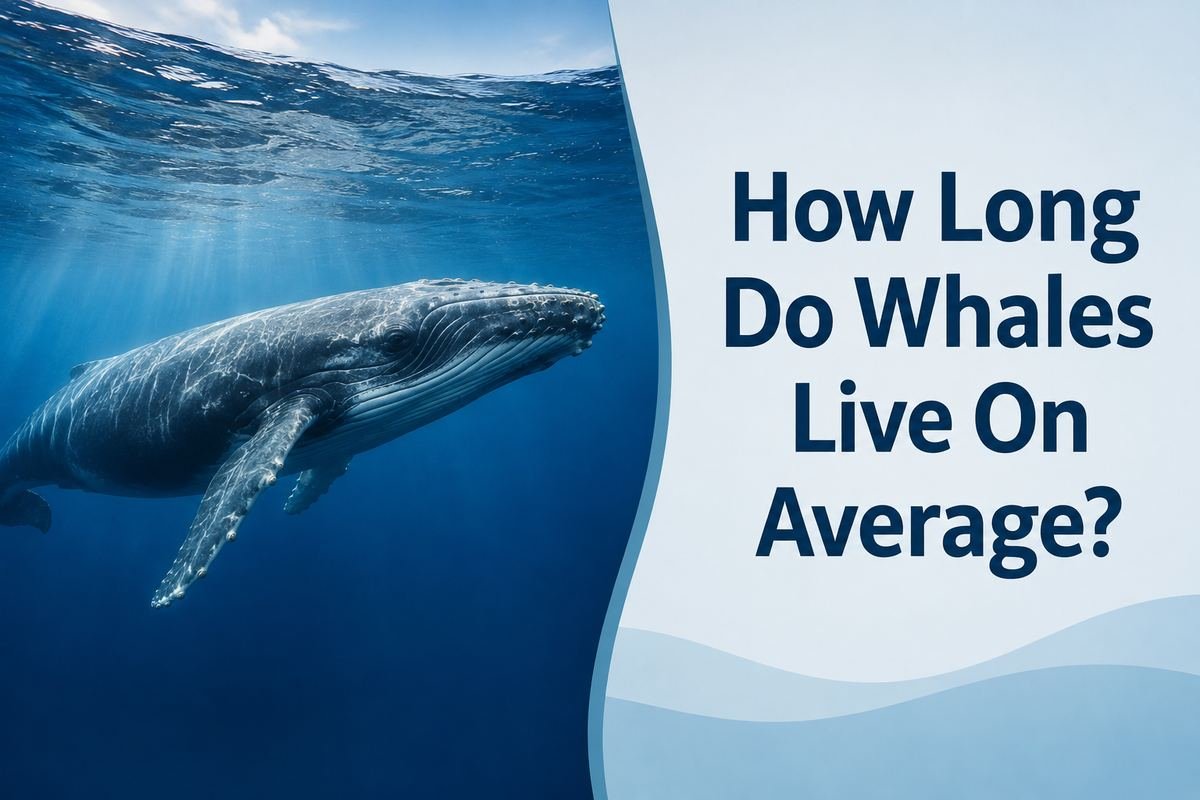
There’s no single answer, because “whale” covers dozens of species with wildly different biology. A minke whale and a bowhead whale are both whales, but their lifespans aren’t even in the same league.
As a rough middle ground, most large whale species live somewhere between 50 and 90 years. That makes the question of how long do whales live much more complicated than a single number suggests.
That already puts them ahead of most land mammals. But a handful of species push that number much further, and one species in particular rewrites what scientists thought was biologically possible for a mammal.
Why Do Whales Live So Long?
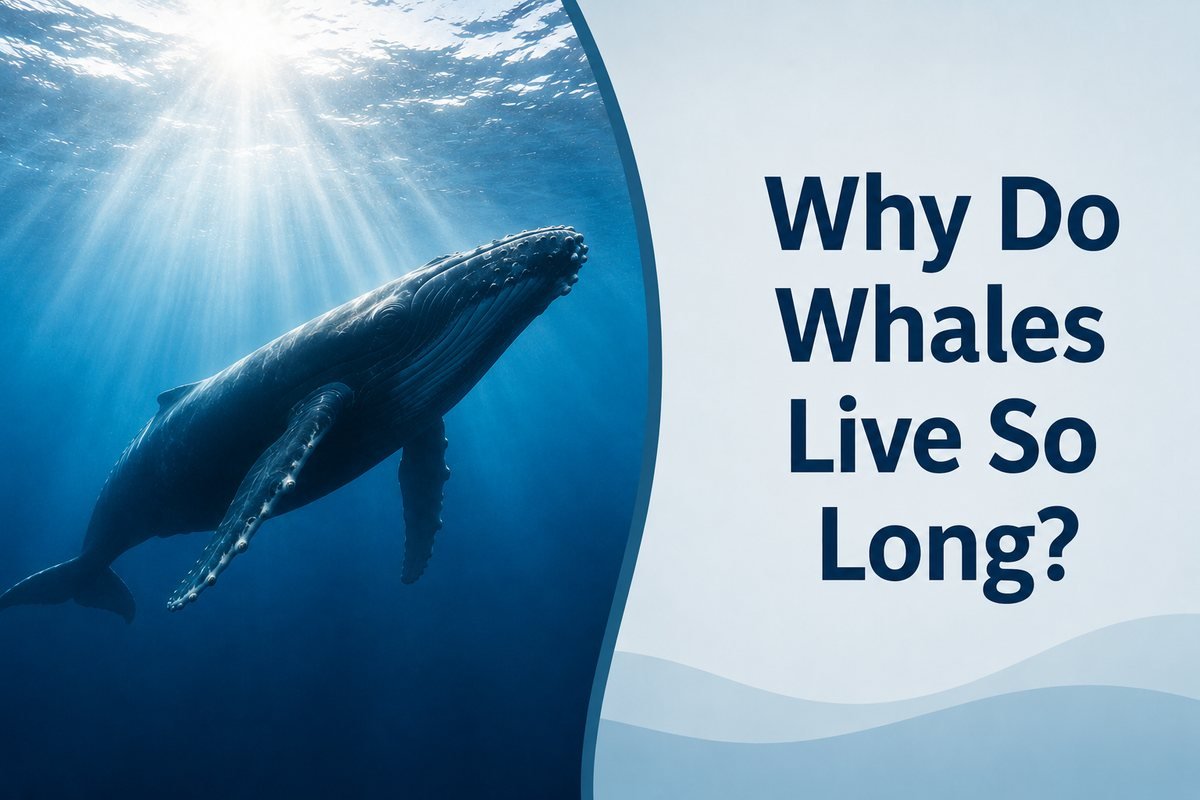
Many people assume bigger animals simply wear out slower, and that’s part of the story — but it’s not the whole explanation.
Large body size does tend to correlate with longer life among mammals. Bigger animals generally have slower metabolisms, and a slower metabolism means cells divide less often, which reduces wear and tear over time. This is one reason elephants outlive mice by decades.
Cold water plays a role too. Whales living in frigid Arctic and sub-Arctic waters, like bowhead whales, tend to have unusually slow metabolisms compared to whales in warmer regions. A slower metabolism generally means slower aging.
There’s also a fascinating detail evolutionary biologists have puzzled over for years: larger animals, with vastly more cells, should theoretically face higher cancer risk, since more cells means more chances for something to go wrong during cell division. Yet whales don’t get cancer at anywhere near the rate this logic predicts. Researchers call this “Peto’s Paradox,” and studies into whale genetics suggest these animals may have evolved extra tumor-suppressing mechanisms as they grew larger over millions of years. It’s still an active area of research, but it may help explain how whales get away with living so long despite their massive size.
Read This Why Are Whales Endangered? The Real Reasons Explained
Lifespan by Whale Species
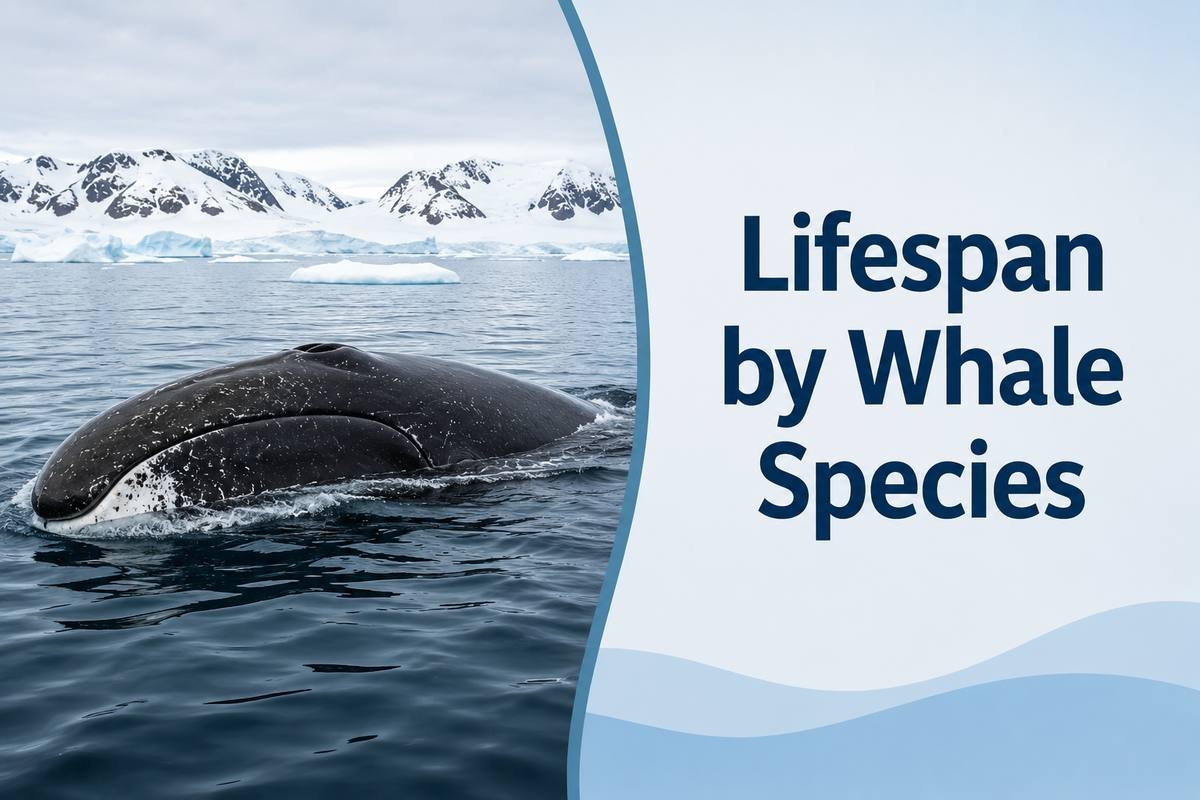
The clearest way to understand how long do whales live is to compare the typical lifespan of different species.
| Species | Typical Lifespan | Notes |
|---|---|---|
| Bowhead whale | 150–200+ years | Longest-living mammal known |
| Blue whale | 80–90 years | Largest animal on Earth |
| Humpback whale | 80–90 years | Age estimated from baleen and earplugs |
| Fin whale | 80–90 years | Second-largest whale species |
| Gray whale | 70–80 years | Long coastal migrations |
| Sperm whale | 60–70 years | Deepest-diving of the great whales |
| Orca (killer whale) | 50–90 years (females), 30–40 years (males) | Strong sex-based lifespan gap |
| Minke whale | 30–50 years | One of the smaller baleen whales |
Bowhead whales stand apart from every other mammal on the planet. Researchers studying Arctic populations have found stone and ivory harpoon points embedded in the blubber of whales still alive today — tools that stopped being used by Indigenous Alaskan whalers well over a century ago. That alone tells you these animals were already adults before some national parks existed.
How Scientists Figure Out a Whale’s Age
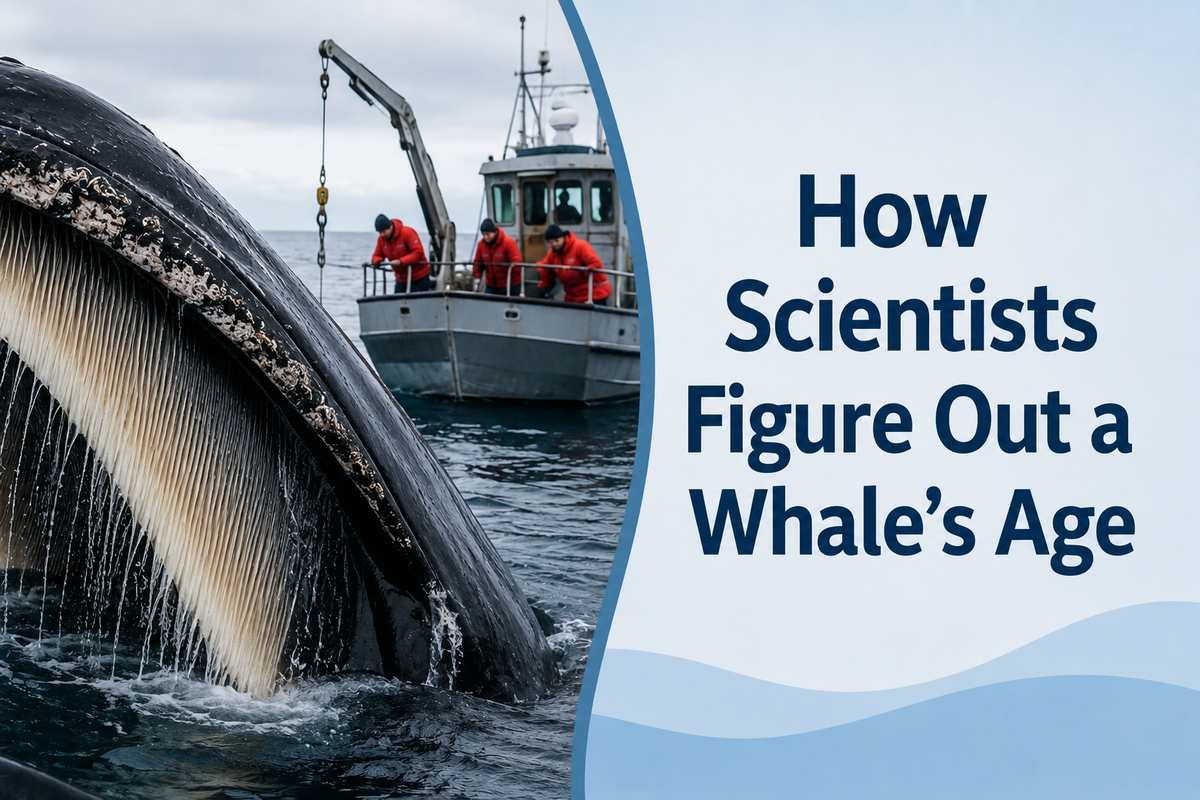
You can’t exactly ask a whale for its birth certificate, so researchers rely on a few clever biological clues.
For baleen whales, one of the most reliable methods involves the earplug. Baleen whales build up a waxy earplug throughout their lives, and it forms layers much like the rings inside a tree trunk. Each layer generally corresponds to about six months of growth, so counting layers gives scientists a fairly accurate age estimate.
Toothed whales, including orcas and sperm whales, get aged differently. Their teeth grow in layers too, and slicing a tooth thin enough to view under a microscope reveals growth rings similar to earplug layers.
Bowhead whale age estimates rely on something even more unusual: a slow chemical change inside the lens of the eye. A specific protein in the lens gradually converts from one molecular form to another at a known, extremely slow rate. By measuring how far that conversion has progressed, researchers can estimate age with surprising precision — and this is exactly the method that produced those startling 200-year estimates.
What Shortens a Whale’s Lifespan?
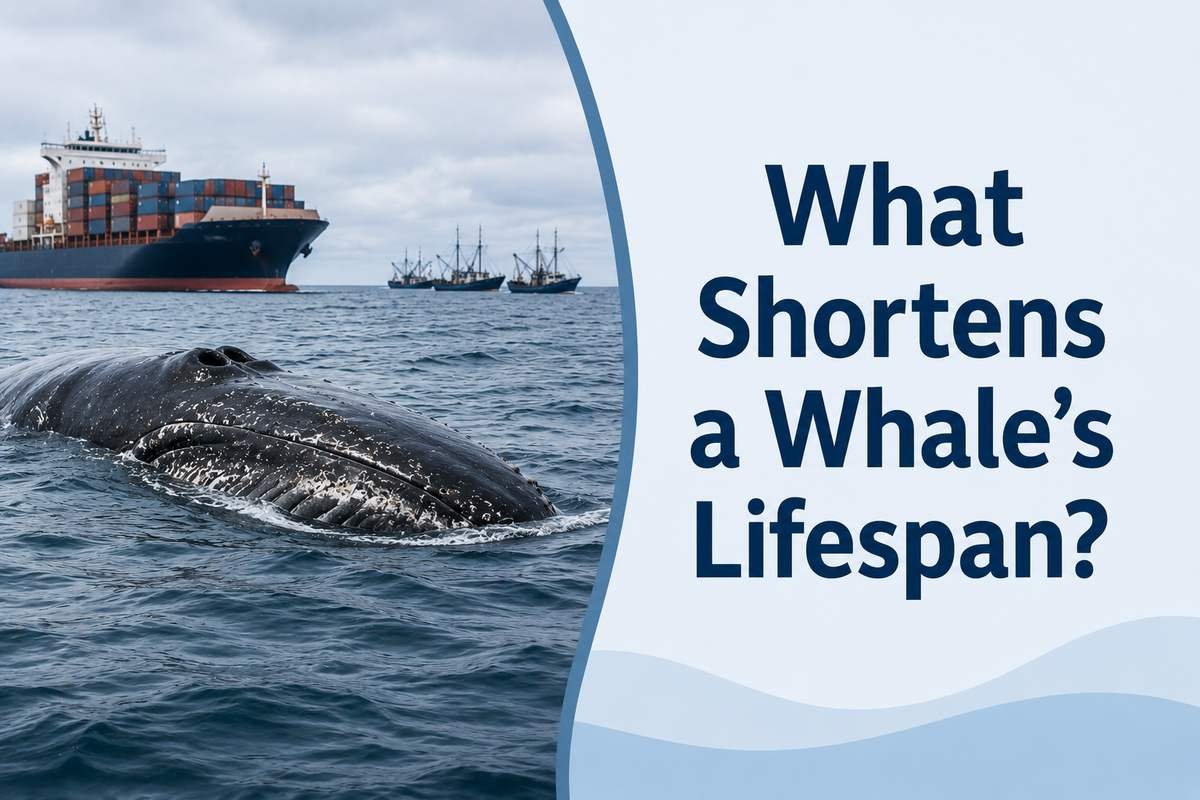
Biology sets the upper limit, but very few whales in the wild actually reach it. Several pressures cut life short well before natural aging becomes the main factor.
Ship strikes are a leading cause of death for whales that share busy shipping lanes with cargo vessels, including blue whales and fin whales. Fishing gear entanglement is another major threat, particularly for species that feed near the surface or migrate along coastlines.
Commercial whaling throughout the 19th and 20th centuries devastated populations of nearly every large whale species, and many populations are still recovering. Some species, like the North Atlantic right whale, remain critically endangered partly because of how few individuals are left to reproduce.
Pollution and changing ocean temperatures add further strain, particularly by disrupting the availability of krill and small fish that whales depend on for energy.
💡 Did You Know?
The bowhead whale’s age-detection method — based on eye lens chemistry — was originally developed to study human tissue before scientists realized it could unlock the biological age of the world’s longest-living mammal.
Read This Why Do Whales Breach? The Leading Theories Explained
Do Whales Die of Old Age?
In the wild, most whales don’t get the chance to die of pure old age the way a human might. Predation, particularly from orcas targeting calves and weakened individuals, plays a role for many species. But for whales that survive into old age, the body does eventually decline the way any aging mammal does — reduced reproductive capacity, slower movement, and weakened immune response are common signs researchers observe in the oldest tracked individuals.
Myth vs Fact
| Myth | Fact |
|---|---|
| All whales live about the same amount of time | Lifespans range from roughly 30 years to over 150 years depending on species |
| Bigger whales always live longer | Body size matters, but metabolism and water temperature matter just as much |
| Scientists guess whale ages based on size alone | Age is measured through earplug layers, tooth rings, or eye lens chemistry |
| Orcas live as long in the wild as they do in captivity | Wild orcas, especially females, generally live significantly longer than captive ones |
Quick Tips
✓ Look up “IWC” (International Whaling Commission) reports for population and conservation data by species
✓ Support organizations tracking ship-strike reduction efforts in whale migration corridors
✓ If whale watching, keep a respectful distance — vessel noise and proximity add stress that affects long-term health
✓ Follow research from institutions like NOAA Fisheries for updated lifespan studies as new tagging data emerges
Frequently Asked Questions
What is the longest-living whale species?
The bowhead whale holds the record, with some individuals estimated at over 150 years old and possibly beyond 200. This estimate comes from chemical analysis of the eye lens combined with old harpoon fragments found in living whales.
Do orcas really live shorter lives than other whales?
Yes, particularly males. Female orcas can live into their 80s or 90s, but males typically live only 30 to 40 years, largely due to the physical demands of their role within pod social structures.
How long do blue whales live?
Blue whales typically live between 80 and 90 years, although individual lifespan can vary. Scientists estimate their age primarily through layered earplug wax, since blue whales don’t have teeth to examine.
Can scientists tell a whale’s exact age?
Not with perfect precision, but methods like earplug layering and eye lens chemistry provide estimates that are considered scientifically reliable, often accurate within a few years.
Why do some whales live so much longer than others?
Differences come down to body size, metabolic rate, water temperature, and evolutionary biology. Cold-water species with slow metabolisms, like bowhead whales, tend to live the longest.
Conclusion
A bowhead whale swimming in Arctic waters today may have been alive before some countries existed. That’s not just a fun fact — it’s a reminder of how differently time moves for different creatures sharing this planet.
So, how long do whales live? For many species, several decades is normal, while bowhead whales can survive for well over a century.
The next time you picture a whale gliding through the ocean, it’s worth remembering: for some of them, that ocean has been home for longer than any human alive has been on Earth.
Related Article
Why Do Whales Breach? The Leading Theories Explained
Why Are Whales Endangered? The Real Reasons Explained

Ethan Carter is a nature enthusiast and educational writer at Wonderexplained. He creates well-researched articles about animals, oceans, weather, and the natural world, making complex topics easy to understand. His goal is to provide accurate, engaging, and reader-friendly content that inspires curiosity and lifelong learning.

3 thoughts on “How Long Do Whales Live? Lifespan by Species (Full Guide)”