

A cat parked at a windowsill, eyes locked on a bird hopping around outside, suddenly starts making a strange, rapid clicking sound, somewhere between a chirp and a stutter. Why Do Cats Chirp at Birds is a common question among cat owners who hear this unusual sound for the first time. It’s one of the more distinctive noises a cat makes, and it’s different enough from a normal meow that it tends to catch people’s attention.
Researchers and veterinary behaviorists have proposed several explanations for this behavior over the years, and while there’s no single, universally agreed-upon answer, the leading theories connect it closely to a cat’s predatory instincts.
This article breaks down what’s actually happening when a cat chirps or chirps at a bird, what the leading theories suggest, and how to tell the difference between excitement, frustration, and other possible explanations.
What Is Cat Chirping and What Does It Sound Like?
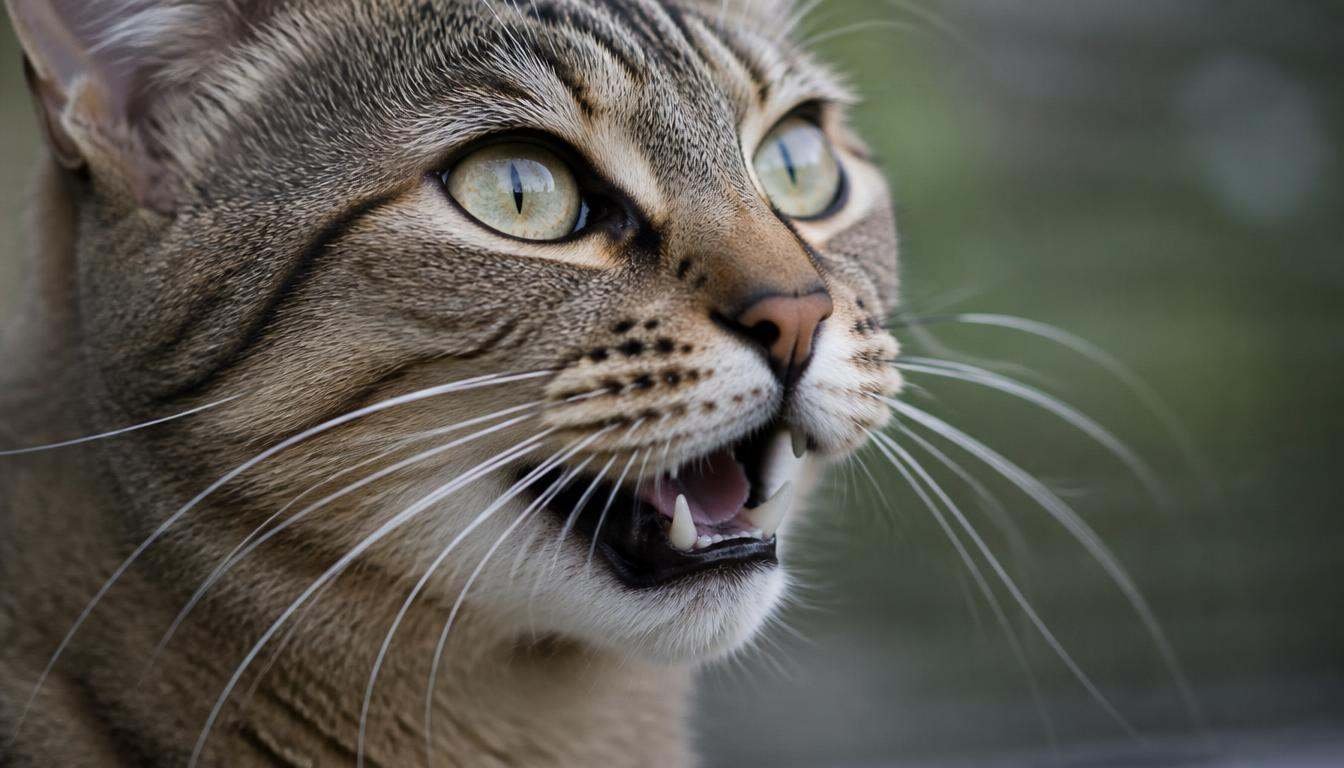
Cat chirping, often used interchangeably with chattering, generally describes a rapid, clicking or stuttering sound cats make, typically produced by quickly opening and closing the jaw, sometimes combined with small vocal chirps or squeaks. The sound is distinct from a typical meow and is most commonly observed when a cat is watching a bird, squirrel, or other small moving animal, usually through a window or from behind some other barrier that prevents the cat from reaching it.
According to Susanne Schötz, a researcher who studies cat vocalizations, this behavior often follows a recognizable progression, beginning with a cat becoming intensely focused on potential prey before starting to chirp, and in some cases escalating into more prolonged chattering the longer that visual focus continues.
Why Do Cats Chirp or Chatter When They See Birds?
Chirping and chattering are widely believed to be connected to a cat’s predatory instincts, specifically triggered by the sight of fast, erratic movement typical of birds and other small prey animals. Even well-fed, fully domesticated cats retain much of the sensory wiring and behavioral sequence associated with hunting, and the sight of a bird moving nearby can activate that same instinctive sequence, stalking, focusing, and preparing to pounce, even when there’s no realistic chance of the cat actually reaching the bird.
Because there isn’t a single controlled scientific study that has definitively confirmed one exact cause, most current explanations remain theories rather than settled fact, though they’re generally consistent with what’s known about feline predatory behavior more broadly.
Read This Why Do Cats Make Biscuits? The Real Reason Behind Kneading
Is Cat Chirping a Sign of Frustration or Excitement?
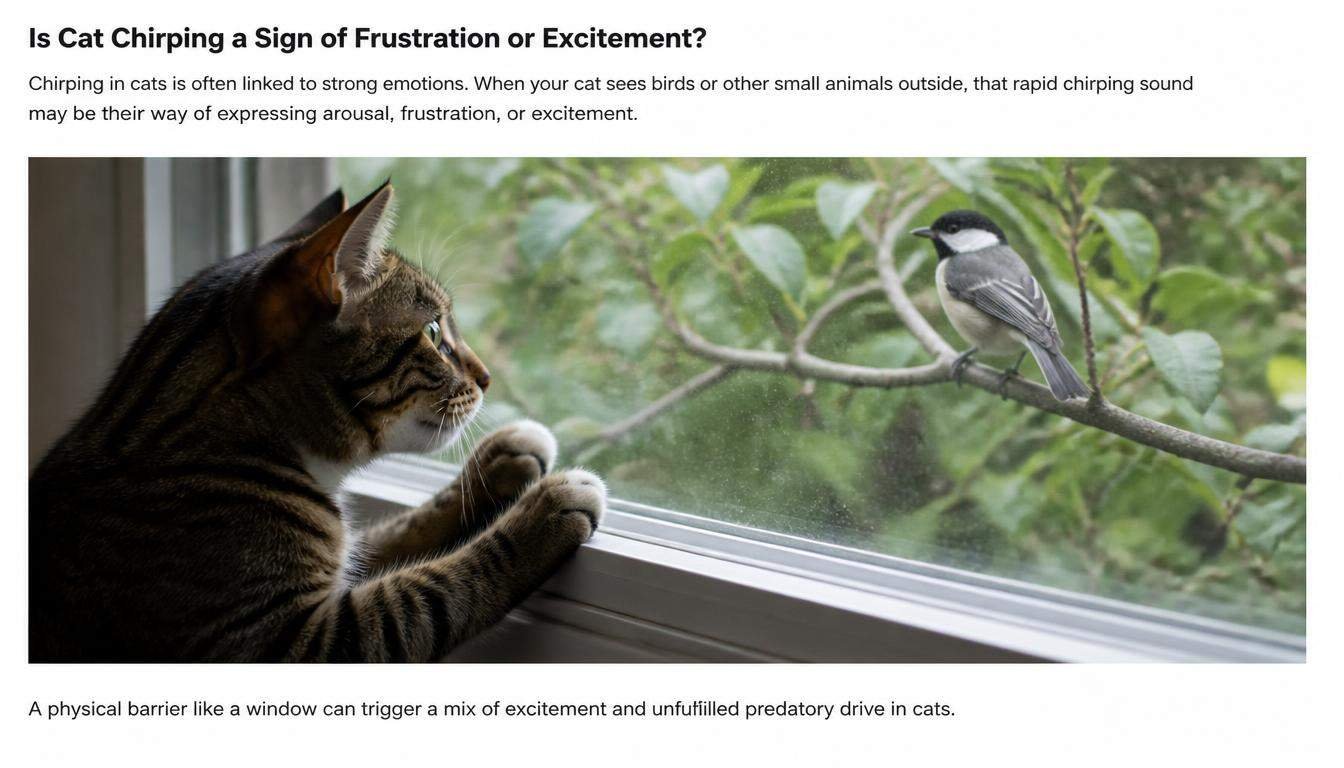
Both explanations have been proposed, and they aren’t necessarily mutually exclusive. One widely cited explanation, sometimes called the frustration theory, suggests that chattering reflects a cat’s built-up predatory arousal when it can see prey but is physically unable to reach or capture it, essentially a visible sign of the hunting sequence being triggered without any outlet for completing it.
At the same time, some researchers and behaviorists describe the same behavior as primarily reflecting excitement and anticipation rather than frustration specifically, framing the sound as closer to a cat’s physical and mental preparation for a hunt rather than an expression of being thwarted. Notably, research published in the journal Animals examining cat vocalizations found that chirps, trills, and chattering-type sounds were associated specifically with positive emotional contexts in the study’s observations, and were not observed during situations linked to stress or discomfort, which lends some support to the idea that the behavior may reflect excited anticipation rather than pure frustration. Given the limited amount of rigorous research specifically isolating this behavior, it’s most accurate to describe chirping as likely reflecting a mix of heightened predatory arousal, which can include elements of both excitement and frustration depending on the specific situation and individual cat.
Read This Why Do Cats Stretch After Sleeping? The Real Reason Explained
Do Cats Chirp Because They Are Mimicking Bird Sounds?

This is one of the more intriguing theories, though it remains speculative rather than firmly established for domestic cats specifically. The idea gained attention after a 2005 expedition in the Amazon rainforest, during which researchers from the Wildlife Conservation Society and the Federal University of Amazonas documented a margay, a small wild cat species, apparently mimicking the vocalizations of a pied tamarin, a type of small primate that serves as prey for the margay in that region.
While this observation suggested that at least one wild cat species may be capable of vocal mimicry related to hunting, it was based on a single documented instance involving a different species than the domestic cat, and there isn’t strong, rigorously tested scientific evidence confirming that domestic cats specifically chatter as a deliberate mimicry strategy to lure birds closer. It remains a genuinely interesting hypothesis, but one that should be treated as unconfirmed rather than an established explanation.
What Is the Difference Between Cat Chirping, Trilling, and Chattering?
These terms are sometimes used inconsistently across different sources, but they generally describe related, though distinct, feline vocalizations. Chirping typically refers to a short, high-pitched sound, sometimes resembling a small bird-like chirp or squeak, and is commonly heard both during prey-watching behavior and, separately, as a friendly greeting sound some cats make toward familiar people.
Trilling is generally described as a rolled, musical sound, often used by mother cats communicating with kittens or by adult cats greeting a trusted person, and is typically considered a distinctly friendly, non-predatory vocalization. Chattering, by contrast, refers specifically to the rapid, clicking jaw movement associated with prey-watching behavior described earlier in this article, and is generally understood as a physical, largely voiceless behavior rather than a true vocalization in the same sense as a chirp or trill. Because chirping and chattering can sometimes occur together or in close succession during prey-focused behavior, it’s easy to see why the terms are sometimes used loosely or interchangeably, even though they describe somewhat different sounds and contexts.
Does Cat Chirping Mean My Cat Is Stressed or Happy?
Prey-related chirping and chattering, specifically the behavior directed at birds or other small animals outside a window, is generally not considered a sign of stress in the way that other feline vocalizations, like prolonged yowling or hissing, might be. As noted earlier, at least one study examining feline vocalizations found these particular sounds associated with positive rather than negative emotional contexts, suggesting the behavior more likely reflects excited engagement than distress.
That said, it’s worth distinguishing this specific window-watching chirp from a cat’s general emotional or health state more broadly. If chirping or chattering behavior appears in unusual contexts, occurs excessively, or is accompanied by other signs of distress, changes in appetite, withdrawal, or unusual aggression, it’s reasonable to consider whether something else might be going on and to consult a veterinarian if there’s genuine concern, since chirping alone in a typical prey-watching context isn’t generally considered a health or stress indicator on its own.
Read This Why Do Cats Groom Each Other? The Real Reasons Behind Allogrooming
How to Stop Your Cat From Chirping at Birds Outside the Window?
Since chirping and chattering are generally understood as instinctive responses tied to predatory behavior rather than a behavioral problem in the typical sense, most veterinary behaviorists don’t consider it something that necessarily needs to be stopped, particularly since it doesn’t usually indicate distress. That said, if an owner wants to reduce how often the behavior occurs, providing alternative outlets for a cat’s predatory instincts can help.
Interactive play involving toys that mimic prey movement, such as feather wands or toys pulled unpredictably across the floor, allows a cat to complete more of the natural hunting sequence, stalking, chasing, and “catching,” which may help reduce the buildup of predatory arousal that can occur when a cat only watches inaccessible prey through a window without any physical outlet. If a cat’s chattering behavior seems to be paired with visible signs of genuine agitation, such as pacing or tail lashing, rather than simple focused excitement, increasing regular interactive playtime is generally a reasonable and low-risk way to help address that underlying predatory energy.
Frequently Asked Questions
Is it normal for cats to chirp at birds every day?
Yes, chirping or chattering at birds is a common, instinct-driven behavior in many cats, particularly those with a strong prey drive, and isn’t generally considered abnormal on its own.
Do all cats chirp or chatter at birds?
No, individual cats vary considerably in how often they display this behavior, and a cat’s overall temperament and prey drive appear to influence how frequently chirping occurs.
Is chattering the same thing as a cat being aggressive?
Not typically, since chattering is generally directed at inaccessible prey outside a window rather than at people or other pets, and it isn’t usually considered a sign of aggression toward humans.
Can kittens chirp at birds too?
Yes, kittens can display chirping and chattering behavior as their predatory instincts develop, even before they have any real hunting experience.
Should I be worried if my cat suddenly stops chirping at birds?
Not necessarily, since individual interest in outdoor birds can vary over time and isn’t a reliable health indicator on its own, though any sudden, broader changes in behavior or activity level are worth mentioning to a veterinarian.
Conclusion
A cat’s chirp or chatter at a bird outside the window is best understood as a visible echo of a deeply wired predatory instinct, likely reflecting some combination of excitement, focused arousal, and possibly frustration at being unable to complete the hunting sequence. While researchers haven’t settled on one single definitive explanation, and intriguing ideas like prey mimicry remain more speculative than confirmed, the behavior overall fits clearly within what’s known about feline hunting instincts more broadly. Rather than a cause for concern, this small, distinctive sound is generally just a glimpse of the hunter still very much present inside every housecat.

Ethan Carter is a nature enthusiast and educational writer at Wonderexplained. He creates well-researched articles about animals, oceans, weather, and the natural world, making complex topics easy to understand. His goal is to provide accurate, engaging, and reader-friendly content that inspires curiosity and lifelong learning.
