

Say a dog’s name in an unusual tone of voice, or ask a strange question in an upbeat voice, and there’s a good chance you’ll get the classic response: head cocked to one side, ears perked, eyes fixed on you like you’ve just said something fascinating. Why Do Dogs Tilt Their Heads is a question many dog owners ask when they see this adorable behavior. It’s tempting to assume it simply means “I’m confused.” Research over the past several years suggests the real explanation is more interesting than that, and it likely involves several overlapping reasons rather than one single cause.
This article breaks down what’s actually going on when a dog tilts its head, what recent research has found, and when the behavior might be worth mentioning to a veterinarian instead of just enjoying it.
What Does It Mean When a Dog Tilts Their Head?
A dog’s head tilt is generally understood as a sign that the dog is actively processing something in its environment, most often a sound, rather than a straightforward expression of confusion. Veterinary behaviorists and researchers have proposed several overlapping explanations, including improving sound localization, adjusting vision around the muzzle, and engaging in cognitive processing tied to memory and language recognition. According to Dr. Amy Learn, a veterinary behaviorist quoted by GreatPetCare, head tilting is often thought to occur when a dog is processing or responding to a sound or word that carries some prior significance to them.
Rather than treating head tilting as having one single fixed meaning, most current research treats it as a flexible behavior that can serve slightly different purposes depending on the situation.
Why Do Dogs Tilt Their Head When You Talk to Them?
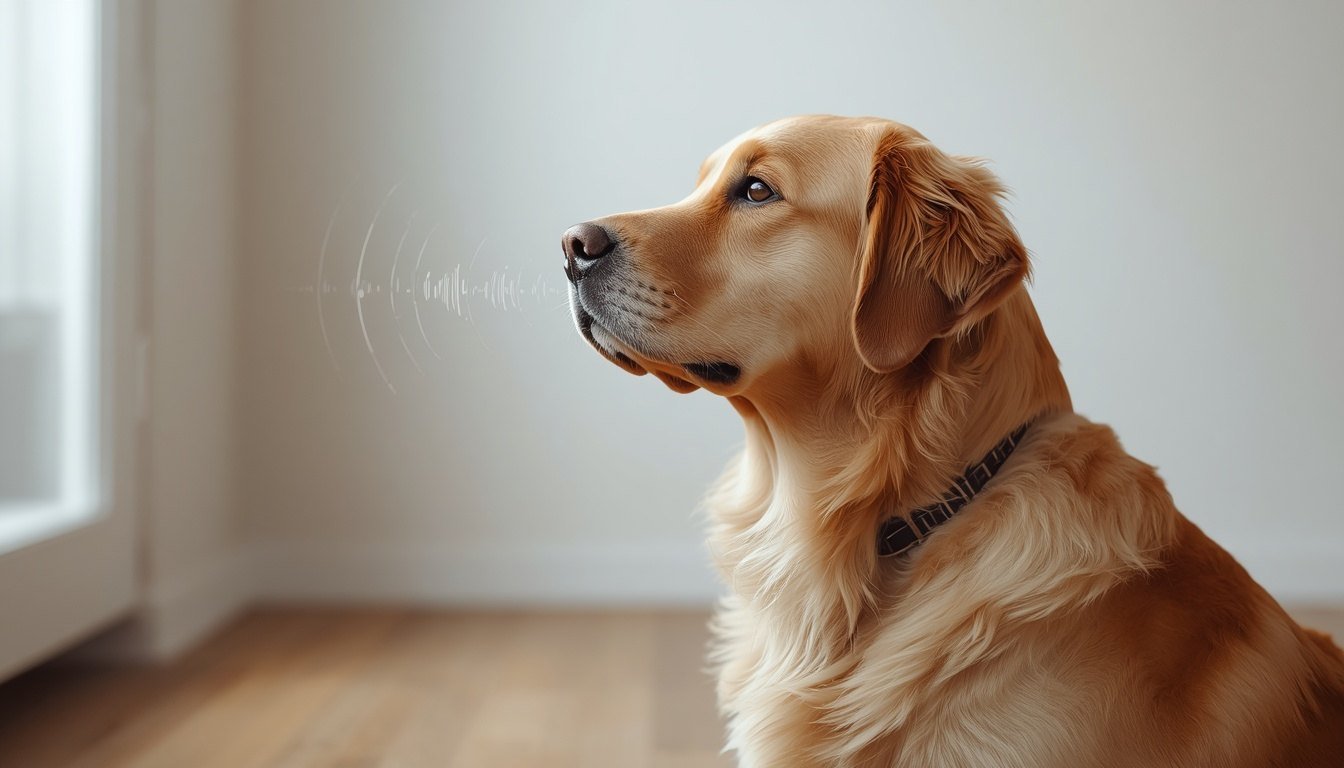
When a dog tilts its head while a person is talking, several overlapping factors are likely involved. One commonly cited explanation relates to hearing: dogs may adjust their head position to more accurately determine where a sound is coming from, particularly if the voice or tone is unfamiliar or especially interesting to them. Another explanation involves vision. Dr. Andrea Tu, a veterinary behaviorist, has noted that a dog’s muzzle can interfere with binocular vision, particularly in longer-nosed breeds, and that tilting the head may help a dog see a person’s face and mouth more clearly while they’re speaking.
Psychologist Stanley Coren, who has written extensively on dog cognition, has similarly pointed to vision as a likely factor, suggesting that dogs may tilt their heads partly to get a clearer view of a speaker’s face, since a dog’s own muzzle can otherwise partially block that view.
Read This Why Do Dogs Pant? The Real Science Behind This Everyday Habit
Do Dogs Tilt Their Heads to Hear Better?
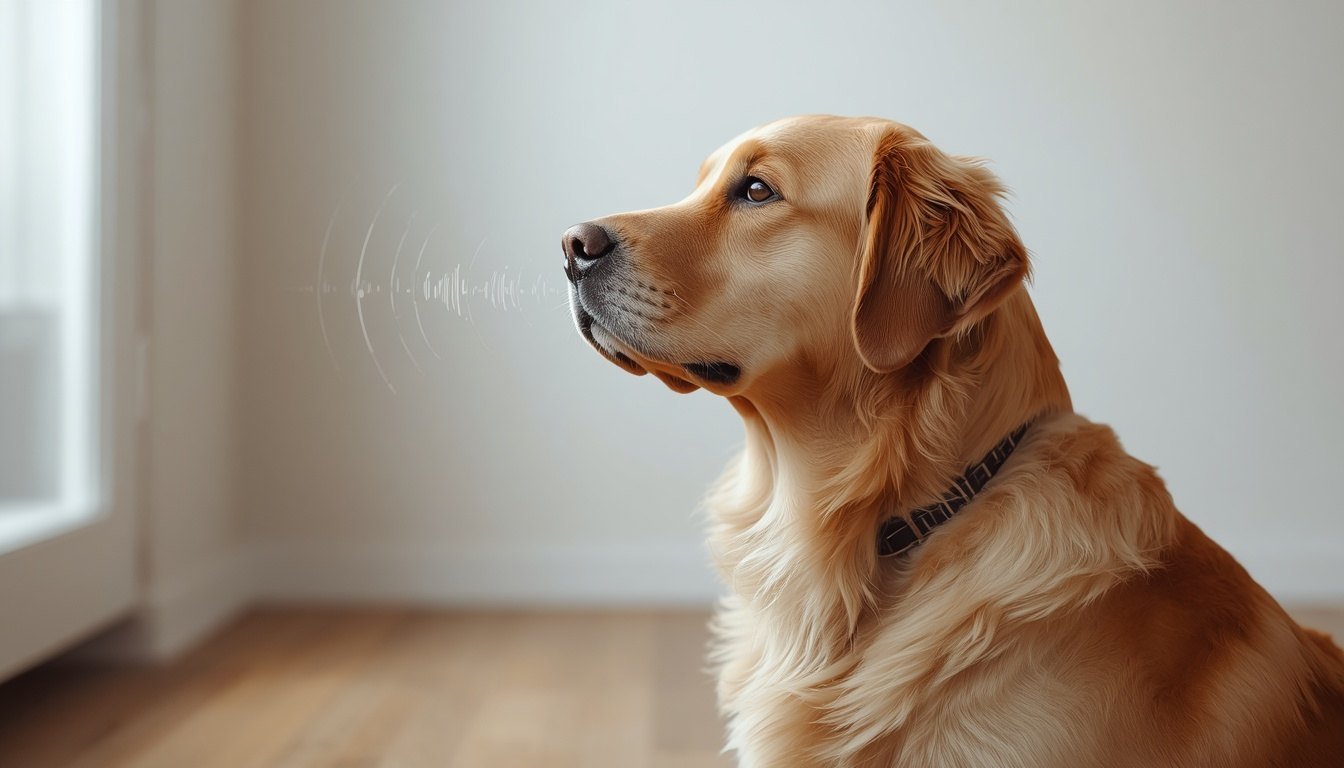
Improving sound localization is one of the most frequently cited explanations for head tilting, and it has a reasonable basis in canine anatomy. Dogs have movable outer ear flaps, called pinnae, which can partially cover the ear canal and affect how sound reaches the ear. By tilting the head and adjusting ear position, a dog may be able to more accurately judge the direction and location of a particular sound, especially one that’s unfamiliar, unusual, or particularly meaningful to them.
It’s worth noting that while this hearing-based explanation is widely referenced, researchers generally agree that it likely isn’t the only factor involved, since head tilting also appears in situations, like watching something interesting, where sound alone doesn’t fully explain the behavior.
Read This Why Do Dogs Bark? Understanding What Dogs Are Trying to Say
Is Head Tilting a Sign of Confusion in Dogs?
Not necessarily, and this is an important distinction from how the behavior is often casually described. While it’s possible that a head tilt sometimes accompanies genuine uncertainty, current research suggests the behavior is more accurately understood as a sign of active attention or information processing rather than confusion on its own. A 2021 study published in the journal Animal Cognition by researchers Andrea Sommese and Attila Andics, conducted at Eötvös Loránd University in Hungary, found that dogs known for reliably learning the names of specific toys tilted their heads significantly more often when hearing those familiar toy names compared to other dogs.
This finding led researchers to suggest that head tilting may occur specifically when a dog is retrieving a meaningful memory or association tied to a particular word or sound, which points toward focused mental processing rather than simple bewilderment. It’s important not to overstate this finding, though, since it was based on a specific group of dogs demonstrating unusually strong word-object associations, and researchers have cautioned that head tilting likely serves multiple, sometimes overlapping, purposes rather than a single universal explanation.
Why Does My Dog Only Tilt Head at Certain Words Like “Walk” or “Treat”?

Dogs commonly tilt their heads specifically at words they’ve learned to associate with something meaningful, and this pattern lines up with the memory-processing explanation supported by recent research. If a dog has repeatedly heard a word like “walk” or “treat” paired with a specific, reliably positive outcome, hearing that word again may prompt the kind of focused attention and mental processing that head tilting appears to be associated with.
This selective tilting at meaningful words, rather than at random background noise, is part of why researchers increasingly view the behavior as connected to recognition and memory rather than purely a reaction to an unusual sound. It’s also worth noting that positive reinforcement plays a role here as well: if an owner reacts warmly, laughs, or offers praise or a treat when a dog tilts its head, that response can reinforce the behavior over time, making a dog more likely to repeat it in similar situations going forward.
When Is Dog Head Tilting a Sign of an Ear Infection or Health Problem?
While occasional head tilting during normal interactions is generally considered a harmless and common behavior, a persistent, unusual, or sudden head tilt can sometimes indicate an underlying medical issue rather than simple attention or curiosity. Ear infections are a common cause of head tilts, since inflammation or discomfort in the ear canal can cause a dog to hold its head at an angle consistently, not just briefly during specific interactions.
More seriously, a persistent head tilt combined with other symptoms, such as loss of balance, stumbling, rapid eye movements, or disorientation, can potentially indicate a condition affecting the vestibular system, the inner ear and brain structures responsible for balance, and this combination of symptoms generally warrants prompt veterinary evaluation. The key distinguishing factor is duration and context: a quick, situational head tilt during play or conversation is very different from a head tilt that persists constantly or appears alongside other unusual symptoms.
Read This Why Do Dogs Have Whiskers? Their Real Purpose Explained
Can You Train Your Dog to Tilt Their Head on Command?
Yes, head tilting can generally be reinforced and trained like many other dog behaviors, particularly since it often already occurs somewhat naturally and tends to be reinforced unintentionally through positive owner reactions. Using standard positive reinforcement training techniques, rewarding a dog with treats, praise, or attention immediately after it tilts its head, either spontaneously or in response to a specific cue, can increase how often the behavior occurs and eventually allow it to be performed reliably on command.
Because head tilting doesn’t require any unusual physical exertion and many dogs already display it periodically on their own, it’s often considered a relatively easy behavior to reinforce and shape into a trained cue compared to more physically demanding tricks.
Frequently Asked Questions
Is it normal for dogs to tilt their heads frequently?
Yes, occasional head tilting in response to interesting sounds, unfamiliar words, or engaging interactions is considered normal behavior in dogs and isn’t typically a cause for concern on its own.
Do all dog breeds tilt their heads the same amount?
No, some research and veterinary observations suggest that breeds with longer muzzles may tilt their heads more frequently for visual reasons, since a shorter muzzle interferes less with a dog’s field of vision.
What’s the difference between a normal head tilt and a concerning one?
A normal head tilt is typically brief, situational, and tied to a specific sound or interaction, while a concerning head tilt is usually persistent, doesn’t resolve, and may be accompanied by other symptoms like loss of balance or disorientation.
Does a dog’s head tilt mean it understands what I’m saying?
Not necessarily in the sense of understanding full sentences, but research suggests head tilting may occur when a dog recognizes a specific, previously learned word or sound that holds meaningful association for them.
Should I encourage my dog to tilt its head?
There’s generally no harm in positively reinforcing an already natural, healthy head tilt, though any sudden, persistent, or unusual head tilting outside of normal social interaction should be evaluated by a veterinarian rather than encouraged.
Conclusion
A dog’s head tilt turns out to be a more layered behavior than a simple sign of confusion, likely reflecting a combination of improved sound localization, better visual access to a speaker’s face, and active mental processing tied to memory and word recognition. Recent research, including studies on dogs with strong word-learning abilities, suggests that this small, endearing gesture may actually be a visible glimpse of a dog working through something meaningful in the moment. At the same time, understanding the difference between this normal, situational behavior and a persistent or unusual head tilt tied to a potential ear or balance issue is an important distinction for any dog owner to keep in mind.

Ethan Carter is a nature enthusiast and educational writer at Wonderexplained. He creates well-researched articles about animals, oceans, weather, and the natural world, making complex topics easy to understand. His goal is to provide accurate, engaging, and reader-friendly content that inspires curiosity and lifelong learning.
