

Every autumn, hillsides that were solid green for months suddenly erupt into red, orange, and gold, and it happens on a schedule so reliable that entire tourism industries are built around predicting it. That predictability might make it seem like a simple process, but leaf color change is actually the result of several different pigments interacting inside the leaf, some of which have been there all along, hidden the whole time.
This article walks through exactly why leaves change color, what’s happening chemically inside them, and why some years produce a much better display than others.
Why Do Leaves Change Color?
Leaves change color because the green pigment chlorophyll, which dominates their appearance during spring and summer, breaks down as days get shorter and temperatures cool in fall. Once chlorophyll fades, other pigments that were present in the leaf all along, called carotenoids, become visible, and in many species, an additional red-and-purple pigment called anthocyanin is actively produced during autumn itself. According to the USDA Forest Service, the length of night, leaf pigments, and weather all play a role in determining how vivid a given fall season’s colors turn out to be.
What Makes Leaves Green?
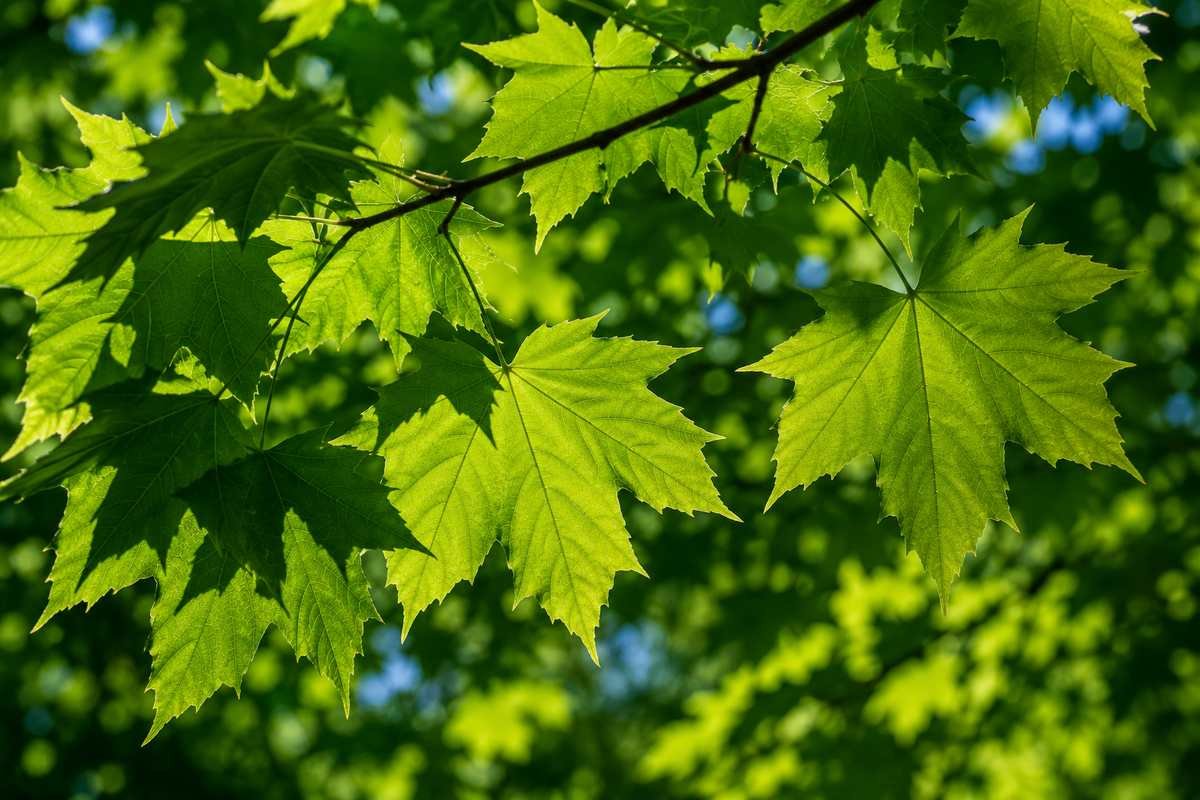
Leaves appear green throughout spring and summer because of chlorophyll, the pigment plants use to absorb sunlight for photosynthesis, the process by which they convert light, water, and carbon dioxide into the sugars they use for energy. Chlorophyll is so abundant and so effective at absorbing light during the growing season that it masks any other pigments present in the leaf, which is why most leaves look uniformly green even though other colors are technically already there underneath.
Chlorophyll isn’t a permanent fixture, though. Plants continuously produce and break down chlorophyll throughout the growing season, replenishing it as needed to keep photosynthesis running efficiently.
Why Do Leaves Turn Yellow and Orange?
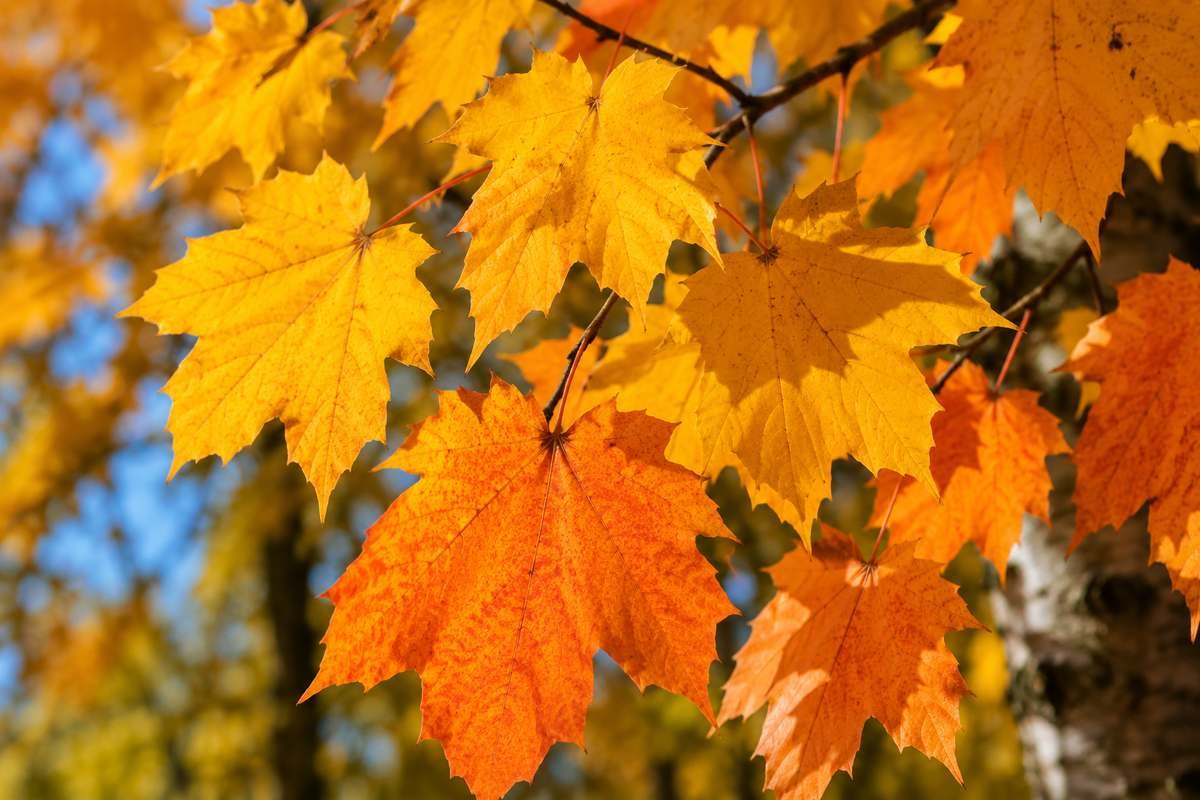
Yellow and orange fall colors come from carotenoids, a group of pigments that are actually present in the leaf throughout the entire growing season, not just in autumn. Carotenoids simply stay hidden behind chlorophyll’s much stronger green color until fall, when chlorophyll production slows and eventually stops.
Once chlorophyll breaks down, the carotenoids already present in the leaf’s cells become visible, revealing yellow and orange tones that had essentially been there the whole summer, just concealed. This is part of why the same tree tends to produce a similar range of yellow-orange tones from year to year, since carotenoid levels are relatively stable and largely tied to the tree’s species rather than changing dramatically with each season’s weather.
Why Do Leaves Turn Red?
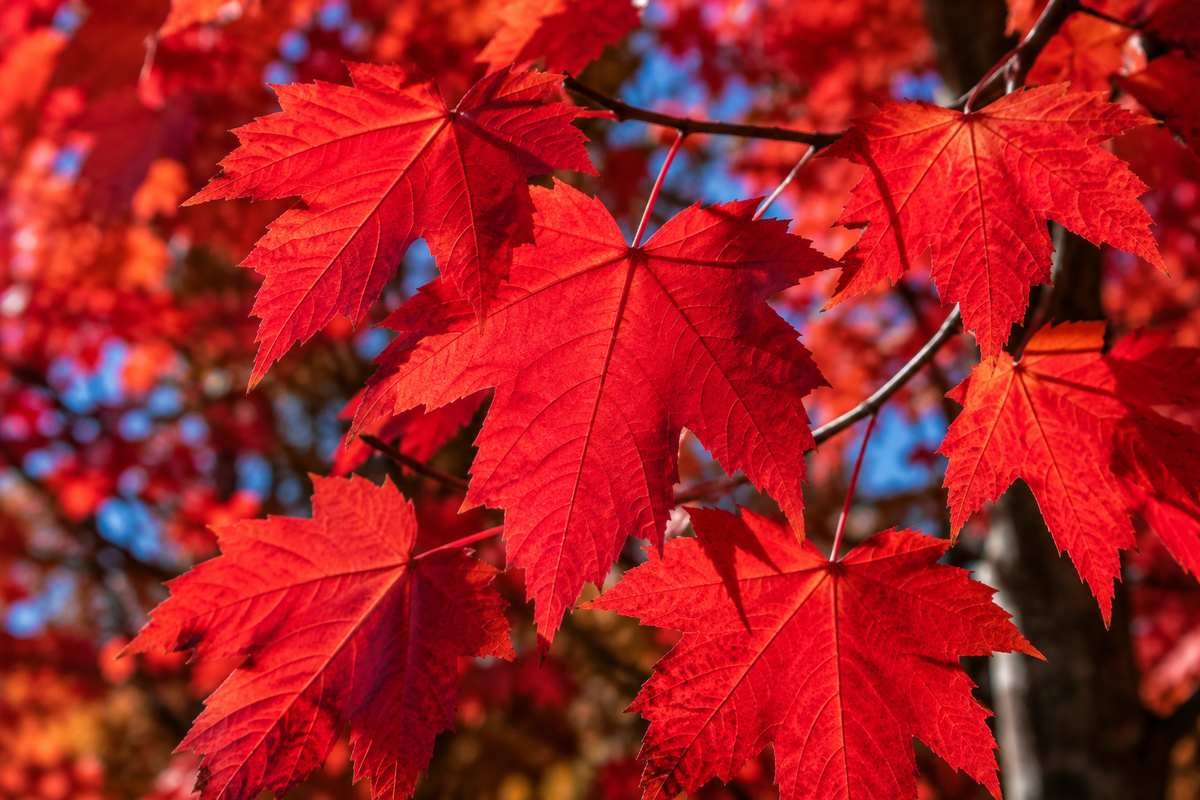
Unlike carotenoids, the red and purple pigment anthocyanin usually isn’t present in the leaf during summer. Instead, many tree species actively produce anthocyanin in autumn, typically in response to bright sunlight and a buildup of sugars trapped inside the leaf as the connection between the leaf and the rest of the tree begins to close off for the season.
Because anthocyanin production depends on active synthesis rather than simply being unmasked, red and purple fall colors tend to vary more dramatically from year to year than yellow and orange tones do, since they’re more sensitive to specific weather conditions in a given autumn. Sunny days combined with cool, but not freezing, nights are generally associated with more vivid anthocyanin production and, as a result, brighter reds.
Why Do Leaves Change Color in Fall?
The main trigger for fall color change isn’t temperature, but the length of night. As autumn progresses and nights grow steadily longer, this signals to deciduous trees that it’s time to begin preparing for winter dormancy. In response, trees gradually reduce and eventually halt chlorophyll production, a process that ultimately reveals the yellow and orange carotenoids and, in many species, triggers new anthocyanin production as well.
While night length is the most consistent and predictable signal, temperature and weather conditions still meaningfully influence the timing and intensity of the resulting display, which is why fall colors never look exactly identical from one year to the next even in the same location.
What Causes Leaves to Change Color?
Three main factors work together to determine a given fall season’s colors: the leaf pigments naturally present or produced by a specific tree species, the steadily increasing length of night as autumn progresses, and the specific weather conditions of that particular season, including temperature, rainfall, and sunlight. Species genetics play a significant role too, since different tree types are generally associated with characteristic color ranges, which is part of why maples, oaks, and birches often display noticeably different palettes even when planted side by side.
According to the USDA Forest Service, scientists don’t yet fully understand every detail of how these factors interact, but the general framework of pigments, night length, and weather conditions is well established as the core explanation.
Why Do Some Trees Change Color Before Others?
Timing differences between species are generally understood to be genetically inherited traits, meaning a specific tree species will typically show similar color-change timing at similar latitudes, whether it’s growing at a cooler high elevation or a warmer lowland location. Some species, like certain maples, are known for changing color relatively early in the season, while others, like some oaks, tend to hold their color change until later in autumn.
Local growing conditions, including soil moisture, sun exposure, and even a specific tree’s health, can also cause some individual trees to change color slightly earlier or later than others of the same species nearby.
Why Do Leaves Fall From Trees?
As chlorophyll production stops and the visible color change occurs, trees also begin forming a specialized layer of cells at the base of each leaf stem, called the abscission layer. This layer gradually seals off the connection between the leaf and the branch, cutting off the flow of water and nutrients and eventually causing the leaf to detach and fall.
This process helps deciduous trees conserve water and energy during winter months, when maintaining leaves would require resources the tree can’t easily replace while photosynthesis is limited by cold temperatures and shorter daylight hours.
Do All Leaves Change Color?
No. Evergreen trees, such as most pines, spruces, and other conifers, retain their needle-like leaves through winter and don’t go through the same dramatic seasonal color change, since they continuously replace individual needles gradually throughout the year rather than shedding them all at once. Deciduous trees, including familiar species like maple, oak, birch, and aspen, are the ones responsible for the widely recognized fall color displays.
Even among deciduous species, the specific colors produced vary considerably. Some trees are strongly associated with vivid reds due to significant anthocyanin production, while others primarily display yellows and browns dominated by carotenoids, largely depending on each species’ particular pigment chemistry.
When Do Leaves Change Color?
The timing of fall color change varies significantly by region, elevation, and local climate, generally starting earlier at higher latitudes and higher elevations, where nights lengthen and temperatures cool sooner in the season. In much of the northern United States and similar temperate regions, peak color typically occurs sometime between late September and mid-October, while more southern regions often see peak color later, into late October or even November.
Because timing depends on a combination of night length and local weather conditions, the exact peak color window can shift somewhat from year to year, which is why regional fall foliage tracking reports and forecasts are updated regularly during the season rather than following a fixed calendar date.
Common Misconceptions
Fall colors aren’t created suddenly in autumn. Carotenoid pigments responsible for yellow and orange tones are present in the leaf throughout the entire growing season; they’re simply hidden by chlorophyll until fall.
Cold temperatures alone don’t cause leaves to change color. The primary trigger is the increasing length of night, though temperature and weather conditions do influence the intensity and timing of the display.
Not every fall color comes from the same type of pigment. Yellows and oranges generally come from carotenoids already present in the leaf, while reds and purples usually come from anthocyanins actively produced during autumn itself.
An early frost doesn’t necessarily create better fall color. In fact, a hard freeze can sometimes damage leaf cells and cause leaves to drop before their full color potential develops, rather than enhancing the display.
Frequently Asked Questions
Why do some years have more vibrant fall colors than others?
Warm, sunny fall days combined with cool but not freezing nights are generally associated with the most vivid displays, particularly for red and purple anthocyanin-based colors, while drought or unusually warm weather can lead to duller, shorter-lived color.
What pigments are responsible for fall leaf colors?
Chlorophyll produces green, carotenoids produce yellow, orange, and brown, and anthocyanins produce red, purple, and crimson tones, with the final appearance of any given leaf depending on which pigments are present and in what amounts.
Why do leaves eventually turn brown?
After chlorophyll, carotenoids, and anthocyanins break down or fade, a separate compound called tannin remains in the leaf’s cell walls, and since tannins don’t fade the way other pigments do, they’re responsible for the brown color leaves take on toward the end of the season.
Does the same tree always show the same fall colors every year?
Not exactly. While a tree’s general color range is largely determined by its species and genetics, the specific vibrancy and timing can shift from year to year depending on that season’s particular weather conditions.
Do leaves in warmer climates change color?
Many warmer climates have fewer deciduous trees overall, and where deciduous species are present, fall color changes can still occur but may be less dramatic or more variable, since consistently mild temperatures and less pronounced seasonal night-length changes can affect pigment development.
Conclusion
The colors of autumn aren’t something trees create out of nowhere each fall; they’re a reveal of pigments that, in the case of carotenoids, were quietly present all along, combined with new anthocyanin production triggered by lengthening nights and specific weather patterns. Understanding this layered chemical process, chlorophyll fading, carotenoids emerging, and anthocyanins forming under the right conditions, makes it easier to appreciate why fall foliage never looks quite the same from one year to the next. It’s less a single event and more the visible result of a tree’s entire seasonal preparation for winter.

Ethan Carter is a nature enthusiast and educational writer at Wonderexplained. He creates well-researched articles about animals, oceans, weather, and the natural world, making complex topics easy to understand. His goal is to provide accurate, engaging, and reader-friendly content that inspires curiosity and lifelong learning.
