

Tigers are the largest cats on Earth. They are also among the most threatened. They range across Asia, from Russia to Sumatra and mainland Southeast Asia. In many places, only small, scattered populations survive. This collection of tiger facts covers how big tigers get, how they hunt, how they raise their young, and how many are left in the wild. Some of the numbers, especially population and lifespan figures, vary between sources, so where scientists disagree, the article says so.
Quick Facts About Tigers
- Scientific name: Panthera tigris
- Size rank: The largest member of the cat family.
- Diet: Meat only, mostly deer and wild pigs
- Social life: Mostly solitary
- Gestation: Roughly 100 days
- Conservation status: Endangered on the IUCN Red List.
Physical Features
Tigers Are the Largest Cats, but Size Varies
Males of the larger continental tiger may weigh up to about 660 pounds, while the upper range for males of the smaller Sunda tiger is around 310 pounds. Within both groups, males are heavier than females. Body size follows the region and the subspecies, so any single “tiger weight” is only a rough guide.
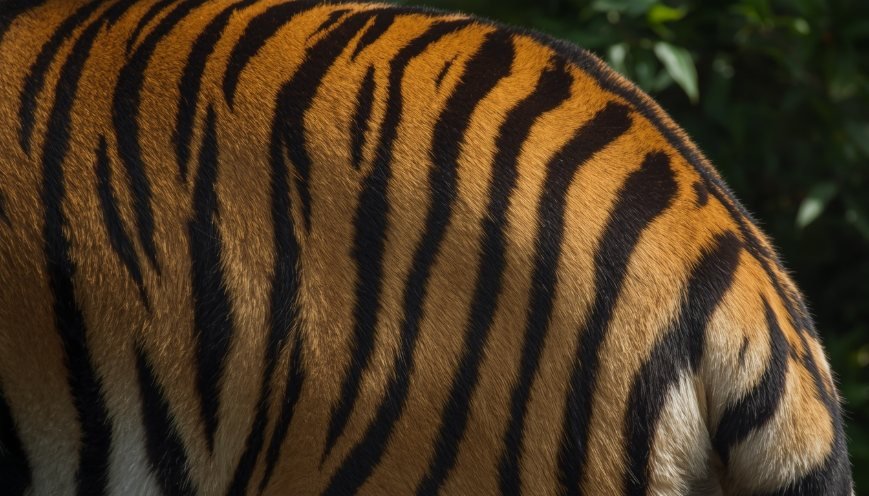
Every Tiger Has a Unique Stripe Pattern
A tiger’s stripe pattern works like a fingerprint and can be used to identify individuals. Researchers use this in camera-trap surveys to tell one animal from another. The stripes also break up the outline of the body in tall grass and forest shade.
Tigers Have White Spots on the Backs of Their Ears
Many tigers have pale spots on the backs of their ears. They resemble eyes and may help deter predators or communicate with cubs. Their exact function is not settled.
White Tigers Are a Color Variant, Not a Separate Kind
White tigers are not a separate subspecies. They are a genetic variant of the Bengal tiger that lacks the orange pigment, and they are extremely rare in the wild.
Habitat and Range
Tigers Live Across Very Different Habitats
Tigers are not limited to the jungle. The Sundarbans mangrove forest is one habitat, and tigers there mainly prey on spotted deer and occasionally on fish and crabs. In Russian winters, Amur tigers shift toward daylight activity, following their prey. The species adapts to cold forest, grassland and tropical wetland alike, provided prey and cover are available.
Tigers Need a Lot of Forest
WWF estimates that protecting a single tiger means conserving roughly 24,710 acres of forest. That is why conservation groups focus on large connected landscapes rather than small reserves.
Tigers Have Disappeared from Much of Their Old Range
The Bali, Javan and Caspian tiger populations are gone, and tigers are considered functionally extinct in Cambodia, Vietnam and Laos. Today’s range is a fraction of the historic one.
Read This 40+Lion Facts: Interesting Facts About Lions[2026]
Diet and Hunting
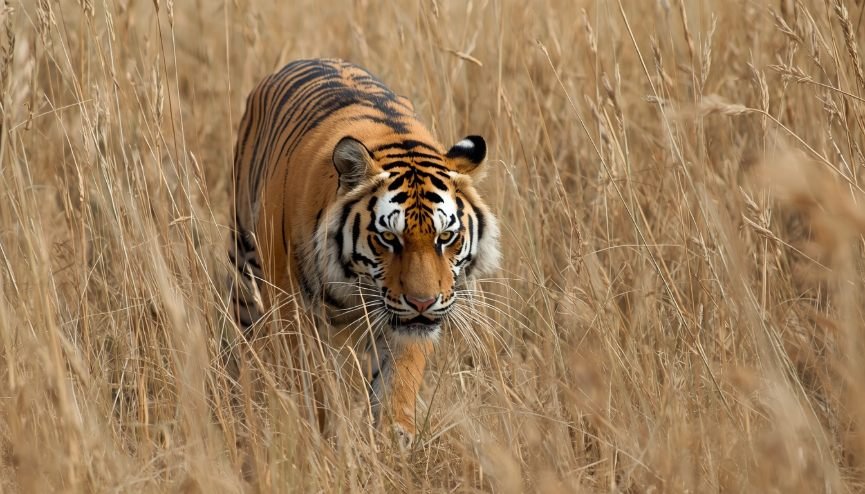
Tigers Are Ambush Predators
Tigers usually stalk to within about 25 metres of prey, then make a short final rush. They tend to abandon an attack that has not succeeded within roughly 150 to 200 metres. Their strategy is to get very close, not to outrun anything.
Most Hunts Fail
Estimates of hunting success range from about 5% to 50%. Nobody has collected a large modern sample of complete hunts, so treat any single percentage cautiously. Failed stalks often come down to prey noticing the cat first.
Tigers Eat Large Prey
Sambar, chital and wild boar make up the bulk of the diet across most of the range, and typical prey weighs about 60 to 250 kg. Tigers are obligate carnivores and cannot live on plants.
Tigers Can Eat a Huge Amount in One Sitting
A tiger may eat up to about 40 kg (88 lb) of meat in one meal. They rarely eat at the kill site. They usually drag the animal into cover first, and they may stay with a large kill for 2 to 4 days or longer.
Behavior and Communication
Adult Tigers Live Mostly Alone
Wild tigers are thought to be solitary, except when mating or raising young. A male’s territory commonly overlaps those of several females.
Tigers Mark and Defend Territory
They mark territory with secretions and scratch marks on trees, and disputes are usually settled by intimidation rather than outright violence. Fights do happen. Competition with other tigers is one reason adult mortality stays high.
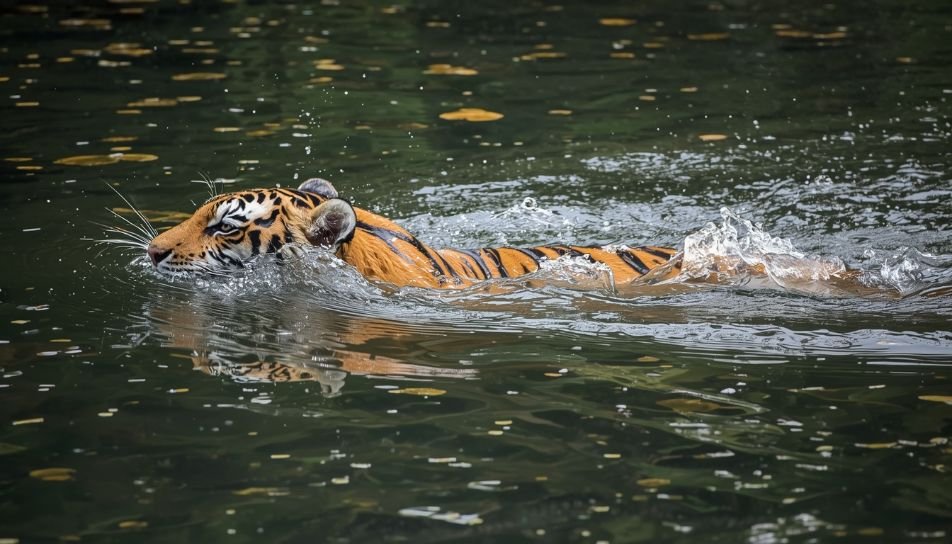
Tigers Are Strong Swimmers
Unlike most cats, tigers often enter water to travel, cool down or hunt. Sundarbans tigers are known for regularly swimming between mangrove islands.
Tigers Roar, and They Also Chuff
The roar comes from a specialized larynx and can carry a long way through forest, which helps with territorial spacing and finding mates. At close range, tigers also “chuff,” a soft, non-threatening exhalation used in friendly encounters.
Tigers Are Most Active Around Dusk and Night
Tigers hunt mainly between dusk and dawn, though they will hunt in the daytime, especially in harsh conditions. Their activity follows their main prey.
Reproduction and Young
Female Tigers Only Ovulate After Mating
Tigers are induced ovulators, so females do not release eggs until mating occurs. Mating can happen at any time of year but is most common between November and April.
Litters Are Usually Two to Four Cubs
Gestation lasts about 100 days, and litters range from one to seven cubs, averaging two to four. Newborns are blind and helpless. Their eyes open at 6 to 14 days.
Mothers Raise Cubs Alone
Male tigers provide no parental care. A mother feeding cubs must increase her killing rate by about 50% to meet the extra demand.
Cubs Spend Up to Three Years Learning to Hunt
Cubs begin taking solid food at about two months, join hunting trips at 5 to 6 months, and stay with their mother until 18 months to 3 years. They learn stalking and killing by watching and practicing.
Many Cubs Do Not Survive to Adulthood
About half of wild cubs do not survive past two years, and only 40% of those that reach independence go on to establish a territory and breed.
Read This Why Do Lions Have Manes? The Science Behind Their Thick, Fluffy Hair
Lifespan
Lifespan Figures Differ by Source
The Smithsonian’s National Zoo gives 10 to 15 years as usual in the wild, and up to about 20 in human care. Animal Diversity Web lists 8 to 10 years as typical in the wild, and captive tigers as old as 26. The differences reflect how studies are done and how hard wild tigers are to follow, so treat any single number as approximate.
Conservation
Tigers Have Declined Sharply Over a Century
Wild tigers fell from an estimated 100,000 at the start of the 20th century to around 3,200 in 2009.
Current Numbers Depend on What Is Being Counted
The IUCN estimate is 3,726 to 5,578 tigers, excluding cubs, with about 3,140 mature individuals. A 2023 report put the global figure near 5,574. The figures differ because they include different animals and apply different evidence rules. They are not really in conflict.
India Holds Most of the World’s Wild Tigers
India counted 3,682 wild tigers in 2022, roughly 75% of the global population according to that source. Other sources say about 70%, so the exact share depends on which global total you use.
A Conservation Program Helped Turn Things Around
India’s tiger population had fallen to 1,827 by the early 1970s. Project Tiger launched on 1 April 1973 in response. The rebound in India is widely treated as one of the few large-scale tiger successes.
The Main Threats Are Poaching and Habitat Loss
WWF calls poaching the most immediate threat. Habitat fragmentation isolates small populations and, together with hunting of prey species, causes local prey shortages.
Recovery Is Possible
A 2025 IUCN Green Status assessment rated tigers Critically Depleted, but estimated that over 25,000 could live in the wild if suitable historic habitat were restored.
Read This Why Do Elephants Have Big Ears? 7 Fascinating Science Facts [2026]
Frequently Asked Questions
How many tigers are left in the wild?
Roughly 3,700 to 5,600, depending on the counting method. The IUCN range excludes cubs, and a 2023 report gave about 5,574. Most live in India. Numbers change with each new national survey.
What do tigers eat?
Mostly deer and wild pigs, with sambar and chital especially important where they occur. Tigers also take larger animals such as gaur when they can, and smaller prey when large prey is scarce.
How long do tigers live?
About 10 to 15 years in the wild is a common figure, though some sources give shorter averages. Captive tigers can live to around 20 or more.
Where do tigers live?
Across parts of Asia, from Russia’s far east to India, Southeast Asia and Sumatra. They live in forests, grasslands and mangroves, but only in fragments of their historic range.
Are tiger facts endangered?
Yes. The IUCN Red List lists them as Endangered. The 2025 Green Status assessment also rates them Critically Depleted, which measures how far the species is from its full recovery potential.
Conclusion
Tigers combine size, stealth and unusually flexible habits: they swim, live in snow and mangrove, and hunt prey many times heavier than a person. They are also a conservation story with mixed results. Numbers have recovered in some places and collapsed in others. The best current estimates put them at a few thousand animals worldwide.

Ethan Carter is a nature enthusiast and educational writer at Wonderexplained. He creates well-researched articles about animals, oceans, weather, and the natural world, making complex topics easy to understand. His goal is to provide accurate, engaging, and reader-friendly content that inspires curiosity and lifelong learning.

2 thoughts on “40+Tiger Facts: Interesting Facts About Tigers[2026]”