

A male lion’s mane is one of the most recognizable features in the entire animal kingdom, framing its face in a thick collar of hair that no other big cat grows. Why do lions have manes has puzzled naturalists for well over a century, including Charles Darwin himself, who proposed early theories about its purpose. Thanks to long-term field research in Tanzania’s Serengeti National Park, scientists now have a much clearer picture of what the mane actually communicates, and it turns out to involve both attracting mates and sizing up rivals. This article breaks down what a lion’s mane is really used for, why some manes are darker than others, and why the mane comes with a genuine physical cost.
Quick Answer
Lions have manes primarily because the mane functions as a signal to both potential mates and rival males. According to long-term research by biologists Peyton West and Craig Packer at the University of Minnesota, mane darkness reflects a male’s testosterone levels and nutrition, which females use to judge his quality as a mate, while mane length signals fighting ability to other males. The mane’s size and color also respond to ambient temperature, since a thick, dark mane carries a real cost in hotter climates.
What Is a Lion’s Mane Used For?
A lion’s mane serves two closely related but distinct signaling purposes rather than a single function. According to research from the University of Minnesota’s Lion Center, mane darkness conveys information about a male’s nutrition and testosterone levels, which influences both female mate choice and how other males assess a rival. Mane length, on the other hand, appears to specifically signal a male’s fighting ability to other males, based on long-term records showing that males with shorter manes had often been recently injured or sick.
In short, the mane works less like a single ornament and more like two overlapping signals, color and length, each carrying somewhat different information to the lions reading it.
Lion Manes and Attracting Mates
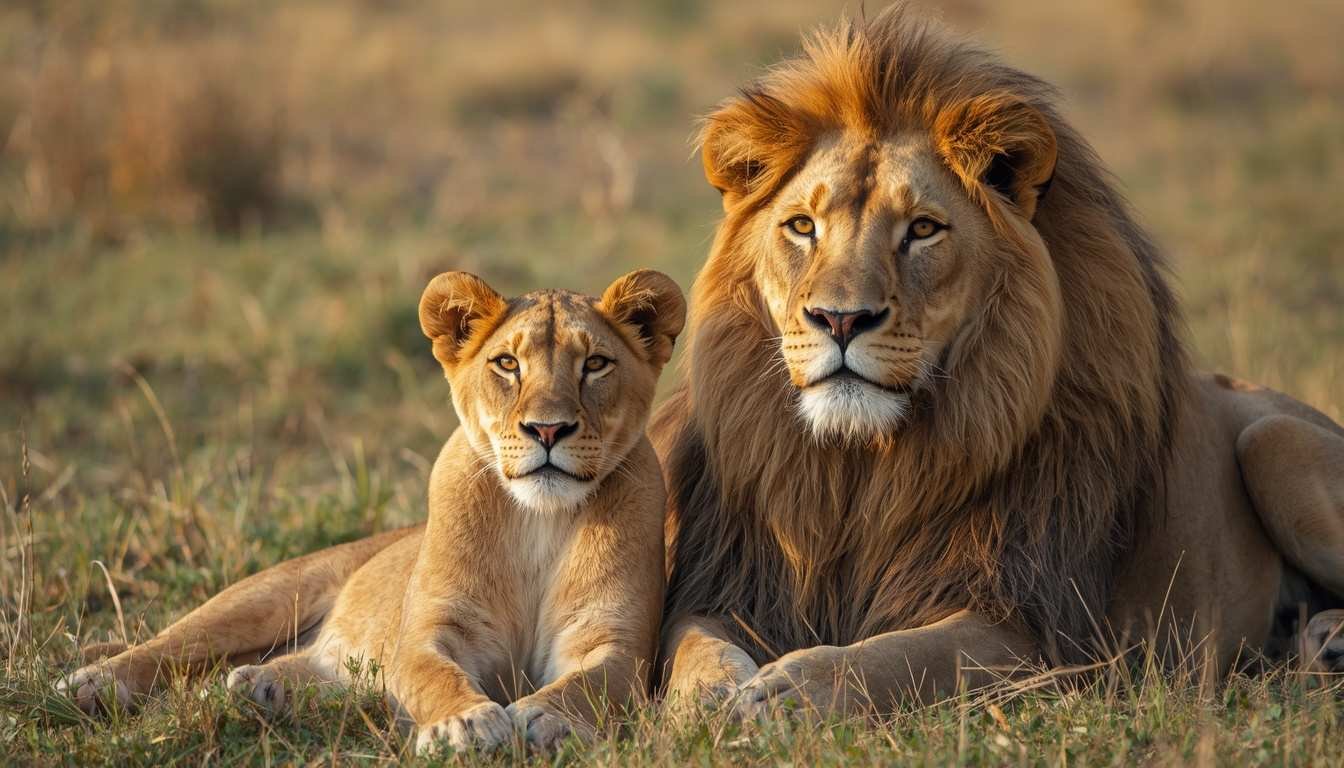
Female lions show a clear preference for males with darker manes, a finding confirmed through a distinctive field experiment conducted by researchers Peyton West and Craig Packer in the Serengeti. The researchers presented life-sized dummy lions with detachable mane wigs of different colors and lengths to wild lions and recorded how females and males responded. Female lions consistently approached dummies with darker manes over those with lighter manes.
This preference makes practical sense from a mating standpoint, since the research found that males with darker manes had higher testosterone levels, and dark-maned males also experienced longer reproductive lifespans and higher offspring survival rates. By choosing a mate based partly on mane darkness, female lions are effectively selecting a mature, well-nourished male who may be better able to protect and provide for the pride.
Lion Manes and Male Competition
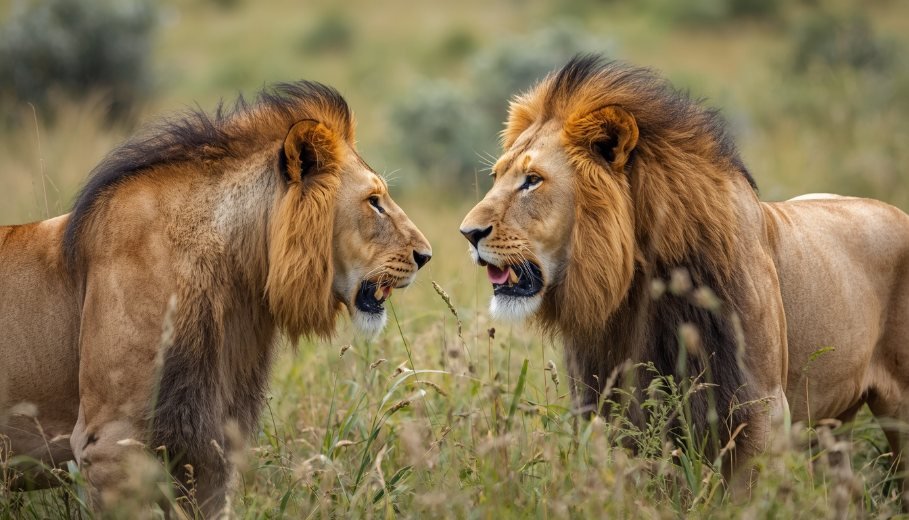
Beyond attracting females, a lion’s mane also plays a role in male-to-male competition and assessment. In the same Serengeti field experiments, male lions tended to avoid approaching dummies with longer, darker manes, suggesting that other males use mane appearance to judge whether a rival is worth challenging.
Long-term observational records support this pattern, since males with shorter manes had frequently been recently injured or sick, which suggests mane length reflects a male’s current fighting condition rather than being purely decorative. In this sense, the mane may help some potential conflicts get resolved through visual assessment alone, without necessarily requiring an actual physical fight.
Read This Why Can Foxes Bury Their Food? The Science Behind Their Food-Caching Behavior
Do Lion Manes Protect Their Necks?
The idea that a lion’s mane evolved primarily to physically protect its neck during fights, an idea originally proposed by Charles Darwin, has been directly tested and found to be a less significant factor than once assumed. Peyton West stated that the research team’s data did not support neck protection as a significant driver of mane evolution, based on the Serengeti field study results.
This does not necessarily mean the mane offers zero physical protection during a fight, but the research suggests that its role as a signal of quality to females and rival males is the better-supported explanation for why the trait evolved and persists, rather than any direct defensive function.
Why Are Some Lion Manes Darker Than Others?
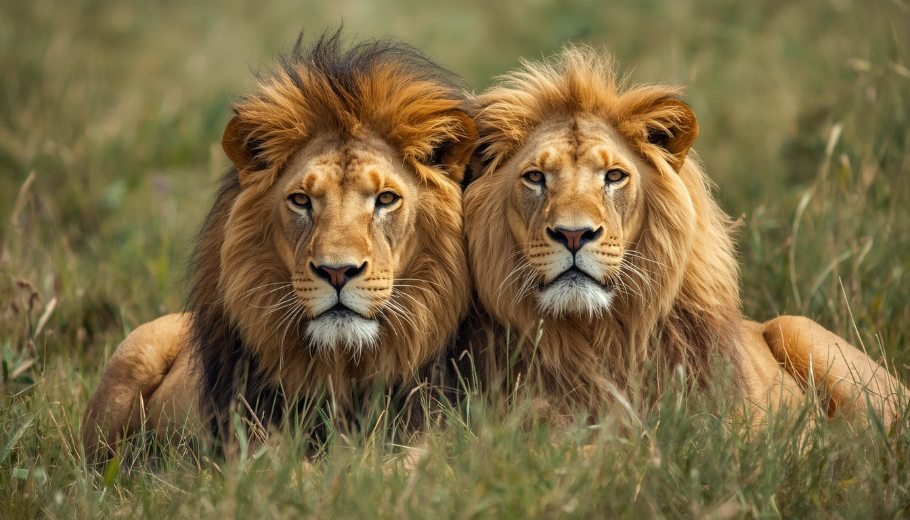
Mane darkness in lions is linked to a combination of testosterone levels and nutrition. According to the Serengeti research, statistical comparisons of mane darkness against blood testosterone levels showed that males with darker manes had higher testosterone. Researchers also compared “belly sizes,” a rough indicator of recent food intake, and found that during cooler months, darker-maned males had larger bellies than lighter-maned males, indicating that darker manes are also connected to a male’s overall nutrition and health.
Because both testosterone and nutritional condition can vary from one individual lion to another, and can shift over an individual male’s life depending on health, age, and food availability, mane darkness is not a fixed trait but one that can reflect a male’s current physical condition.
Read This Why Do Foxes Scream at Night? The Real Reason Behind Their Eerie Calls
Why Do Some Male Lions Have Small or No Manes?
Ambient temperature plays a major role in mane size, which explains why some lion populations, most notably the lions of Tsavo in Kenya, are known for having little to no mane at all. The Serengeti research found that maned males run hotter than females, and that males in hotter seasons, years, and habitats tend to have lighter and shorter manes than males living in cooler conditions.
This temperature relationship reflects a genuine trade-off. A large, dark mane appears to be advantageous for attracting mates and intimidating rivals, but growing and maintaining one also raises a male’s body temperature, which becomes a costlier burden to carry in consistently hot environments like Tsavo. Researchers have also noted that Serengeti lions are already developing lighter and shorter manes than they did in the past, a change scientists link to shifting environmental temperature.
Do Lion Manes Help Keep Lions Cool?
No, the evidence points in the opposite direction. Rather than helping lions stay cool, a full mane appears to make male lions run hotter. Using infrared thermography to measure body surface temperatures, researchers found that maned males were hotter than females, and that males with darker manes ran hotter still than males with lighter, blond-colored manes.
This heat cost is significant enough that it appears to directly limit mane size in hot climates. The same research found that males with darker manes had higher proportions of defective sperm and ate smaller meals during hotter weather, both changes linked to the added heat burden of a heavy, dark mane. Researchers describe this as a classic example of a costly signal, since only the healthiest, best-conditioned males can afford to grow and maintain a large, dark mane despite its physiological cost.
Read This Why Do Foxes Have Bushy Tails? The Reason Behind Their “Tails”
Frequently Asked Questions
What determines the color of a lion’s mane?
Mane color is linked to a male lion’s testosterone levels and nutritional condition, both of which can change over time based on health and food availability.
Do female lions have manes?
No, female lions do not grow a mane; the trait is specific to adult male lions.
Why do Tsavo lions have little to no mane?
Tsavo’s hot climate appears to make growing a large, dark mane too costly in terms of body heat, so males there tend to have smaller manes or none at all.
At what age do male lions grow a full mane?
Male lions typically begin developing a mane as they mature, with mane size and darkness continuing to increase as a male ages, though exact timing can vary between individuals.
Does a bigger mane mean a stronger lion?
Mane length has been linked to recent fighting condition, since males with shorter manes were often found to have recently been injured or sick, but mane size alone is not a perfect measure of overall strength.
Conclusion
A lion’s mane turns out to be a remarkably informative signal once you know how to read it, with its color hinting at testosterone and nutrition, and its length hinting at recent fighting conditions. Decades of field research in the Serengeti have shown that this signal comes at a real physiological cost, since a thick, dark mane makes a male run hotter and can even affect his fertility during warm months. That trade-off between looking impressive and staying cool helps explain both the lion’s iconic appearance and the notably mane-free lions found in hotter regions like Tsavo.

Ethan Carter is a nature enthusiast and educational writer at Wonderexplained. He creates well-researched articles about animals, oceans, weather, and the natural world, making complex topics easy to understand. His goal is to provide accurate, engaging, and reader-friendly content that inspires curiosity and lifelong learning.

1 thought on “Why Do Lions Have Manes? The Science Behind Their Thick, Fluffy Hair”