

Lions are often called the “king of the jungle,” even though they don’t actually live in jungles at all — most spend their lives in open savannas and grasslands across sub-Saharan Africa. What sets lions apart from nearly every other big cat is how social they are, living, hunting, and raising cubs together in family groups called prides.
These lion facts cover everything from their physical build to their hunting roles, communication, and the challenges they face today, giving a fuller picture of an animal that’s as complex as it is famous.
Quick Facts About Lions
- Scientific name: Panthera leo
- Habitat: Savannas, grasslands, and open woodlands, mainly in sub-Saharan Africa, with one small population in India’s Gir Forest
- Diet: Carnivorous, primarily large hoofed mammals like antelope, zebra, and wildebeest
- Social structure: Live in prides, typically made up of related females, their cubs, and a small number of adult males
- Lifespan: Roughly 12 years in the wild, up to around 25 years in captivity
- Conservation status: Listed as Vulnerable by the IUCN, with an estimated 20,000 or so remaining in the wild
Physical Features
Lions Have Strong, Compact Bodies Built for Power
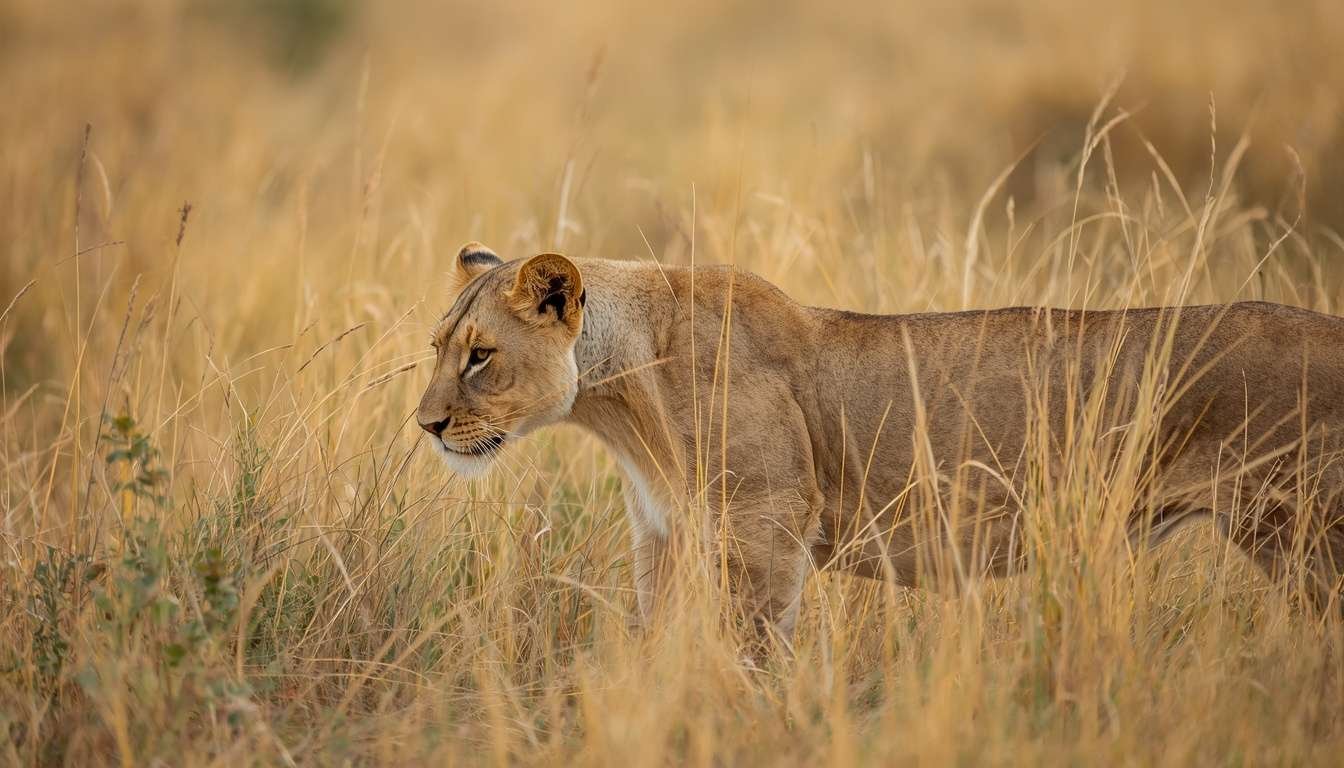
Lions have muscular builds with powerful forelegs, strong jaws, and sharp teeth adapted for bringing down and killing large prey. Their coats are typically a yellow-gold color, which helps them blend into dry grassland.
Only Male Lions Grow Manes
The mane is one of the most distinctive features in the animal kingdom, and it’s unique to males. Mane color and length vary from blond to reddish-brown to black, and research suggests it’s influenced by a combination of age, genetics, and hormone levels.
Lion and Tiger Bodies Are Strikingly Similar
Without their coats, lions and tigers are so alike in body structure that even experts can have difficulty telling them apart. The obvious differences people rely on — coat pattern and the male lion’s mane — are really more about surface appearance than underlying anatomy.
Cubs Are Born With Spotted Coats
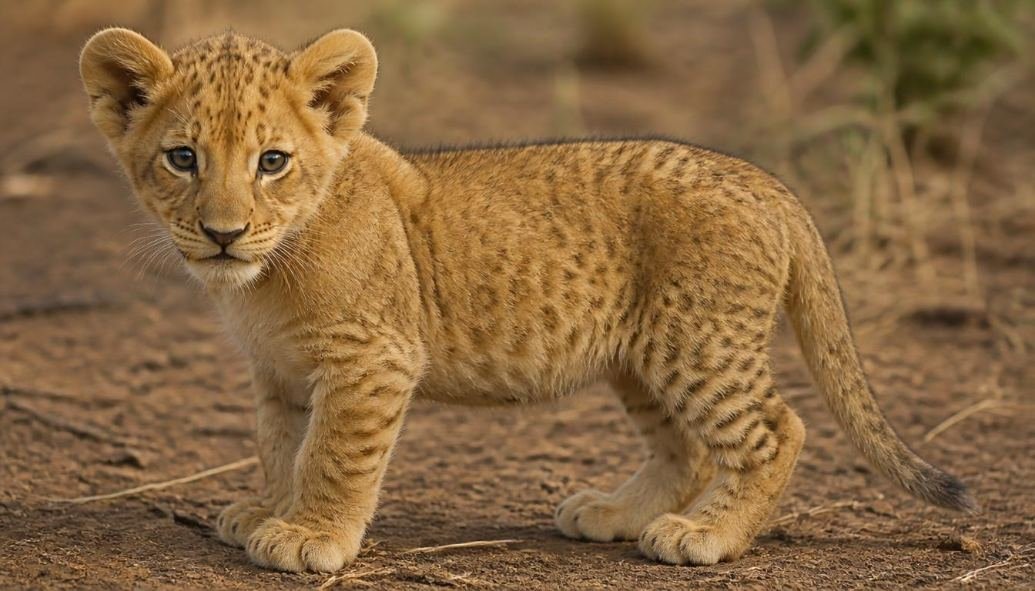
Young lions have faint spotting on their fur when they’re born. This spotting typically fades as the cubs mature into adulthood.
Habitat and Range
Most Lions Live in Grasslands, Not Jungles
Despite the popular nickname, lions primarily inhabit savannas, grasslands, and open woodland rather than dense forest. These environments give them the open sightlines and cover needed for effective group hunting.
A Small Population Survives Outside Africa
While the vast majority of lions live in sub-Saharan Africa, a small population of Asiatic lions survives in India’s Gir Forest National Park, the last remaining wild population of this subspecies outside Africa.
Lion Territory Has Shrunk Dramatically
Lions once ranged across much of Africa and into parts of Asia and Europe. Today, due to habitat loss and historical hunting pressure, lions occupy only a small fraction of their historic range, with populations now scattered and often fragmented.
Read This Why Do Lions Have Manes? The Science Behind Their Thick, Fluffy Hair
Diet and Hunting
Lions Are Apex Predators
As apex predators, lions sit at the top of their food chain with no natural predators of their own as adults, though cubs and vulnerable individuals can occasionally fall prey to animals like hyenas or leopards.
Lionesses Do Most of the Hunting
Within a pride, female lions handle the majority of hunting, often working cooperatively to bring down prey that’s larger or faster than any single lion. Male lions typically focus more on defending the pride’s territory.
Lions Hunt Mostly at Dusk and Dawn
Lions tend to hunt during low-light periods — dusk, dawn, and at night — when their prey has more difficulty spotting them approaching. Cooperative hunting helps offset the fact that lions generally lack the top speed and stamina of many of the animals they pursue.
Their Prey Ranges From Antelope to Buffalo
Lion diets are built around large and medium-sized hoofed animals such as antelope, zebra, wildebeest, and buffalo. When the opportunity arises, lions may also scavenge kills from other predators like hyenas or cheetahs.
Social Life and Communication
Read This Why Do Penguins Waddle? The Real Science Behind It [2026]
Lions Are the Only Truly Social Big Cats
Lions are unusual among big cats because they live in structured social groups called prides, rather than the mostly solitary lifestyle seen in tigers, leopards, and most other large cats.
Pride Size Can Vary Widely

A pride can range from just a few lions up to around 40 individuals, typically made up of related females, their cubs, and a small number of resident adult males — usually no more than two or three.
Female Cubs Usually Stay for Life
Female lions generally remain with their birth pride for their entire lives, while young males are pushed out once they’re old enough to compete with the pride’s dominant males, usually between two and four years of age.
A Lion’s Roar Can Travel Miles
Roaring plays a major role in lion communication, serving to declare territory, warn off rivals, and help locate other pride members. A roar can be heard from several miles away, and lions also communicate through grunts, moans, growls, and purring sounds.
Read This Why Do Elephants Have Big Ears? 7 Fascinating Science Facts [2026]
Conservation
Lions Are Classified as Vulnerable
Lion populations have declined significantly over recent decades, and the species is currently listed as Vulnerable by the IUCN Red List, with estimates suggesting roughly 20,000 lions remain in the wild.
Habitat Loss Is a Leading Threat
As human agriculture and development expand into former lion territory, habitat loss and increased conflict with people — including retaliatory killings after livestock losses — remain major pressures on remaining populations.
Frequently Asked Questions
What do lions eat?
Lions are carnivores that primarily hunt large hoofed mammals such as antelope, zebra, and wildebeest.
Where do lions live?
Most lions live in the savannas and grasslands of sub-Saharan Africa, with a small additional population in India’s Gir Forest.
How long do lions live?
Wild lions typically live around 12 years, while lions in captivity can live considerably longer, sometimes up to about 25 years.
Are lions social animals?
Yes, lions are the most social of the big cats and live in family groups called prides rather than alone.
Why do male lions have manes?
A male lion’s mane is thought to be shaped by a mix of age, genetics, and hormones, and it’s a trait unique to males of the species.
Conclusion
Lions carry a reputation as fierce, solitary kings, but the reality is more interesting: they’re deeply social animals whose survival depends on cooperation, from group hunts led by lionesses to the shared defense of pride territory. lions facts Understanding these behaviors offers a clearer picture of why lions have fascinated people for so long, and why protecting their remaining habitat matters for the species’ future.

Ethan Carter is a nature enthusiast and educational writer at Wonderexplained. He creates well-researched articles about animals, oceans, weather, and the natural world, making complex topics easy to understand. His goal is to provide accurate, engaging, and reader-friendly content that inspires curiosity and lifelong learning.
