

You’re on a whale-watching boat, scanning flat, quiet water, when suddenly forty tons of animal launch almost entirely out of the ocean and crash back down with a sound like thunder. Everyone on deck gasps at once. Then the water goes still again, as if nothing happened.
It’s one of the most dramatic things a wild animal does anywhere on Earth, and for a long time, researchers weren’t entirely sure why whales bother doing it at all.
Quick Answer
Whales breach, meaning they launch their bodies out of the water and crash back down, for several likely reasons. Leading theories include communication over long distances, removing parasites and dead skin, displaying strength during mating season, and simple play. Most researchers believe breaching often serves more than one purpose at once.
Key Takeaways
✔ Breaching can send sound signals that travel for miles underwater
✔ The impact may help whales dislodge parasites like barnacles from their skin
✔ Breaching often increases during mating season, especially among male humpback whales
✔ Young whales sometimes breach repeatedly, which many researchers interpret as play
✔ No single explanation fully accounts for every breach, and scientists believe multiple causes overlap
✔ Breaching requires enormous energy, which is part of why researchers find it so puzzling
Table of Contents
- Why Do Whales Breach?
- The Communication Theory Behind Breaching
- Could Breaching Be About Removing Parasites?
- Why Breaching Increases During Mating Season
- Is Breaching Sometimes Just Play?
- How Much Energy Does a Breach Actually Take?
- Do All Whale Species Breach the Same Way?
- Did You Know?
- Myth vs Fact
- Quick Tips: How to Watch Whale Breaching Responsibly
- Frequently Asked Questions
- Conclusion
The Communication Theory Behind Breaching
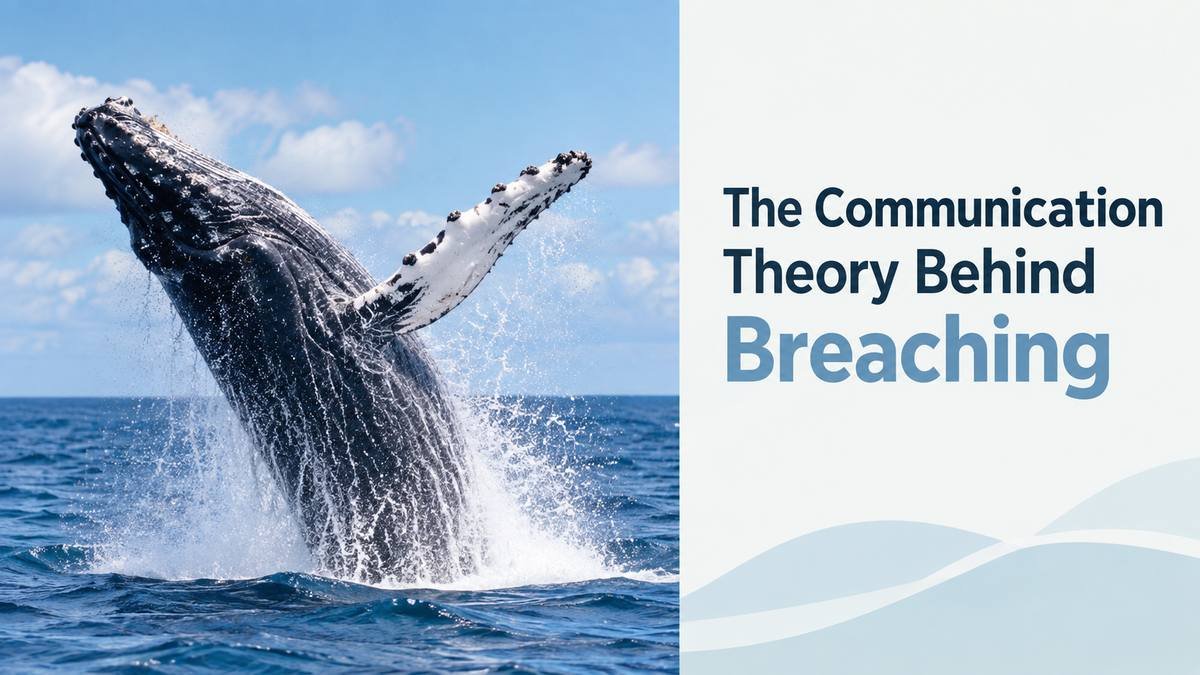
Most people assume a breach is just a whale showing off. The real explanation researchers favor is a lot more practical, and it starts underwater rather than above it.
When a whale’s body slams back down onto the surface, it creates a loud, low-frequency sound that travels remarkably well through water, sometimes for several miles. Marine biologists studying humpback whales have proposed that this impact noise may function as a long-distance signal, letting other whales know where a group is located, especially in noisy ocean conditions where vocal calls alone might not carry as clearly.
This theory gains support from how often breaching happens in groups. When one whale breaches, nearby whales sometimes respond with breaches of their own, almost like a call and response happening across open water.
Could Breaching Be About Removing Parasites?
Here’s where things get a little less glamorous, but no less interesting. Whales, like most large marine animals, deal with a constant buildup of parasites and skin irritants.
Barnacles, whale lice, and other organisms regularly attach themselves to a whale’s skin, and these hitchhikers aren’t just uncomfortable, they can also affect swimming efficiency over time. Some researchers believe the forceful impact of a breach, combined with the sheer amount of water displaced on landing, may help knock loose some of these unwanted passengers.
While this explanation makes practical sense, current evidence doesn’t confirm it as the primary reason. Most marine biologists treat parasite removal as a secondary benefit rather than the main driver of breaching, since whales without noticeable parasite loads breach just as often as those covered in barnacles.
Read This Why Are Whales Endangered? The Real Reasons Explained
Why Breaching Increases During Mating Season
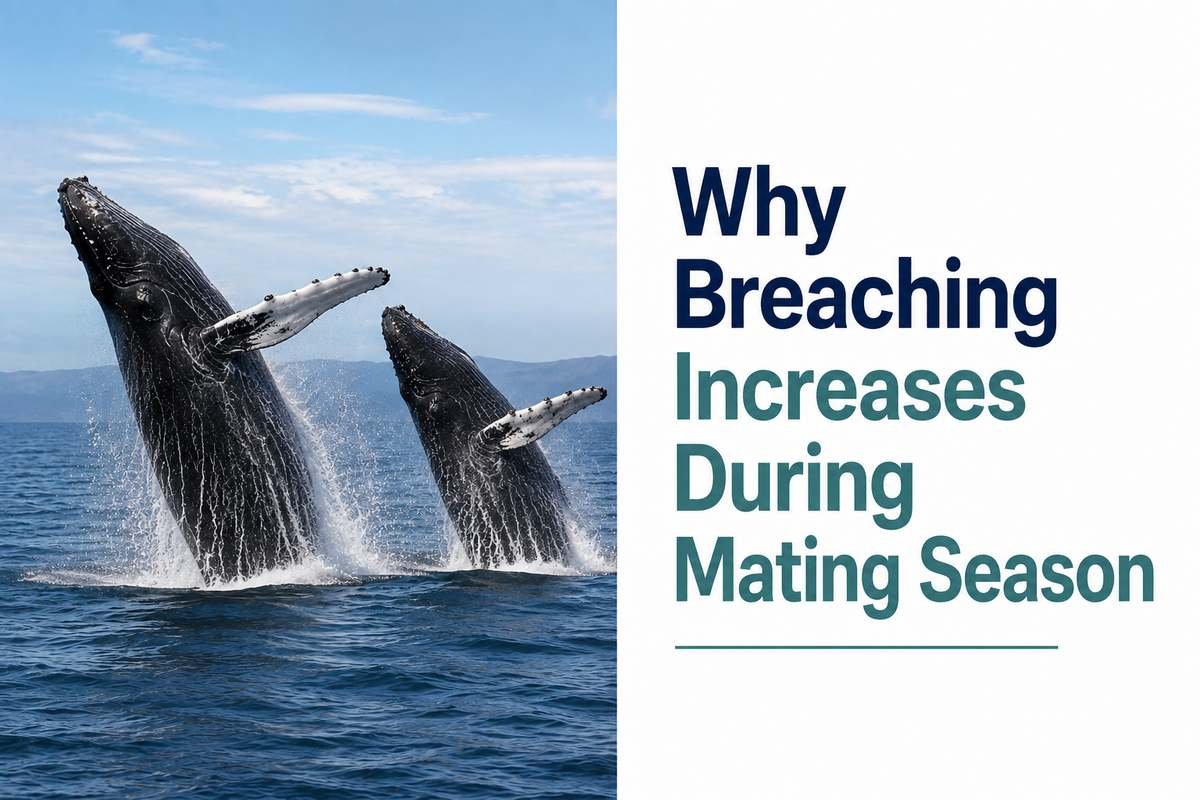
There’s another pattern that shows up clearly in the data, and it points toward something more social than practical. Breaching frequency tends to rise significantly during breeding season, particularly among male humpback whales competing for female attention.
Animal behaviorists suggest this surge in breaching may function as a physical display of strength and stamina, similar to how many land animals use size or endurance to signal fitness to potential mates. A whale capable of repeatedly launching its enormous body out of the water is, in a very literal sense, showing off exactly how strong it is.
This also helps explain why breaching sometimes happens in competitive bursts, with multiple males breaching in quick succession near a single female, almost like an underwater display arena.
Is Breaching Sometimes Just Play?
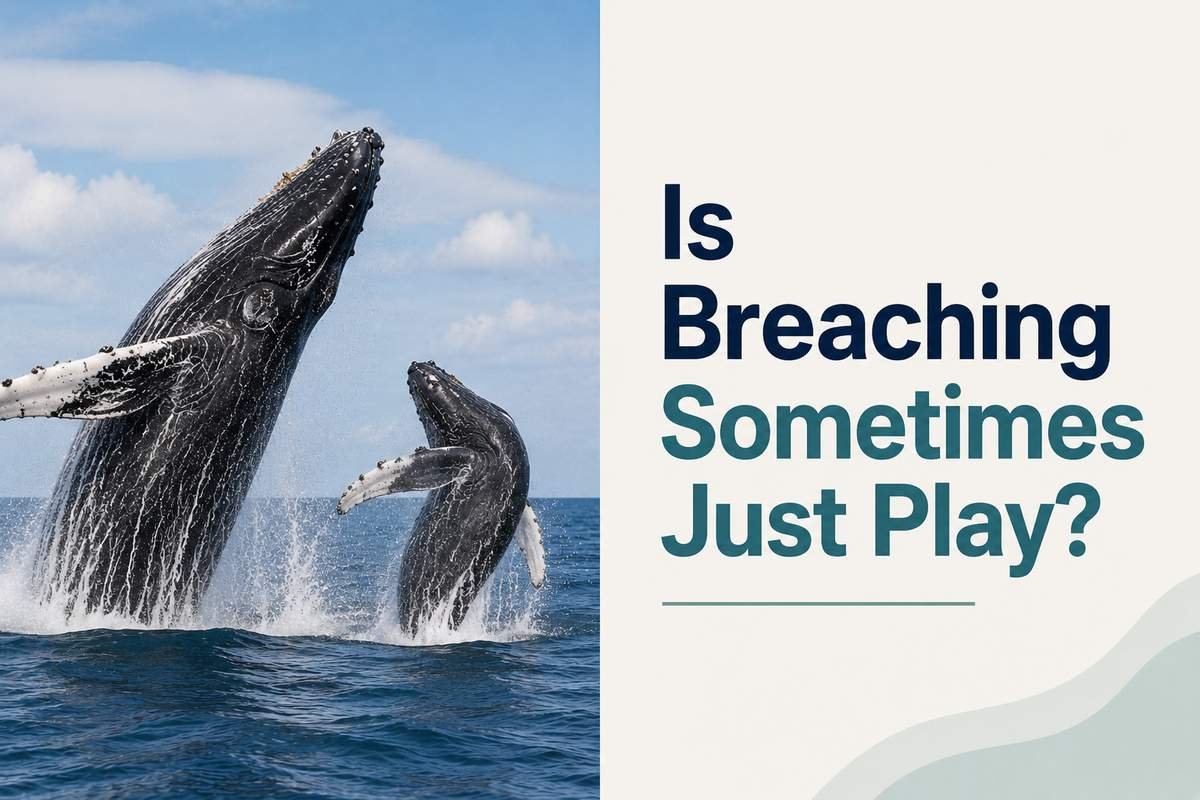
Not every breach fits neatly into a communication or mating explanation, and that’s where things get genuinely charming. Young whales, calves in particular, often breach far more frequently than adults, sometimes doing it over and over with no obvious purpose at all.
Many researchers interpret this repetitive, seemingly purposeless breaching as play, similar to how young mammals on land wrestle, chase, or leap simply because it’s part of normal development. Practicing the physical coordination needed for a full breach early in life may also help young whales build strength and body awareness they’ll rely on throughout adulthood.
Learn more about how humpback whale calves develop during their first year of life.
How Much Energy Does a Breach Actually Take?
Given everything a breach involves, it’s worth asking just how demanding this behavior really is. The answer is: extremely demanding.
A full breach requires a whale to accelerate powerfully underwater before launching most or all of its massive body above the surface, fighting gravity the entire way. For an animal that can weigh over 40 tons, this takes an enormous burst of muscular effort in a very short window of time.
This is exactly why the behavior puzzles researchers so much. If breaching offered no real benefit, natural selection likely would have phased it out given how much energy it costs. The fact that whales continue breaching regularly, despite the physical toll, strongly suggests it serves a meaningful purpose, even if scientists haven’t pinned down one single, universal reason.
Do All Whale Species Breach the Same Way?
Not exactly, though the general behavior appears across many species. Humpback whales are the most famous breachers, known for launching nearly their entire bodies clear of the water, but species like right whales, gray whales, and even orcas also breach with varying frequency and style.
Some species tend to breach at a steeper angle, while others launch at more of a diagonal, twisting slightly before impact. These differences likely relate to body shape, typical behavior patterns, and possibly even the specific social or environmental reasons driving the breach in that species.
💡 Did You Know?
A breaching humpback whale can generate a splash loud enough to be detected by underwater microphones from several miles away, making breaching one of the loudest natural sounds produced by any marine mammal.
Myth vs Fact
| Myth | Fact |
|---|---|
| Whales breach only to show off for humans watching nearby | Breaching happens whether or not humans are present, driven by communication, mating, or play |
| Breaching always means a whale is stressed or in danger | Breaching is a normal, healthy behavior seen regularly in calm, undisturbed whales |
| Only humpback whales breach | Many whale species breach, including gray whales, right whales, and orcas |
| Scientists know exactly why whales breach | Researchers have several leading theories, but no single explanation has been fully confirmed |
Quick Tips: How to Watch Whale Breaching Responsibly
✓ Maintain a respectful distance recommended by local marine wildlife guidelines
✓ Avoid sudden boat movements that could startle or stress nearby whales
✓ Keep noise levels low, since whales rely heavily on sound underwater
✓ Choose whale-watching operators that follow responsible marine wildlife viewing practices
Read This How Long Do Whales Live? Lifespan by Species (Full Guide)
Frequently Asked Questions
Do whales breach for the same reason every time?
Not necessarily. Researchers believe breaching can serve different purposes depending on context, including communication, mating displays, parasite removal, or simple play, and a single whale may breach for different reasons at different times.
Is breaching dangerous for whales?
Breaching itself isn’t considered dangerous under normal circumstances, since whales are well adapted to the physical demands of the behavior. However, breaching near boats or shallow waters can occasionally pose risks to both the whale and nearby vessels.
Why do some whales breach more than others?
Individual personality, age, species, and current behavior, such as mating displays or play, all influence how often a whale breaches. Younger whales and actively competing males tend to breach more frequently than others.
Can whales breach more than once in a row?
Yes, whales often breach multiple times consecutively, particularly during social displays, mating competition, or play behavior in young calves. Some recorded sequences include a dozen or more breaches within just a few minutes.
Do whales breach at night?
Whales are capable of breaching at any time, though most documented observations happen during daylight simply because that’s when researchers and whale-watchers are most likely to see it happen.
Conclusion
No single theory fully explains why whales throw their enormous bodies into the air, and that’s part of what makes the behavior so fascinating. It might be a signal sent across miles of open ocean, a display of raw strength, a way to shed unwanted hitchhikers, or simply the marine equivalent of a joyful leap. Most likely, it’s some combination of all of them, changing meaning depending on the whale, the season, and the moment. The next time you watch a whale crash back into the sea, you’re witnessing behavior scientists are still working to fully understand.
Related Article
How Long Do Whales Live? Lifespan by Species (Full Guide)
Why Are Whales Endangered? The Real Reasons Explained

Ethan Carter is a nature enthusiast and educational writer at Wonderexplained. He creates well-researched articles about animals, oceans, weather, and the natural world, making complex topics easy to understand. His goal is to provide accurate, engaging, and reader-friendly content that inspires curiosity and lifelong learning.

1 thought on “Why Do Whales Breach? The Leading Theories Explained”