

You’ve probably caught your cats mid-grooming session — one patiently licking the other’s ear while the second cat just sits there, eyes half-closed, completely relaxed. It looks sweet. But there’s actually a lot going on beneath that quiet moment.
Cats aren’t naturally big fans of physical closeness unless they trust the individual involved. So, why do cats groom each other? In most cases, it’s a combination of social bonding, trust, communication, and practical grooming.
Quick Answer
Cats groom each other — a behavior scientists call allogrooming — mainly to strengthen social bonds, reduce tension between cats living together, and reach spots they can’t clean themselves, like the head and neck. It’s most common between cats that already have a friendly relationship, and it often signals trust, comfort, and social rank within a household.
Key Takeaways
✔ Allogrooming is a bonding behavior, not just hygiene
✔ Cats typically only groom others they feel safe around
✔ It helps reach hard-to-clean areas like the head and ears
✔ It can also reflect subtle social hierarchy between cats
✔ Kittens learn this behavior early from grooming by their mother
✔ Excessive or one-sided grooming can sometimes signal stress
Table of Contents
- What Allogrooming Actually Means
- Why Trust Comes First
- The Practical Reason: Reaching the Hard Spots
- What Grooming Reveals About Social Rank
- Where This Behavior Comes From
- When Grooming Turns Into a Problem
- Myth vs Fact
- Quick Tips for Multi-Cat Households
- Frequently Asked Questions
What Allogrooming Actually Means
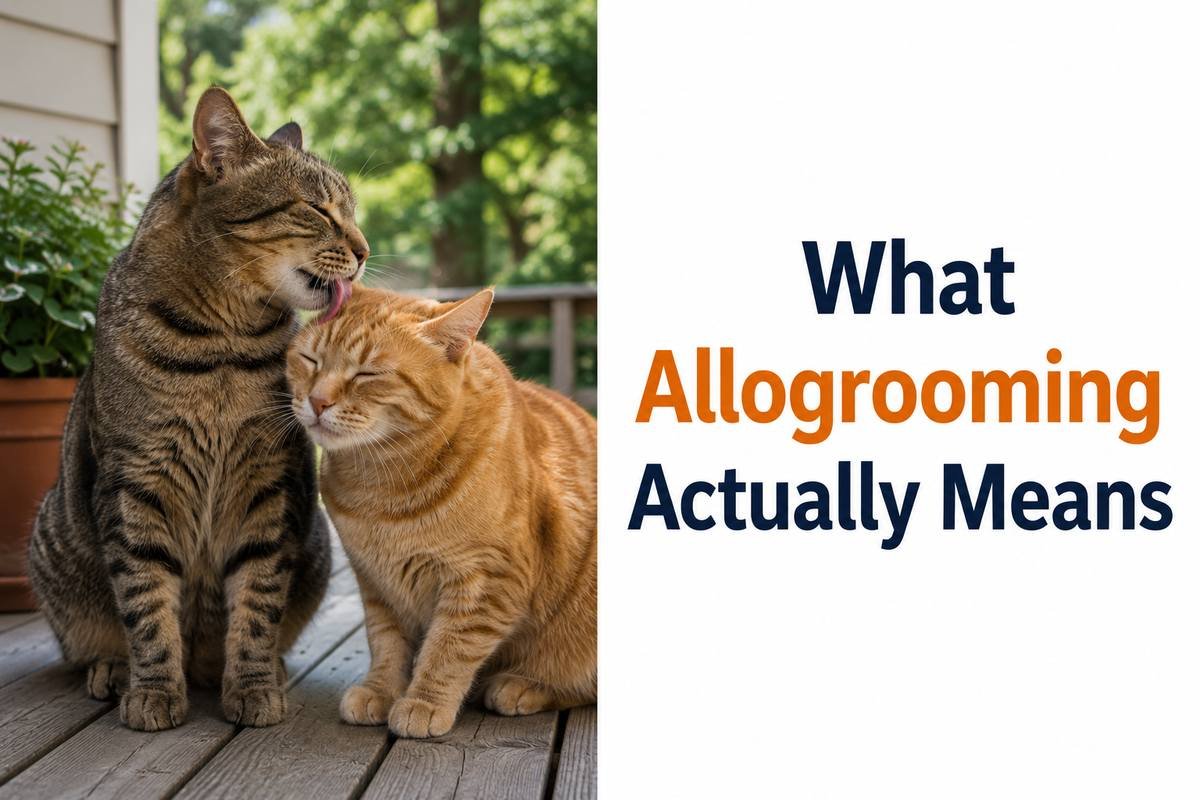
Scientists have a specific term for this behavior: allogrooming, meaning grooming directed at another individual rather than yourself. It shows up across several social species — primates do it, birds do it, and cats do it too, even though cats have a reputation for being independent loners.
That reputation isn’t entirely accurate. Domestic cats that grow up together, or that develop a close relationship over time, often build small rituals of physical contact. Grooming is one of the clearest ones.
Why Trust Comes First
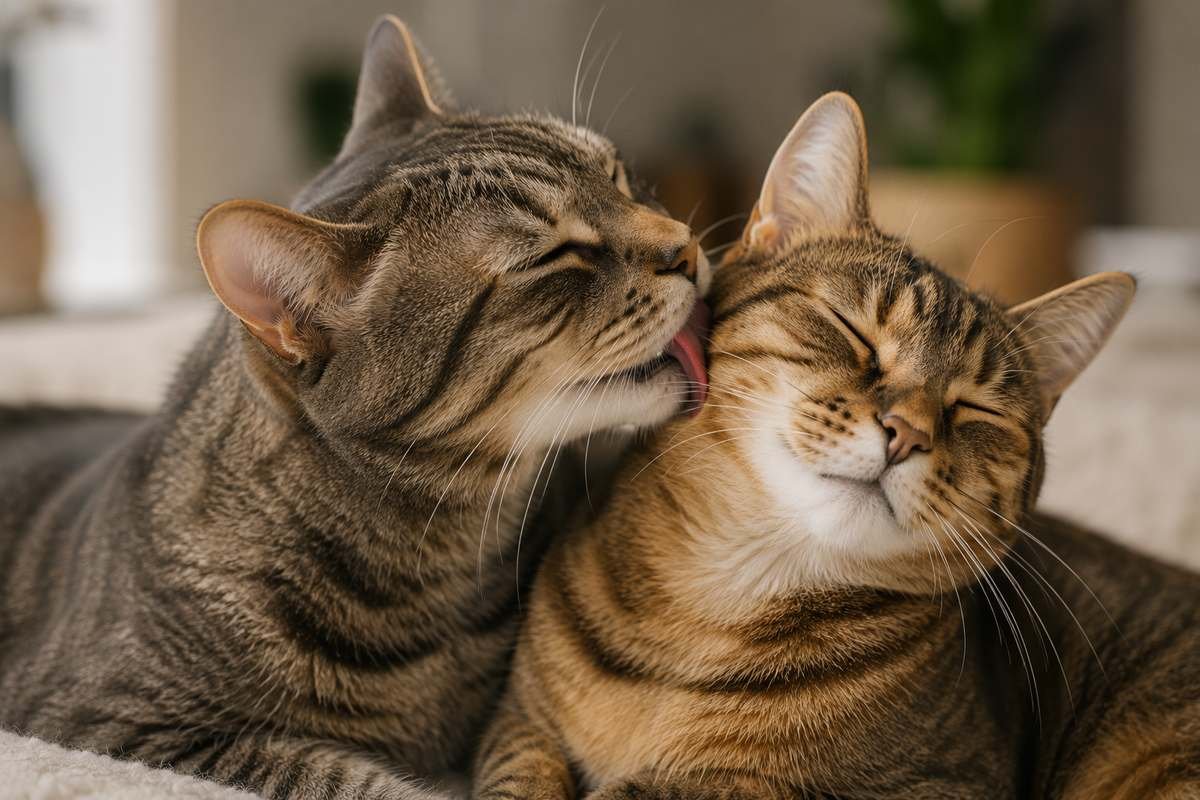
A cat’s neck, head, and ears are vulnerable spots. Predators typically go for the throat, so letting another animal put its mouth near that area isn’t something a cat takes lightly.
That’s exactly why allogrooming matters so much as a signal. When one cat allows another to groom its head, it’s essentially saying, “I don’t see you as a threat.” Cats that dislike or distrust each other almost never groom one another — the behavior only appears once a real bond has formed.
This is also why you’ll rarely see two cats who just met start washing each other. Grooming usually shows up weeks or months into a relationship, after the cats have already worked out that they’re not competing for space or resources.
Read This Why Do Cats Make Biscuits? The Real Reason Behind Kneading
The Practical Reason: Reaching the Hard Spots
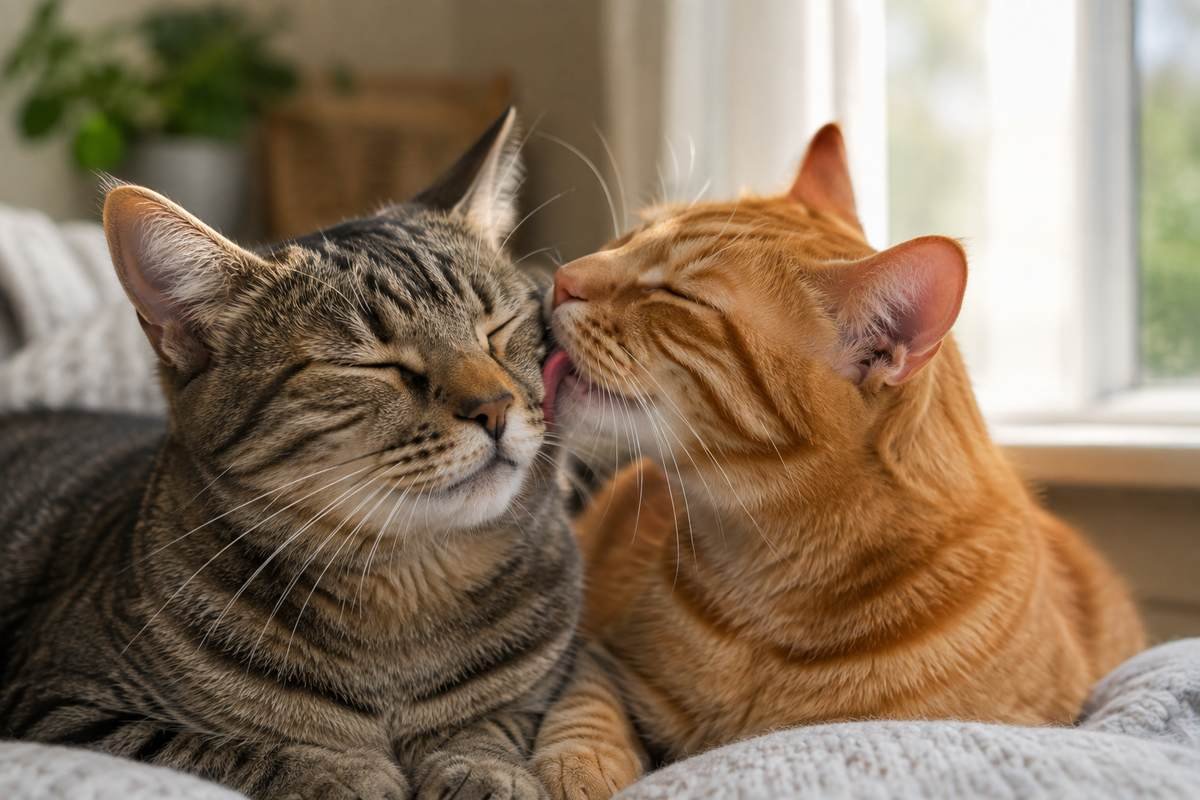
Bonding isn’t the only motivation. Cats physically can’t groom their own faces, foreheads, or the backs of their ears very effectively. A tongue built for scraping meat off bone isn’t ideal for reaching those areas solo.
So when a cat leans its head toward a companion, it’s often making a request: “Can you get this spot for me?” The other cat, if the relationship allows it, obliges. It’s a practical exchange wrapped inside a social one.
What Grooming Reveals About Social Rank
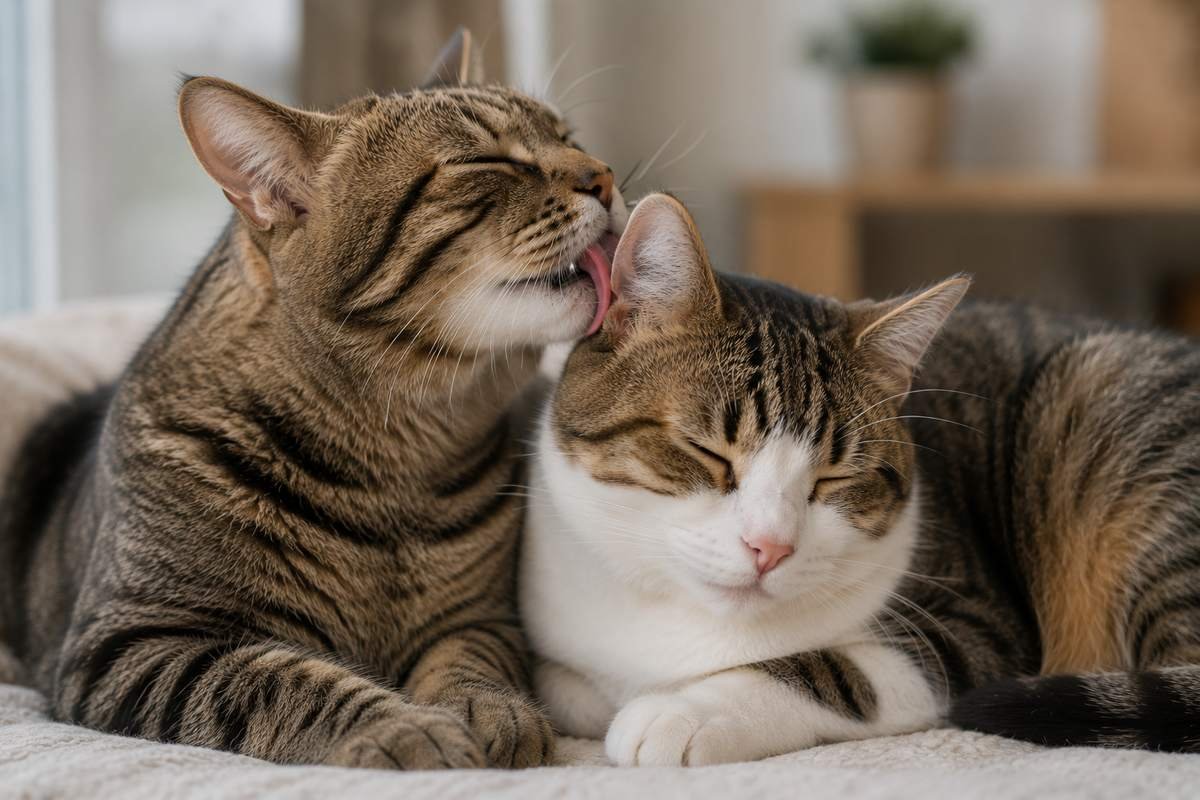
Allogrooming isn’t always perfectly equal between two cats, and that imbalance can be revealing. Behaviorists have noticed that in many multi-cat households, one cat grooms the other more often than it receives grooming in return.
This doesn’t necessarily mean one cat dislikes the other. More often, it reflects a subtle social dynamic — the cat doing more of the grooming may be signaling deference, similar to how a lower-ranking animal in many social species initiates friendly contact with a higher-ranking one. It’s less about dominance in an aggressive sense and more about maintaining peace within the group.
Where This Behavior Comes From
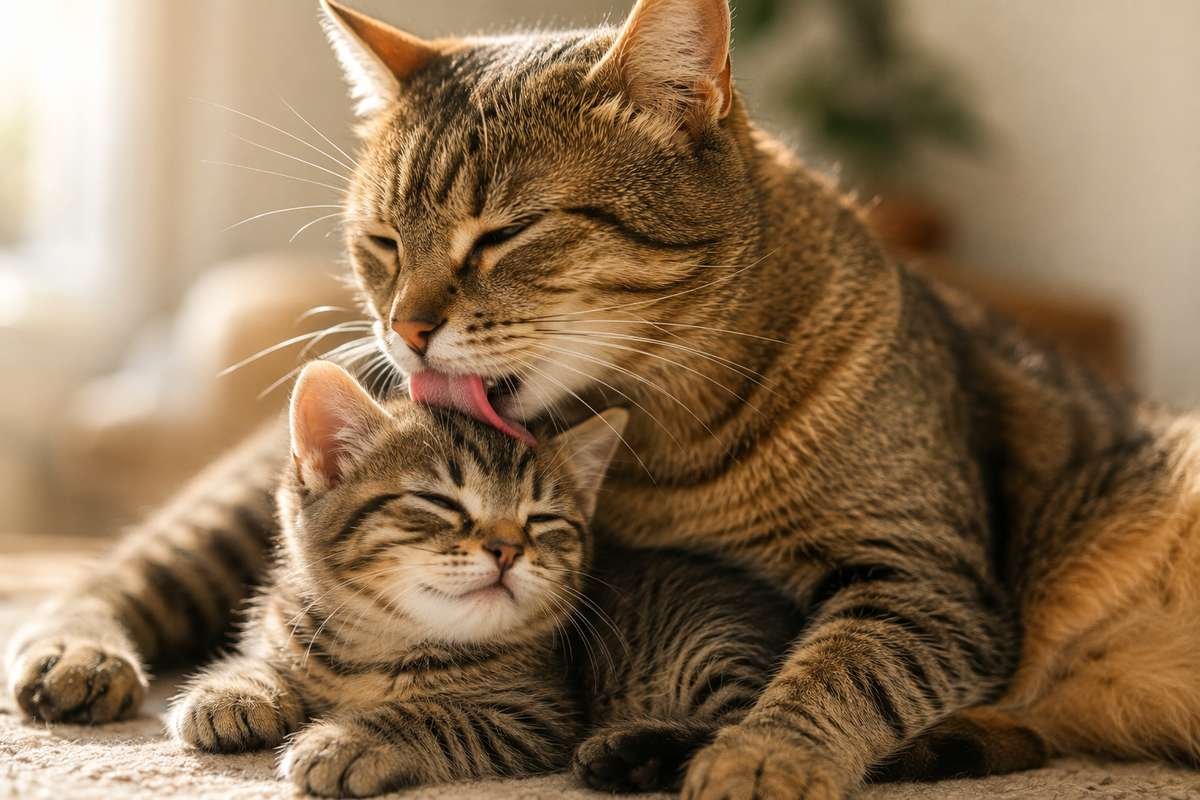
Kittens experience grooming from their mother within days of birth. She licks them to clean them, stimulate digestion, and comfort them — and this early physical contact shapes how kittens understand touch as something safe and reassuring.
Littermates often groom each other too, well before they’re grooming anyone else. That early experience carries forward. Cats that were raised around siblings, or that were socialized well as kittens, tend to be more comfortable initiating or accepting allogrooming as adults.
When Grooming Turns Into a Problem
Most mutual grooming is harmless and even a good sign of a healthy relationship between cats. But there are situations worth paying attention to.
If grooming sessions start turning into bites, growling, or one cat pinning the other down, that’s not bonding anymore — that’s tension. Similarly, if one cat is grooming another so persistently that it starts causing bald patches or skin irritation, it may point to stress or anxiety rather than affection.
💡 Did You Know?
Cats have tiny backward-facing hooks on their tongues called papillae. Originally built for stripping meat from bones, these same hooks make a cat’s tongue surprisingly effective — and slightly rough — for grooming another cat’s fur.
Myth vs Fact
| Myth | Fact |
|---|---|
| Cats only groom each other out of instinct, with no real emotional meaning | Allogrooming is closely tied to trust and social bonding, not just reflex |
| Any two cats will eventually groom each other if they live together long enough | Cats that dislike each other often never groom, even after years in the same home |
| Grooming always means two cats are equally close | Grooming direction can reflect subtle social rank, not just affection |
Quick Tips for Multi-Cat Households
✓ Give new cats time before expecting them to bond — trust builds gradually
✓ Watch grooming sessions for signs they’re shifting into aggression
✓ Provide separate resting spots so grooming stays voluntary, not forced by close quarters
✓ Check for bald patches or skin irritation if one cat grooms excessively
✓ Reward calm, friendly interactions with treats to reinforce positive associations
Read This Why Do Cats Stretch After Sleeping? The Real Reason Explained
Frequently Asked Questions
Do cats groom humans for the same reason?
Yes, in many cases. When a cat licks your hand or hair, it’s often extending the same trust-based behavior it shows other cats. It’s a sign your cat considers you part of its social circle.
Why does one of my cats groom the other but never gets groomed back?
This is common and usually reflects a social dynamic rather than dislike. One cat may simply be more affectionate or more inclined to initiate contact, while the other accepts it without reciprocating as often.
Can two cats bond without grooming each other?
Yes. Grooming is one sign of a good relationship, but not the only one. Cats that sleep near each other, play together, or rest with their bodies touching can still have a strong bond even without frequent allogrooming.
Is it bad if my cats never groom each other?
Not necessarily. Some cats simply aren’t grooming-oriented, even with companions they like. As long as there’s no hostility, a lack of mutual grooming doesn’t automatically mean a poor relationship.
Conclusion
That quiet grooming session between your cats isn’t just cats being cats. Why do cats groom each other? It’s often their way of showing trust, strengthening a social bond, helping with hard-to-reach areas, and maintaining a peaceful relationship. Once you understand what allogrooming means, that simple little grooming session becomes a fascinating part of feline communication.
Related Article
Why Do Cats Stretch After Sleeping? The Real Reason Explained
Why Do Cats Make Biscuits? The Real Reason Behind Kneading

Ethan Carter is a nature enthusiast and educational writer at Wonderexplained. He creates well-researched articles about animals, oceans, weather, and the natural world, making complex topics easy to understand. His goal is to provide accurate, engaging, and reader-friendly content that inspires curiosity and lifelong learning.

3 thoughts on “Why Do Cats Groom Each Other? The Real Reasons Behind Allogrooming”