

Your dog just climbed out of the lake, and before you can even reach for a towel, its whole body turns into a blur. Water flies everywhere — onto the grass, onto your jeans, onto anyone standing within a few feet.
It looks chaotic, almost comedic. But that shake isn’t random at all. Why do dogs shake after getting wet? It’s one of the most efficient drying mechanisms in the animal kingdom, and it happens automatically the moment your dog’s skin registers moisture.
Quick Answer
Why do dogs shake after getting wet? Loose, wet fur triggers nerve receptors in the skin that activate an automatic “wet dog shake” reflex.
This full-body rotation removes up to 70% of trapped water in just a few seconds, protecting the dog from heat loss, skin infections, and the extra energy cost of staying soaked.
So, why do dogs shake after getting wet? The simple answer is that their nervous system triggers a rapid full-body reflex that helps remove water from the coat before it causes excessive heat loss or discomfort.
Key Takeaways
✔ The shake is an involuntary reflex, not a learned behavior
✔ It can remove around 70% of water from a dog’s coat in under four seconds
✔ Smaller animals shake faster than larger animals to generate the same drying force
✔ Wet fur left undried increases the risk of skin irritation and hypothermia
✔ The reflex is triggered by nerve receptors at the base of the hair follicles
✔ Nearly all furred mammals share this same drying mechanism
Table of Contents
- What Triggers the Shaking Reflex?
- The Physics Behind the Shake
- Why Speed and Size Matter
- What Happens If a Dog Doesn’t Shake?
- Do All Animals Shake the Same Way?
- Myth vs Fact
- Quick Tips for Handling a Wet Dog
- Frequently Asked Questions
What Triggers the Shaking Reflex?
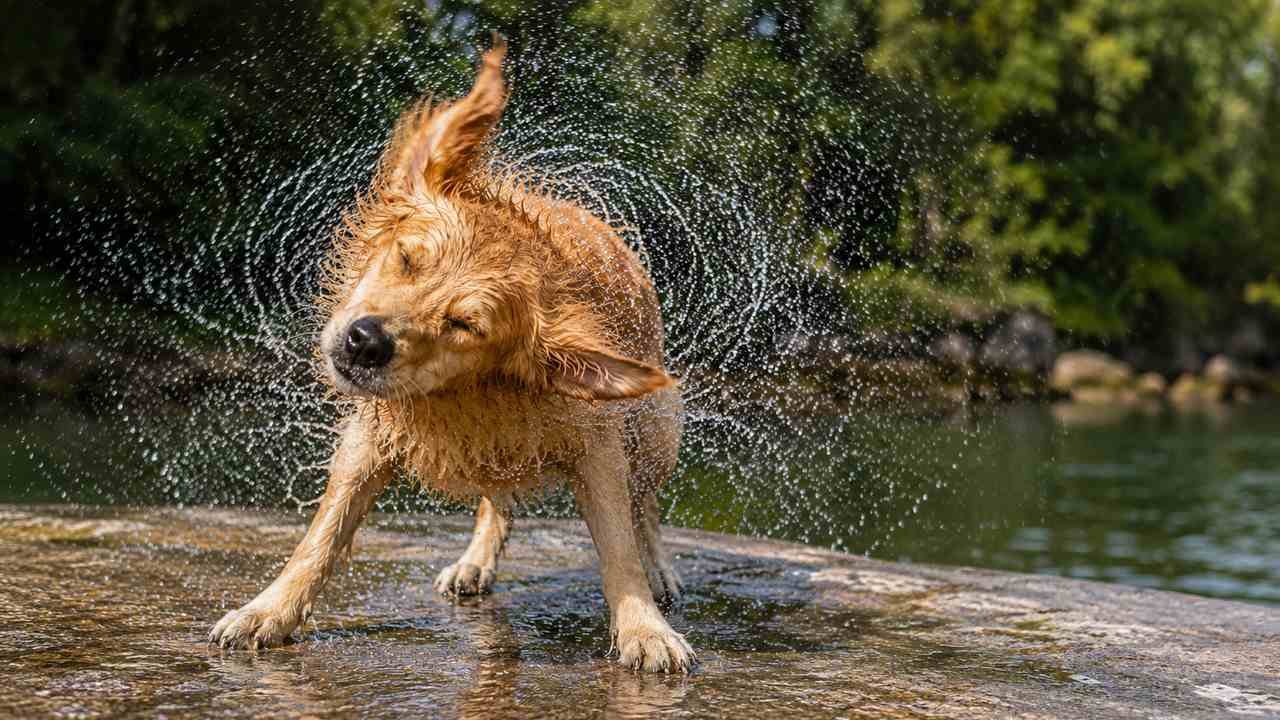
Why do dogs shake after getting wet? The answer starts underneath the skin, in a layer most owners never think about. Every hair follicle on a dog’s body is surrounded by tiny nerve endings that respond to pressure and movement.
When water lands on the coat, it adds weight and shifts the hair in a specific pattern the follicles recognize as “wet.” That sensory signal travels to the spinal cord, which triggers a reflex loop researchers call the wet dog shake — a rapid, rhythmic twisting motion that starts at the head and rolls backward through the shoulders, torso, and tail.
This isn’t something a puppy has to learn from its mother. Puppies develop this shaking behavior very early in life, supporting the idea that the reflex is largely hardwired rather than something they simply learn by watching other dogs.
The Physics Behind the Shake
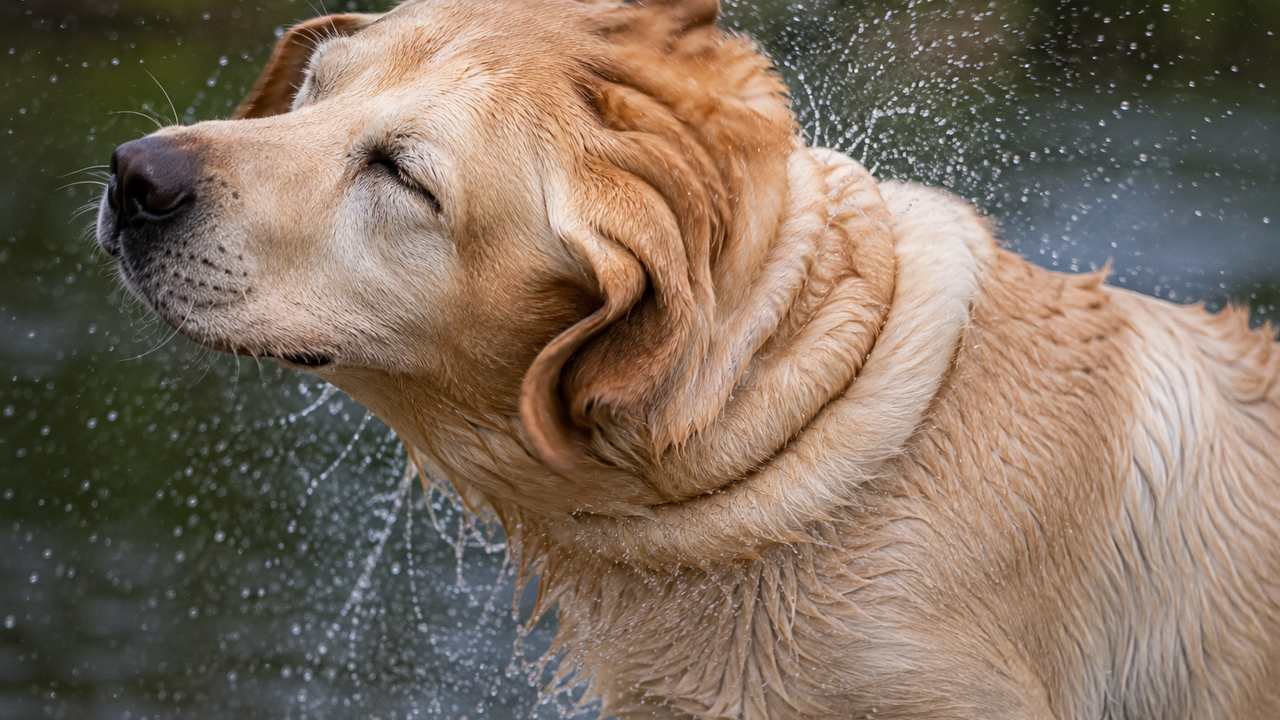
Here’s where things get genuinely interesting. In 2012, a team of engineers and biologists at Georgia Tech used high-speed cameras to study exactly how animals dry themselves, and what they found reshaped how scientists think about this behavior.The answer to why do dogs shake after getting wet becomes even clearer when you look at the physics of the movement.
A dog’s skin can rotate independently of its body, almost like loose clothing spinning around a pole. During a shake, the skin oscillates back and forth at extremely high speed — often more than 4 g’s of acceleration, roughly four times the force of gravity. That rotational whip flings water droplets off the coat before they have time to soak deeper into the fur.This rapid movement is what makes the wet dog shake such an efficient way to remove water without relying on evaporation.
The loose skin around a dog’s neck plays a bigger role here than most people realize. That extra fold of skin increases the range of motion during each shake, which means more centrifugal force is generated with less muscular effort. Dogs with looser skin can create a wider range of motion during the shake, which may help fling water from the coat more efficiently.
💡 Did You Know?
A wet dog can remove about 70% of the water from its coat in roughly four seconds — a task that would take a clothes dryer several minutes to accomplish through evaporation alone.
Read This Why Do Dogs Pant? The Real Science Behind This Everyday Habit
Why Speed and Size Matter
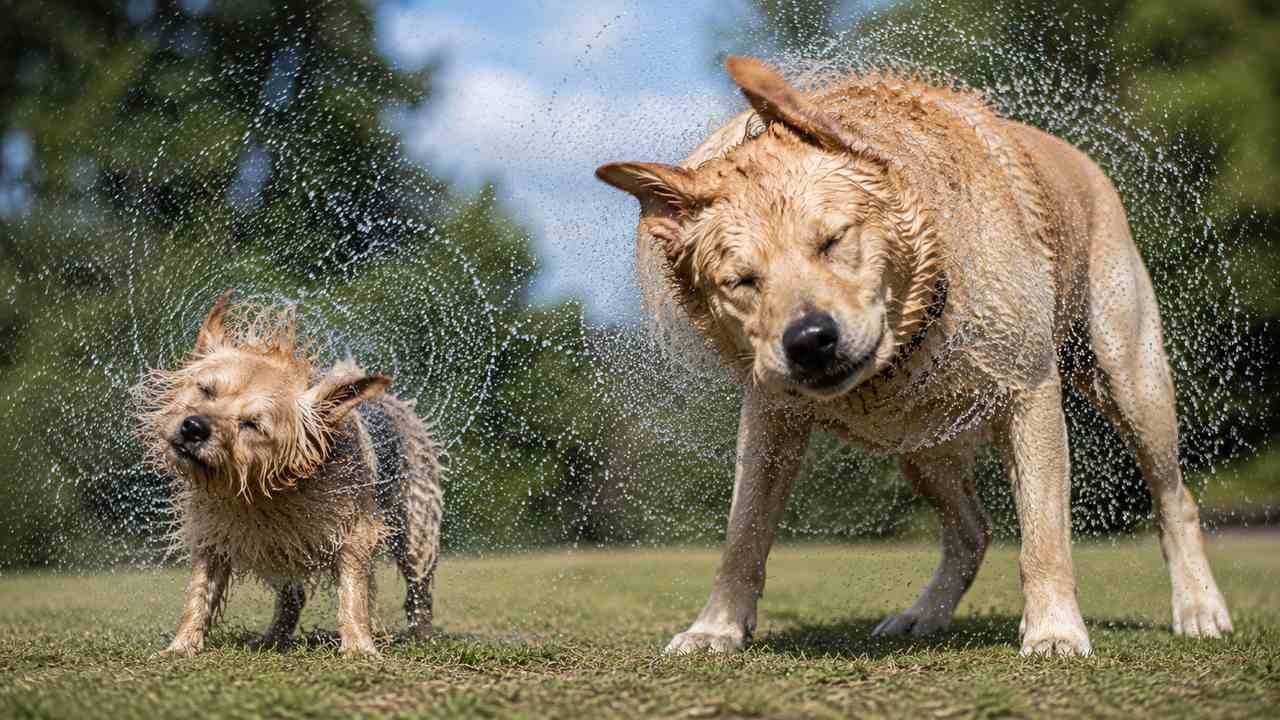
A mouse shakes far faster than an elephant, and that difference isn’t random. It comes down to a consistent rule researchers discovered across dozens of species: smaller animals need to shake at higher frequencies to generate enough force to fling water off their bodies.
Because smaller bodies have less mass and less rotational momentum, they need extra speed to compensate. A mouse can shake at around 27 rotations per second, while a bear manages closer to 4 rotations per second. Dogs typically fall somewhere in between, shaking at 4 to 7 times per second depending on their size, generating just enough force to overcome the surface tension holding water to their fur.
This scaling relationship is so consistent that scientists can estimate an animal’s shaking frequency just by knowing its body size — one of the more elegant patterns to come out of this research.
Read This Why Do Dogs Have Whiskers? Their Real Purpose Explained
What Happens If a Dog Doesn’t Shake?
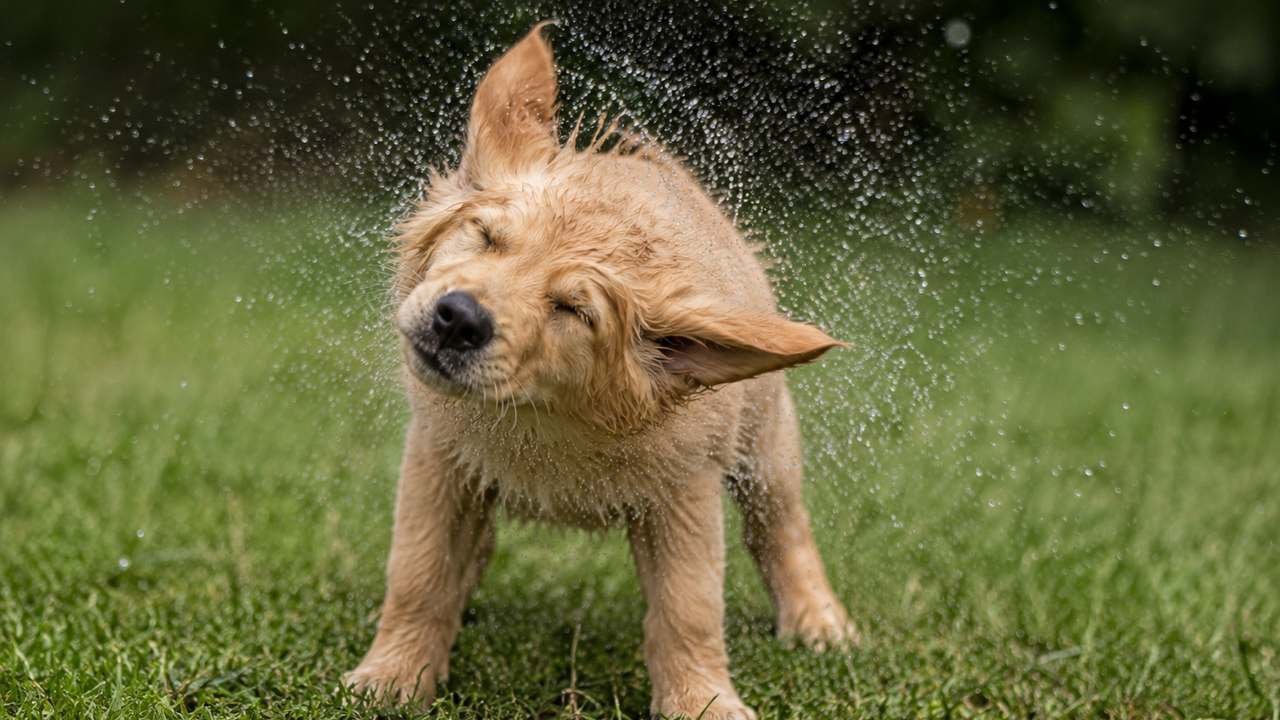
Affection and playfulness explain a lot of dog behavior, but this particular reflex is really about survival.A wet coat does more than just feel uncomfortable, which helps explain why dogs shake after getting wet rather than simply staying soaked.
Water trapped against the skin pulls heat away from the body through evaporation, a process that can drop a dog’s core temperature far faster than most owners expect. For smaller breeds or dogs with thin coats, prolonged wetness can lead to genuine hypothermia risk, even in mild weather.
There’s also a quieter danger that builds up over time. Damp fur creates a warm, moist environment that bacteria and yeast thrive in, which is part of why dogs that stay wet frequently — from swimming, rain, or infrequent drying after baths — are more prone to skin infections and a condition called hot spots. The shake reflex isn’t just tidiness. It’s the fastest tool a dog has to protect its own skin.
Do All Animals Shake the Same Way?
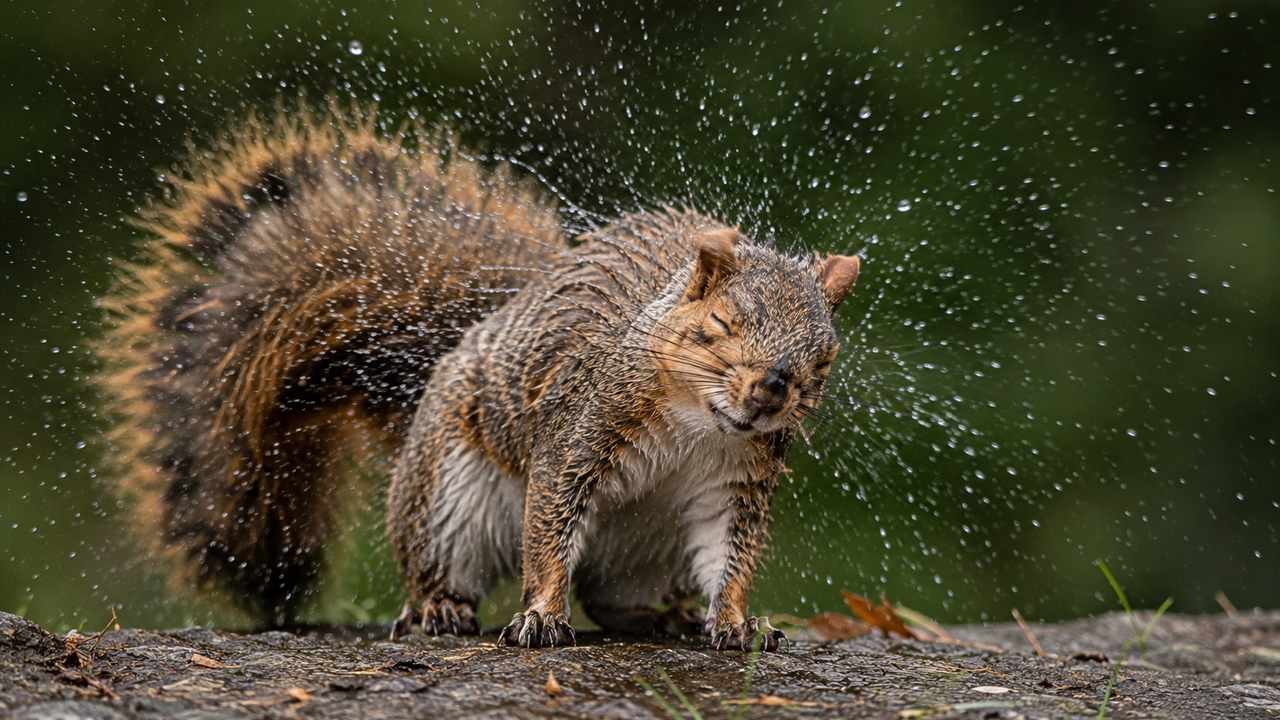
Nearly every furred mammal shares this reflex, from tigers to squirrels to grizzly bears, which tells researchers this behavior likely evolved a very long time ago and proved valuable enough to stick around across countless species.
Interestingly, the mechanism looks nearly identical no matter the animal. Fur type, body size, and skin looseness change the speed and force involved, but the underlying nerve-triggered, skin-rotating reflex stays the same. Even some birds display a related shaking motion after preening, though their feathers rely more on natural oils than raw centrifugal force.
Myth vs Fact
| Myth | Fact |
|---|---|
| Dogs shake because they’re startled by water | The shake is a drying reflex triggered by wet fur, not fear or surprise |
| Only dogs with thick coats shake vigorously | All furred mammals shake, though the speed and force vary by size |
| Shaking is purely a learned habit | Puppies shake within days of birth, before they’ve learned it from other dogs |
| Towel-drying makes the shake reflex unnecessary | Dogs will often still shake even after towel drying, since the reflex triggers automatically at the first sign of dampness |
Quick Tips for Handling a Wet Dog
✓ Let your dog shake before toweling — it removes most of the water naturally
✓ Dry the base of the ears and skin folds separately, since the shake doesn’t reach these areas well
✓ Avoid trapping a wet dog in a small space, since the shake needs room to happen safely
✓ Towel-dry thick-coated breeds promptly after swimming to reduce hot spot risk
✓ Keep older or short-haired dogs warm after wet play, since they lose heat faster
Frequently Asked Questions
Why does my dog shake even when it’s not wet?
Dogs sometimes shake to reset their body after stress, excitement, or an uncomfortable interaction, not just to dry off. This “stress shake” uses a similar physical movement but is triggered by tension or excitement rather than water on the skin.
Do dogs shake more as puppies or adults?
Puppies actually begin practicing the shake reflex within their first week of life, well before their eyes fully open. It becomes more coordinated and forceful as their muscles and coordination develop into adulthood.
Can shaking be a sign of a health problem?
Occasional shaking after getting wet is completely normal. Frequent head shaking unrelated to water, however, can signal ear infections, allergies, or skin irritation and is worth mentioning to a veterinarian.
Why do dogs shake starting from the head instead of the whole body at once?
Why do dogs shake after getting wet? The shake begins at the head because that’s usually the first area to get wet and where the nerve signal originates. The shake begins at the head because that’s usually the first area to get wet and where the nerve signal originates. The rotational motion then travels backward down the spine in a wave-like pattern, which is more energy-efficient than shaking the entire body simultaneously.
Conclusion
That full-body shake your dog performs after every bath, swim, or rainstorm isn’t quirky or comedic by accident. Why do dogs shake after getting wet? Because this simple-looking movement is actually a finely tuned survival tool millions of years in the making.
Understanding why do dogs shake after getting wet makes that familiar post-bath routine seem much less like a funny habit and much more like an efficient biological system.
The next time water flies across your kitchen floor, it’s worth remembering that your dog isn’t just shaking off water. It’s running one of nature’s most efficient drying machines, built into its body since birth.
References
- Georgia Institute of Technology, “Wet Mammals Shake at Tuned Frequencies to Dry” (biomechanics research)
- American Kennel Club
- ASPCA
Related Article
Why Do Dogs Have Whiskers? Their Real Purpose Explained
Why Do Dogs Pant? The Real Science Behind This Everyday Habit

Ethan Carter is a nature enthusiast and educational writer at Wonderexplained. He creates well-researched articles about animals, oceans, weather, and the natural world, making complex topics easy to understand. His goal is to provide accurate, engaging, and reader-friendly content that inspires curiosity and lifelong learning.

1 thought on “Why Do Dogs Shake After Getting Wet? The Science Explained”