

Few sounds in nature are as haunting or as mysterious as a humpback whale’s song echoing through the open ocean. Why do whales sing is a question researchers have been studying for decades, and while some details remain genuinely uncertain, scientists have identified clear patterns connecting whale song to mating behavior, social learning, and the physics of how sound travels through water. This article breaks down what is actually known about whale song, how it differs from other whale sounds, and just how far these remarkable vocalizations can travel.
Quick Answer
Whales sing mainly as part of mating behavior, with male humpback whales producing long, structured songs primarily in their breeding grounds. Scientists agree that song plays a role in attracting mates or communicating with other males, though the exact function is not fully understood. Not all whales sing in this structured way; the behavior is most closely associated with humpback whales and a small number of other baleen whale species.
Quick Facts
- Only male humpback whales are believed to sing structured songs, most often heard in their breeding grounds.
- Humpback whale song is organized hierarchically, with sound units grouped into phrases, and phrases grouped into larger themes.
- Songs can last from about 10 to 30 minutes and are often repeated continuously for hours.
- Humpback whale songs can spread between populations across thousands of kilometers of ocean, one of the best-documented examples of cultural transmission in a non-human animal.
- Low-frequency baleen whale calls can travel long distances underwater using a natural acoustic layer known as the SOFAR channel, though exact travel distances vary with ocean conditions.
Why Do Whales Make Sounds?
Whales make sounds for a range of purposes that go well beyond singing alone. Vocalizations can serve social functions, help maintain contact between individuals, and in the case of toothed whales, support echolocation for navigation and hunting. According to the Whale and Dolphin Conservation organization, whales and dolphins are broadly split into two groups: toothed whales, called odontocetes, and baleen whales, called mysticetes, and these two groups produce and use sound quite differently.
Toothed whales, including dolphins, porpoises, and sperm whales, generate clicks and whistles using structures in their nasal passages, relying heavily on these sounds for echolocation as well as communication. Baleen whales, such as humpback, blue, and fin whales, produce sound using their larynx and tend to generate lower-frequency sounds, including the moans, pulses, and structured songs most people associate with whale vocalizations.
How Do Whales Communicate?
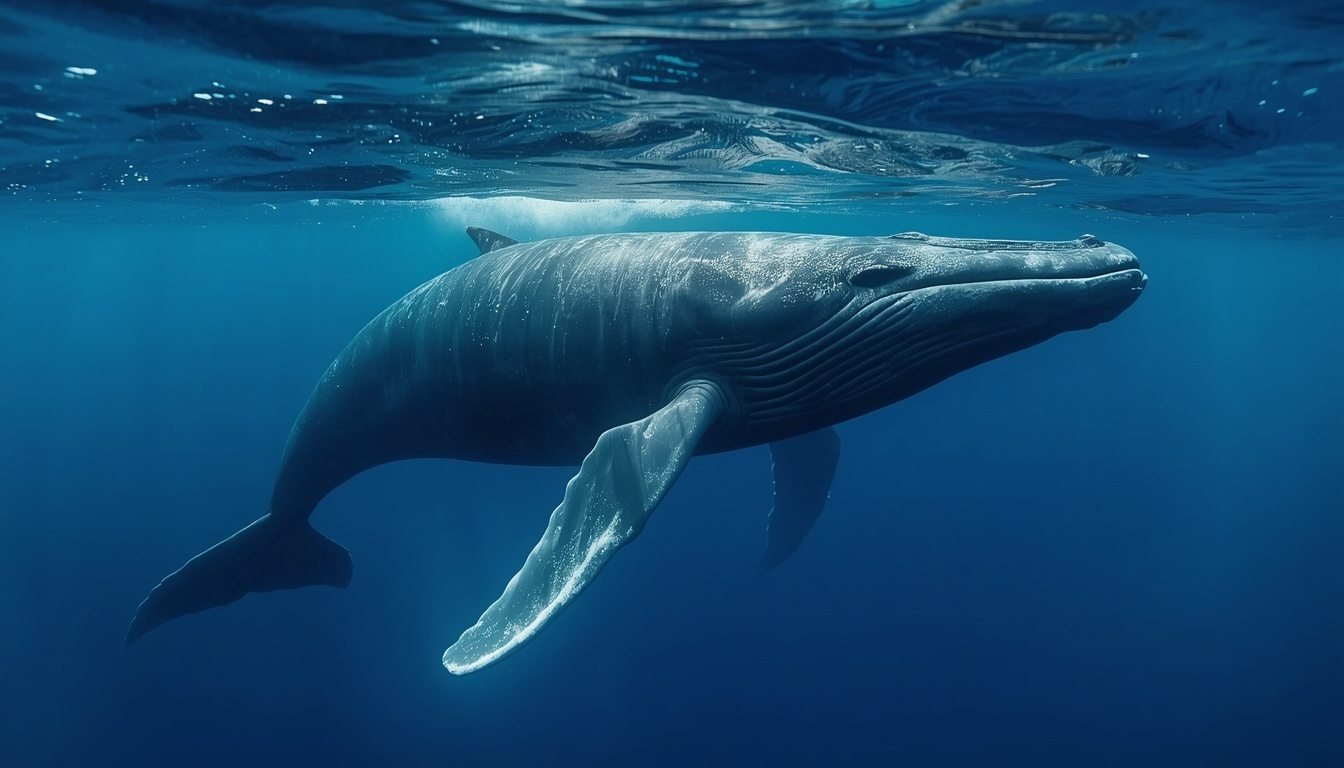
Whale communication relies entirely on sound rather than sight or scent, since visibility underwater is often limited and scent does not travel effectively through water in the way it does through air. Neither toothed whales nor baleen whales produce sound using vocal cords the way humans do.
Toothed whales generate sound using structures called phonic lips, located in their nasal passages, where air passed between differently pressurized air sacs causes vibration and produces clicks and whistles. Baleen whales instead use structures within the larynx, including a U-shaped fold of tissue that vibrates against a fatty cushion as air is pushed from the lungs into a laryngeal air sac. Because this air is recycled rather than exhaled, baleen whales can produce prolonged vocalizations, including extended songs, without needing to surface for air during the performance.
Why Do Humpback Whales Sing?
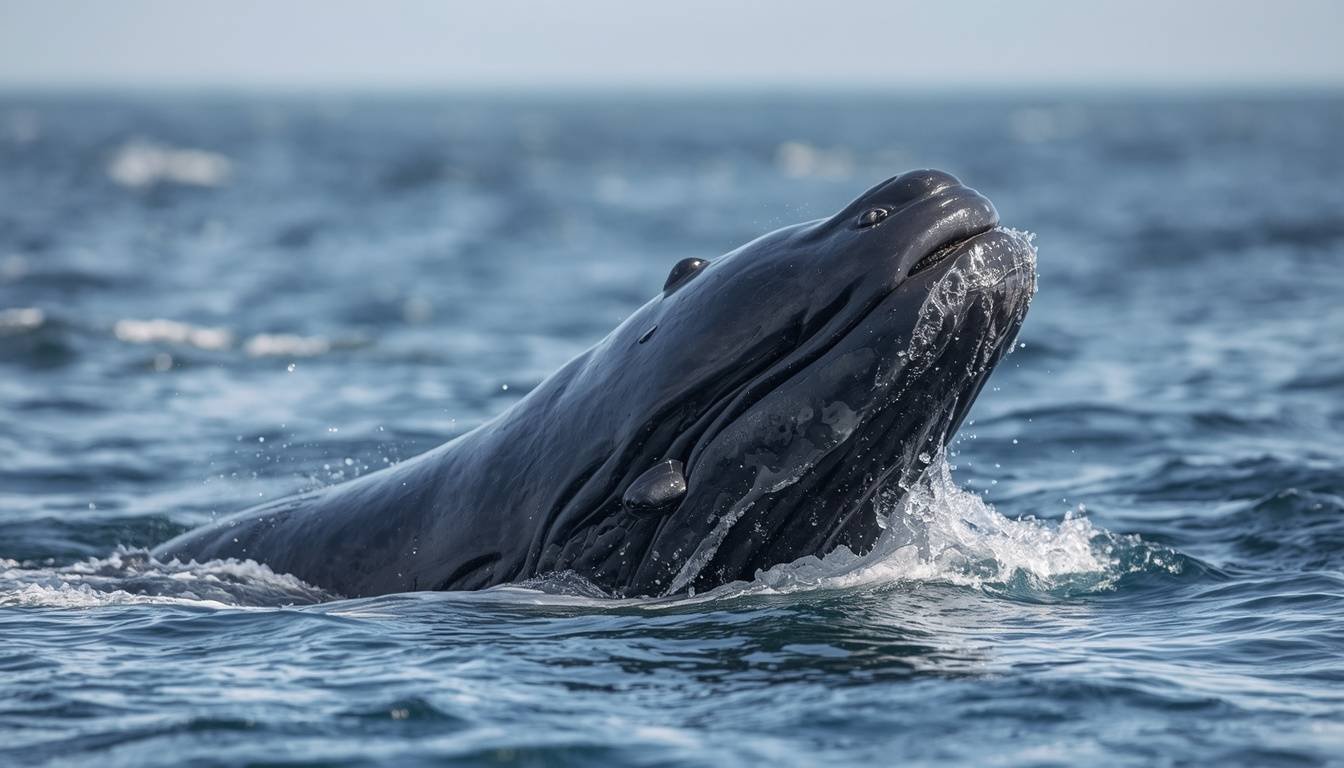
Humpback whales are the species most closely associated with structured whale song, and according to NOAA’s Olympic Coast National Marine Sanctuary, scientists broadly agree that this singing behavior likely plays a role in mating. Only male humpback whales are believed to sing, and this singing is most frequently heard while whales are present in their winter breeding grounds.
The structure of humpback song is often compared to poetry, with individual sound units functioning like words, phrases functioning like lines, and themes functioning like stanzas that are arranged together into a complete song. All singing males within a given population tend to perform the same general version of the song at any point in time, and this shared song gradually evolves over the course of a breeding season and from year to year. While NOAA notes that the exact function of the song isn’t fully understood, sessions of singing can last anywhere from about five minutes to over 24 hours, with the same song repeated continuously throughout.
Read This Why Are Whales Endangered? The Real Reasons Explained
Do All Whales Sing?
No, not all whales produce structured song in the way humpback whales do. Structured, repetitive song of this kind is most strongly associated with humpback whales and has also been documented in some other baleen whale species, including certain populations of blue and fin whales, though these songs differ in structure and complexity from humpback song.
Toothed whales, including dolphins, orcas, and sperm whales, do not produce this type of long, structured song. Instead, they rely on clicks, whistles, and other call types suited to echolocation and shorter social communication rather than extended, evolving musical sequences.
How Far Can Whale Songs Travel?

Low-frequency baleen whale sounds can travel very long distances underwater, thanks in part to a naturally occurring acoustic layer in the ocean known as the SOFAR channel, or deep sound channel. This layer, typically found at certain mid-ocean depths where temperature and pressure combine to create a zone where sound travels with minimal energy loss, allows some low-frequency whale calls to be detected across large stretches of open ocean.
Exact travel distances vary considerably depending on frequency, water depth, ocean noise levels, and other environmental conditions, so specific figures should be treated as estimates rather than fixed measurements. What is well established is that lower-frequency calls, such as those produced by blue and fin whales, generally travel farther underwater than higher-frequency sounds, since lower frequencies lose less energy over long distances in water.
Read This How Long Do Whales Live? Lifespan by Species (Full Guide)
Do Whales Sing to Find Mates?
Mating is considered the most likely primary function of humpback whale song, based on the fact that only males sing and that this behavior is concentrated in breeding areas during the breeding season. Research summarized by NOAA and multiple peer-reviewed studies supports the idea that song plays a role in either attracting females, communicating with or asserting status among other males, or some combination of both.
That said, scientists have also observed humpback whales singing outside of breeding grounds, including on feeding grounds and during migration, which raises open questions about whether mating is the complete explanation. Because this behavior does not fit neatly into a single, simple explanation, researchers continue to treat the exact function of whale song, beyond its likely connection to mating, as an area of ongoing scientific study rather than a fully settled question.
How Do Whales Learn Their Songs?
Humpback whale song is considered one of the clearest documented examples of cultural transmission in a non-human animal, meaning the song is learned socially from other whales rather than being fixed from birth. Peer-reviewed research has traced how song types can spread across entire ocean basins, with one well-documented case showing a song type moving progressively eastward across the South Pacific, from populations near eastern Australia to populations thousands of kilometers away near French Polynesia, over a period of years.
Researchers believe this transmission likely occurs when populations come into acoustic contact, such as on shared migratory routes or overlapping feeding grounds, allowing males from different populations to hear and gradually adopt elements of each other’s songs. Within a single breeding season, most males in a given population maintain a very similar version of the current song, but small changes accumulate over time, and occasionally a population will rapidly replace its entire song with a new version introduced from elsewhere, a phenomenon researchers have referred to as a song revolution.
Read This Why Do Whales Breach? The Leading Theories Explained
Frequently Asked Questions
Do female whales sing?
Structured whale song, as documented in humpback whales, is believed to be produced only by males.
How long is a typical humpback whale song?
A single humpback whale song generally lasts about 10 to 30 minutes, though singing sessions of repeated songs can last much longer.
Can humans hear whale songs without special equipment?
Many humpback whale sounds fall within the range of human hearing, but some baleen whale calls occur at very low frequencies that require recording equipment to detect.
Do whale songs stay the same every year?
No, humpback whale songs gradually change over time and can be replaced more rapidly through cultural transmission from other populations.
Why do some whales sing outside of breeding season?
Humpback whales have been recorded singing on feeding grounds and during migration, and researchers are still studying why this occurs outside typical breeding behavior.
Conclusion
Whale song sits at a fascinating intersection of biology, physics, and animal culture, from the specialized laryngeal structures that let humpback whales sing for hours without surfacing, to the ocean’s natural acoustic channels that carry low-frequency calls across enormous distances. While researchers are confident that mating plays a central role in why humpback whales sing, the full picture, including why some whales sing outside their breeding grounds, remains an active area of scientific study. What is clear is that these songs represent one of the more remarkable examples of learned, evolving communication found anywhere in the animal kingdom.

Ethan Carter is a nature enthusiast and educational writer at Wonderexplained. He creates well-researched articles about animals, oceans, weather, and the natural world, making complex topics easy to understand. His goal is to provide accurate, engaging, and reader-friendly content that inspires curiosity and lifelong learning.
