

Few animal behaviors look as strange at first glance as a cave ceiling covered in sleeping bats, each one hanging perfectly still by its feet. Why do bats sleep upside down actually comes down to a mix of practical anatomy and flight mechanics rather than any strange preference for discomfort. Bats hang upside down because their bodies are built for it, from specialized locking tendons in their feet to a circulatory system that has no trouble handling life spent head-down. This article walks through exactly why bats rest this way, how their bodies manage it, and whether every bat species actually sleeps upside down at all.
Quick Answer
Bats sleep upside down mainly because their wings are not built for a running takeoff the way a bird’s are. Hanging upside down lets a bat simply drop into the air and begin flying almost instantly. Specialized tendons in their feet lock their toes in place automatically, so hanging requires no ongoing muscle effort, and their small size and circulatory adaptations prevent the dizziness or blood pooling that would affect a larger, upright mammal in the same position.
Quick Facts
- Bats cannot take off effectively from the ground because their wings are not strong enough to generate lift from a standing start.
- Specialized tendons in a bat’s toes lock automatically under body weight, letting them hang without using muscle energy.
- A bat’s knees face backward relative to most mammals, which supports the mechanics of its upside-down grip.
- According to Rob Mies of the Organization for Bat Conservation, bats generally do not weigh enough for gravity to meaningfully affect their blood flow.
- A small number of bat species, including Spix’s disk-winged bat, roost head-up instead of hanging upside down.
Why Do Bats Hang Upside Down?
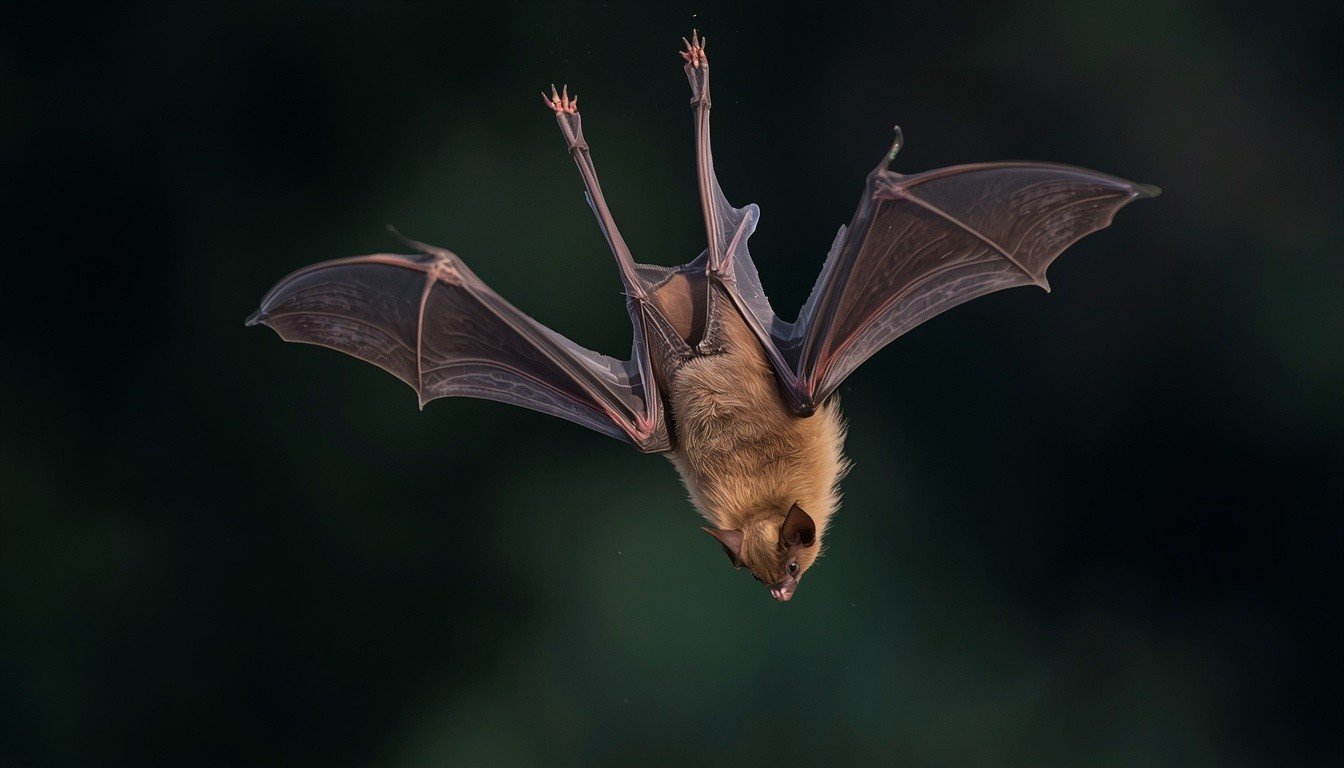
Bats hang upside down primarily because of how their bodies are built for flight rather than for walking or standing. Unlike birds, which can build up speed by running or jumping before takeoff, bats have wings that are not structured to generate enough lift from the ground or from a perched, right-side-up position. Their wings, which are essentially modified hands with elongated fingers connected by a thin membrane, work far more efficiently when the bat is already airborne.
By resting upside down, a bat positions itself to enter flight almost instantly, simply by releasing its grip and dropping into open air. This single adaptation shapes much of the rest of bat anatomy and behavior, since so many species depend on this quick-drop method to become airborne safely and efficiently.
Read This Why Do Penguins Waddle? The Real Science Behind It [2026]
Bats and Easy Takeoffs
The upside-down position gives bats an immediate advantage when it comes to starting flight. Because bats cannot generate enough speed running along the ground or launching upward from a standing position, hanging inverted allows them to use gravity itself as the first push into flight. The moment a bat releases its grip, it begins falling, and that initial drop provides the airspeed needed for its wings to catch the air and begin generating lift.
This is very different from how most birds take off, since birds typically rely on strong leg muscles to jump or a running start to build speed. For bats, the inverted resting position turns what would otherwise be a difficult, energy-intensive launch into an efficient, nearly effortless drop into flight.
How Bats Hang Without Falling
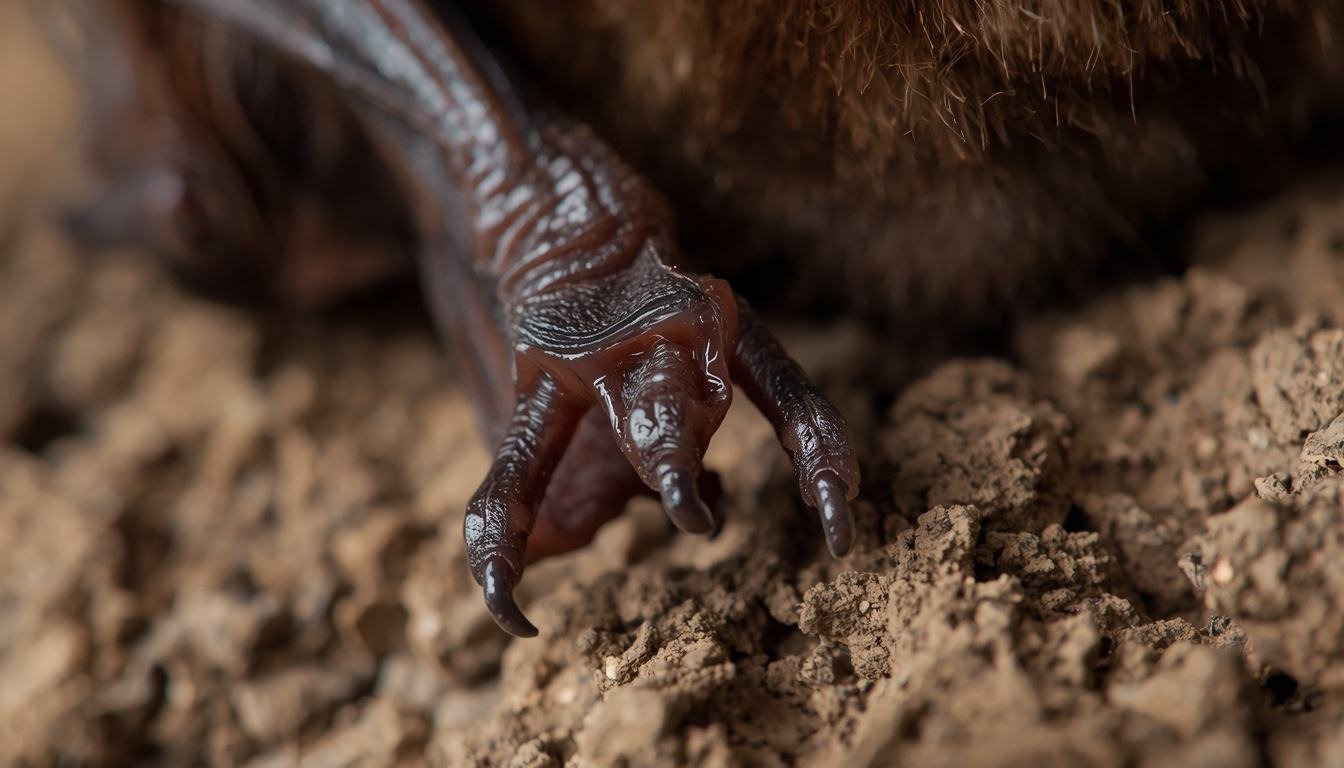
A bat’s ability to hang upside down for extended periods, without expending constant muscular effort, comes down to a specialized tendon-locking mechanism in its feet. Bat knees are oriented differently than in most mammals, effectively facing backward, and this unique joint arrangement works together with tendons that automatically tighten and lock the toes in place under the bat’s own body weight.
Because this locking happens passively through body weight rather than through active muscle contraction, a resting bat does not need to keep gripping consciously. According to the Iowa Department of Natural Resources, a bat’s toes and talons remain locked simply due to gravity and body weight, and releasing that grip actually requires the bat to flex its leg muscles, the opposite of how gripping typically works in most animals. This is also why a bat that dies while roosting can remain hanging in place until something physically dislodges it.
Bats and Predator Protection
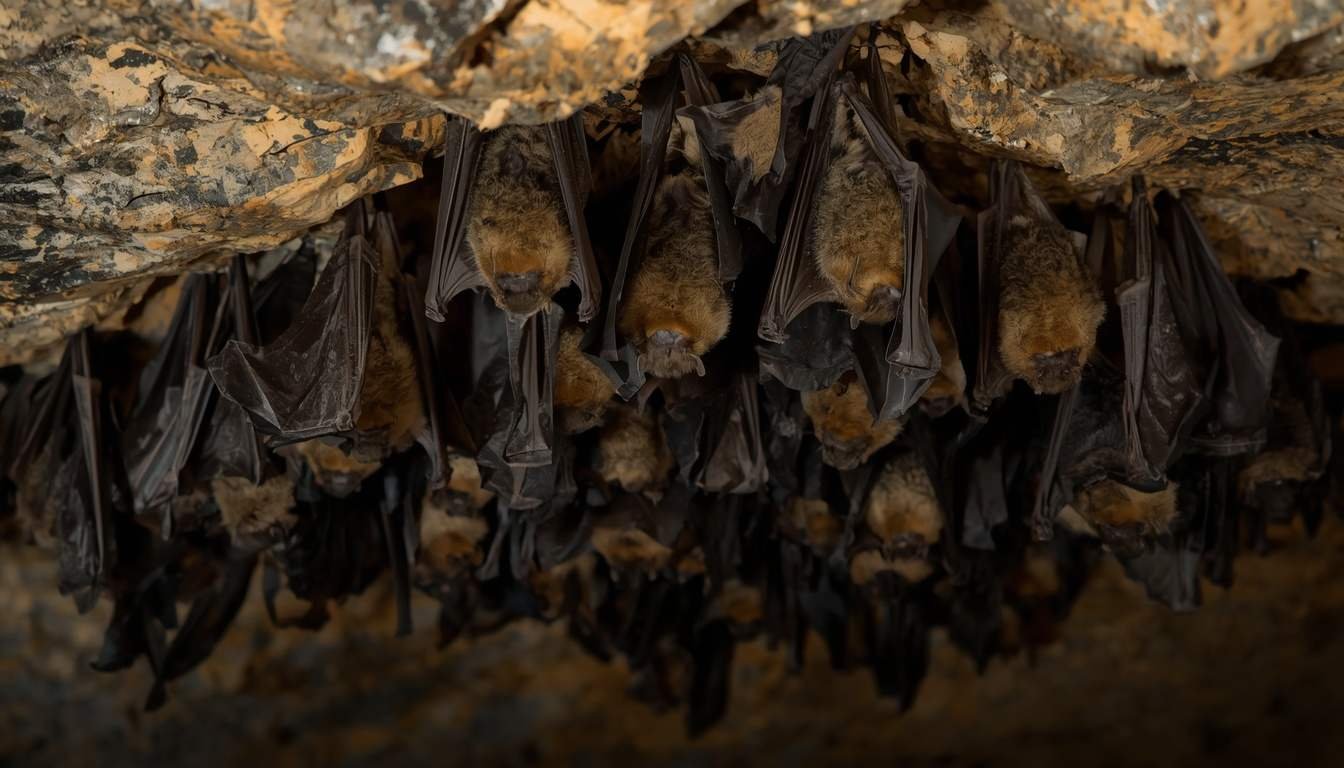
Hanging upside down also gives bats a practical safety advantage by allowing them to roost in locations that are difficult for predators to reach. Caves ceilings, the undersides of bridges, hollow trees, and other elevated, enclosed spaces offer protection from many ground-based predators, and a bat’s ability to grip and hang from rough, uneven surfaces lets it access roosting spots that would be impossible to rest on right-side up.
This combination of an inaccessible location and a low-effort hanging posture allows bats to rest for extended daytime periods with reduced risk of disturbance, which is especially important for species that gather in large colonies within a single roost.
Do Bats Sleep Upside Down All the Time?
For the vast majority of bat species, hanging upside down is the standard resting posture used for both short daytime naps and longer periods of sleep or hibernation. Because the tendon-locking mechanism requires no ongoing muscular effort, bats can remain in this position for extended stretches without discomfort or fatigue, including during long hibernation periods in colder months.
That said, “all the time” does not mean every bat species behaves identically, since some bats will shift position slightly within a roost or move to a new roosting spot depending on temperature, light, or disturbance, even though the fundamental upside-down posture remains their default resting behavior.
Read This Why Can Owls Turn Their Heads So Far? The Science Behind Their Incredible Neck Rotation
Can Bats Sleep Right Side Up?
While the overwhelming majority of bat species hang upside down, a small handful of species do not. Spix’s disk-winged bat, found in Central and South America, and the Madagascar sucker-footed bat both roost head-up instead of upside down. These species have evolved suction-cup-like adhesive pads on their wrists and ankles rather than relying on the typical hooked claws and tendon-locking feet used by most bats.
Research published on the biomechanics of these species suggests they roost head-up because their adhesive pads work best when supporting weight from below rather than resisting the pull of an inverted body position, since experiments have shown that these pads can lose their grip more easily when a bat is oriented head-down. This makes disk-winged and sucker-footed bats a genuine exception to the typical upside-down bat posture, rather than simply a rare behavioral variation within an otherwise identical body plan.
Do Bats Get Dizzy Upside Down?
No, bats do not experience the dizziness or lightheadedness a human would feel from hanging upside down for an extended period. This comes down to a combination of small body size and specific circulatory adaptations. Speaking to National Geographic, Rob Mies of the Organization for Bat Conservation explained that bats generally do not weigh enough for gravity to meaningfully affect their blood flow, which is a significant difference from the much larger blood volume and circulatory pressure involved in a human body.
Bats also have circulatory features, including valves within their blood vessels, that help regulate blood flow and prevent the kind of pooling in the head that causes dizziness in humans when inverted for too long. Because of their small size and these physiological adaptations, even species that spend hours or days continuously upside down, including during hibernation, do not experience the negative effects that a larger, upright-adapted mammal would face in the same position.
Read This Why Do Rabbits Thump Their Feet? The Real Meaning Behind It
Frequently Asked Qustions
Why can’t bats take off from the ground like birds?
Bat wings are not structured to generate enough lift from a standing start, so bats rely on dropping from an elevated, upside-down position to begin flying efficiently.
Does hanging upside down require a bat to use muscle energy?
No, a bat’s toes lock in place automatically under its own body weight, so hanging requires no ongoing muscular effort.
Are there bats that don’t hang upside down?
Yes, a few species, including Spix’s disk-winged bat and the Madagascar sucker-footed bat, roost head-up using adhesive pads instead of hanging upside down.
Why don’t bats get dizzy while hanging upside down?
Bats are generally too small for gravity to significantly affect their blood flow, and specialized circulatory features help prevent blood from pooling in their heads.
Can a bat remain upside down even after it dies?
Yes, because the tendon-locking mechanism in a bat’s feet depends on body weight rather than active muscle effort, a bat can remain hanging even after death until something dislodges it.
Conclusion
A bat’s upside-down resting position turns out to be a remarkably efficient solution to several challenges at once, from enabling a nearly effortless takeoff into flight to keeping the animal safely tucked away from predators. Specialized tendons handle the actual gripping without requiring constant effort, while a bat’s small size and circulatory adaptations quietly solve the blood flow problem that would trouble almost any other mammal in the same position. What looks like an uncomfortable balancing act is really one of nature’s more elegant examples of form matching function.

Ethan Carter is a nature enthusiast and educational writer at Wonderexplained. He creates well-researched articles about animals, oceans, weather, and the natural world, making complex topics easy to understand. His goal is to provide accurate, engaging, and reader-friendly content that inspires curiosity and lifelong learning.
