

Orcas, also called killer whales, are the largest members of the dolphin family and among the most widespread predators in the ocean. They live in every ocean, from Arctic ice edges to tropical seas. Their societies, hunting techniques, and learned “dialects” differ from one population to the next. These orca facts cover how big they get, what they eat, how they raise their young, and why some populations are in trouble. Where scientists still disagree, or where numbers are estimates, the article says so.
Quick Facts About Orcas
- Scientific name: Orcinus orca
- Group: Toothed whale (odontocete) in the dolphin family, Delphinidae
- Length: Adult males commonly about 6–8 m (20–26 ft); females somewhat smaller
- Weight: Up to roughly 6 tonnes in large males
- Range: All oceans, most common in cooler, productive waters
- Diet: Varies by population, from fish to seals to other whales
- Social unit: Family pods led by related females
- Conservation: Assessed globally as Data Deficient, with some populations endangered
Physical Features
Orcas Are Dolphins, Not “True” Whales
The name “killer whale” is misleading. Orcas belong to Delphinidae, the oceanic dolphin family, and are its largest member. “Whale” is a broad everyday term that includes toothed whales such as orcas and sperm whales.
Males and Females Differ Noticeably in Size
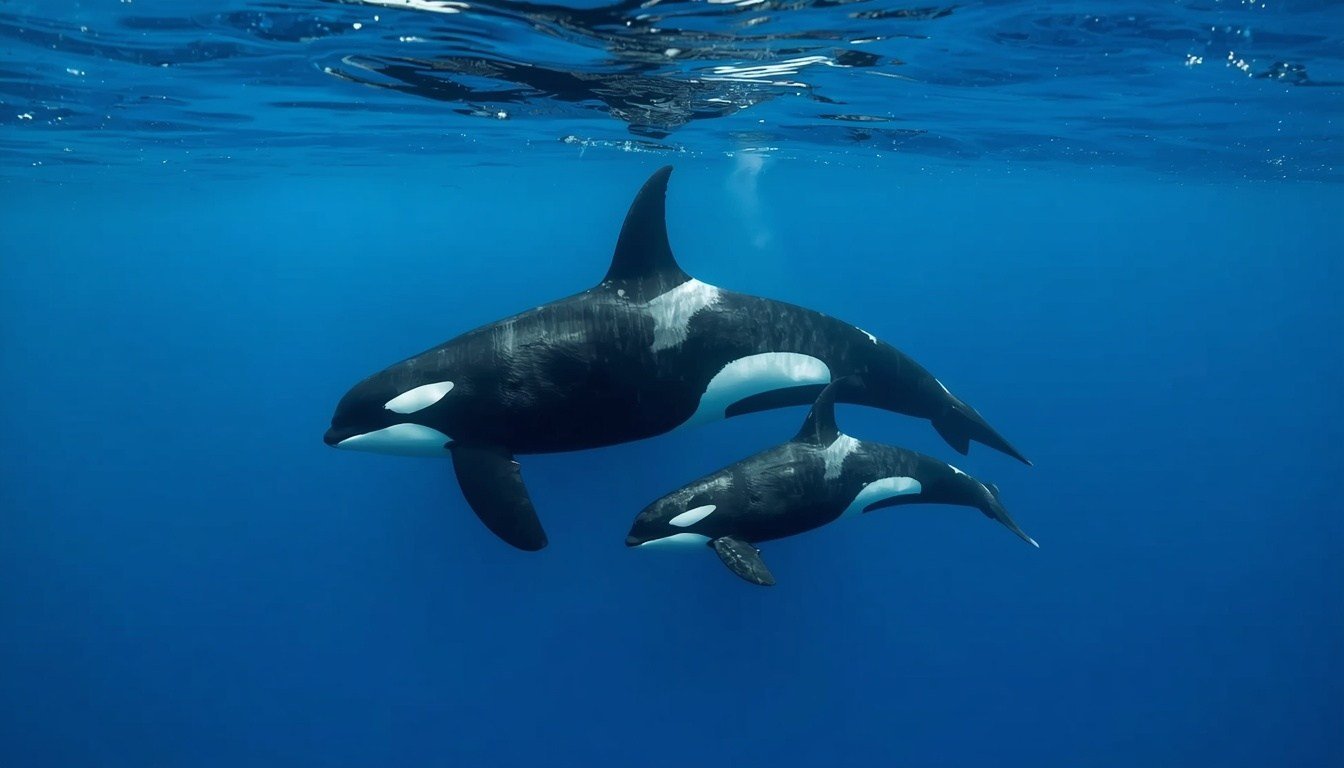
Adult males are larger and heavier than females, and their bodies are proportionally more muscular. The biggest difference is the dorsal fin. A male’s fin can stand about 1.8 m (6 ft) tall and is nearly straight, while a female’s is roughly half that height and curves backward.
Black-and-White Patterns Help With Identification
Orcas have a black back, white underside, and a white patch behind each eye. Researchers also use the gray “saddle patch” behind the dorsal fin, along with nicks and scars on the fin, to tell individuals apart. Photo-identification of these features underpins decades of population monitoring.
Their Teeth Grip Prey but Do Not Chew It
Orcas have about 40–56 conical teeth, each up to around 10 cm (4 in) long. The teeth grip and tear, and the whale swallows food in pieces or whole.
Fast Swimmers in Short Bursts
Orcas are commonly reported to reach speeds above 45 km/h (about 28 mph) in short bursts, with some sources citing up to about 56 km/h. Cruising speeds are much lower.
Habitat and Range
Orcas Live in Every Ocean
Orcas are among the most widely distributed mammals on Earth, found from polar waters to the tropics. They are most abundant in colder, prey-rich regions such as the North Pacific, the North Atlantic, and Antarctic waters.
Different Ecotypes Live Side by Side
In the eastern North Pacific, scientists recognize distinct ecotypes, including fish-eating “residents,” mammal-eating “transients” (also called Bigg’s killer whales), and “offshore” orcas. These groups overlap in range but rarely interbreed and differ in diet, behavior, and calls. Antarctic waters host several more types. Researchers still debate whether some ecotypes should be classified as separate species or subspecies.
Diet and Hunting
Diet Depends on the Population
“Orca” describes many different feeding specialists. Southern Resident orcas of the Pacific Northwest feed mostly on salmon, especially Chinook. Transient orcas hunt seals, sea lions, porpoises, and even large whales. Other populations specialize in herring, tuna, or rays.
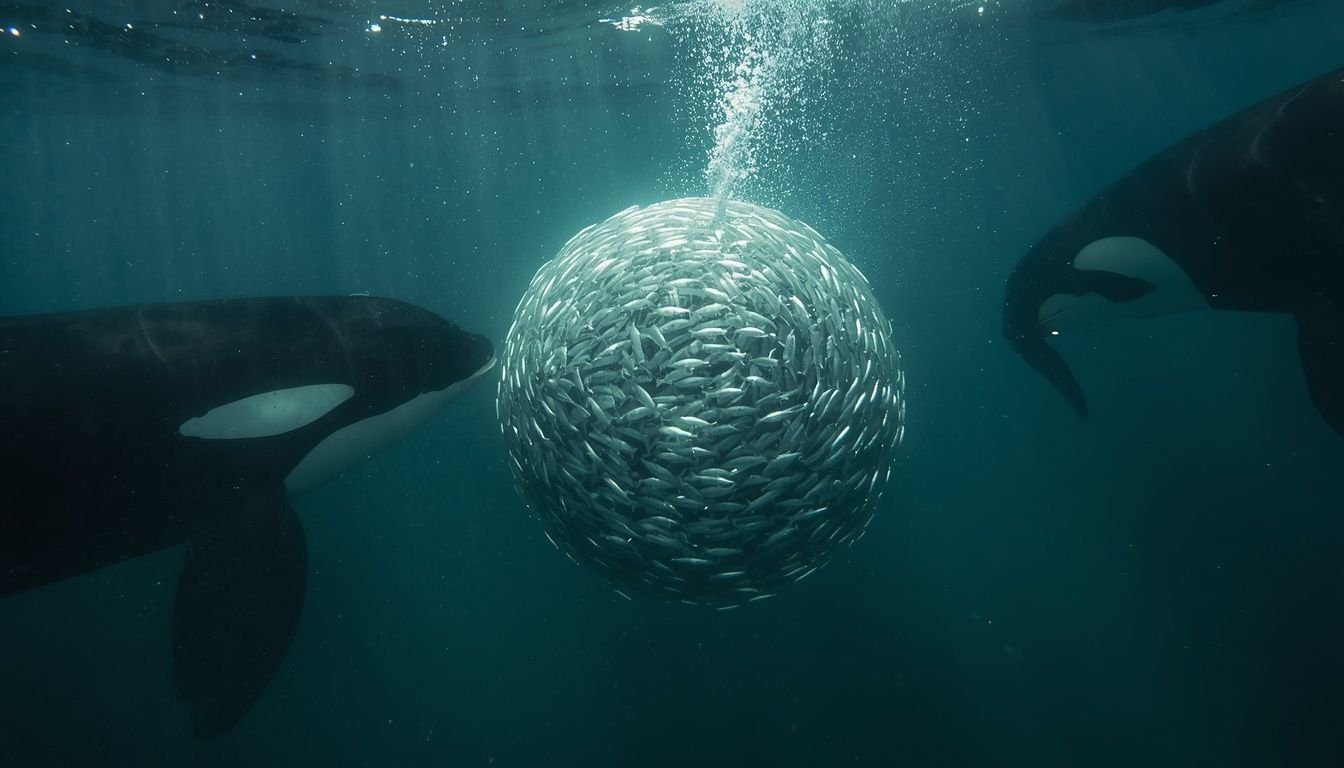
Herring-Eating Orcas Use a “Carousel” Technique
Off Norway, orcas herd herring into tight balls using coordinated swimming and bubbles, then stun fish with slaps of their tails and eat them one at a time.
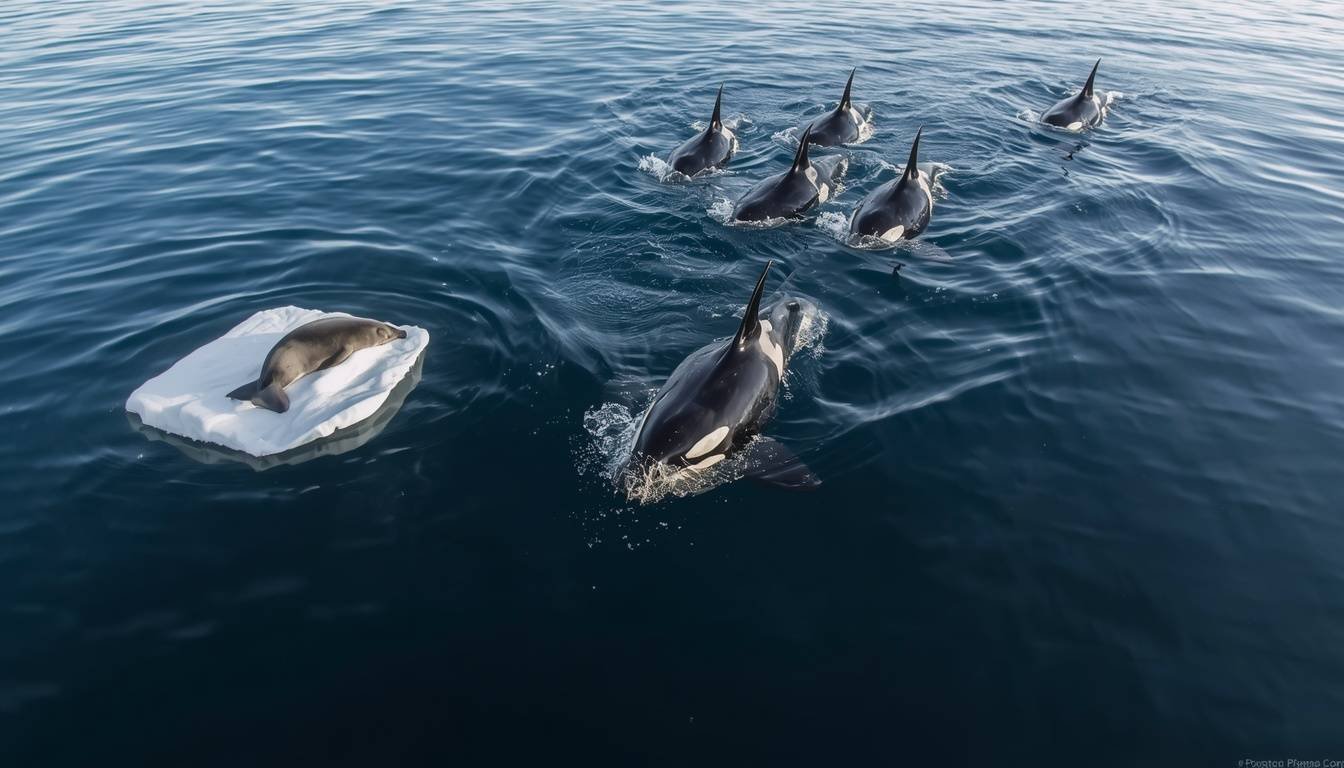
Some Orcas Create Waves to Knock Seals Off Ice
In Antarctic waters, certain orcas swim in line toward an ice floe to generate a wave that washes a resting seal into the water. It is a coordinated technique that appears to be learned within groups.
Orcas Occasionally Hunt Sharks
Research from the Farallon Islands off California and from South Africa documented orcas killing great white sharks and, in several cases, apparently feeding preferentially on the liver.
Orcas Have No Natural Predators
Adult orcas sit at the top of the marine food web. Their main threats come from people and from environmental changes that affect their prey.
Read This 40+Shark Facts: Interesting Facts About Sharks[2026]
Behavior and Social Life
Orca Society Is Built Around Mothers
In many populations, especially fish-eating residents, offspring stay with their mothers for life. Family groups called matrilines join to form pods, and pods can form larger clans.
Pods Have Their Own Calls
Orcas produce clicks, whistles, and pulsed calls. Related groups share distinctive call repertoires often described as dialects. Research indicates these are learned and passed on within families, a form of animal culture.
Echolocation Lets Them “See” With Sound
Orcas send out clicks and interpret the echoes to find prey and navigate, which works well in murky or dark water. Some mammal-eating populations hunt in near silence because their prey can hear them.
Orcas Sleep With Half the Brain at a Time
Like other dolphins, orcas rest using unihemispheric sleep, meaning one brain hemisphere stays alert while the other rests. This lets them keep surfacing to breathe.
Orcas Do Not Have a Documented Record of Killing Humans in the Wild
There is no confirmed case of a wild orca killing a person, despite frequent human-orca overlap. Captive orcas have caused human deaths.
Some Iberian Orcas Interact With Boats
Since 2020, a group of orcas off Spain, Portugal, and Morocco has repeatedly approached sailboats and damaged rudders, and a small number of vessels have sunk. Scientists are still investigating why, and whether it is play, curiosity, or a learned behavior that spread within the group.
Read This 30+Dolphin Facts: Interesting Facts About Dolphins[2026]
Reproduction and Young
Pregnancy Lasts About 15 to 18 Months
Females typically give birth to a single calf, usually every several years. Newborns are roughly 2.1–2.6 m long and weigh around 180 kg.
Calves Nurse for a Long Time
Calves begin eating solid food within their first year or so but may continue nursing longer, and they stay close to their mothers for years.
Grandmothers Matter
Female orcas can live for decades after they stop reproducing. Orcas are one of very few species known to go through menopause. Studies of the Southern Residents found that post-reproductive females help the survival of their offspring, particularly adult sons, whose risk of dying rises sharply after their mother dies.
Read This 45+Whale Facts: Interesting Facts About Whales[2026]
Lifespan
Females Typically Live Longer Than Males
In the wild, females average about 50 years and can live 80 or more, while males average around 30 and commonly reach 50–60. Exact ages for the oldest whales are hard to confirm, and estimates for a few famous individuals remain debated.
Survival and Conservation
Orcas Are Assessed as Data Deficient Globally
The IUCN currently lists Orcinus orca as Data Deficient. This is not a “safe” rating. It reflects uncertainty about whether ecotypes are distinct species and about worldwide numbers. Conservation status is better understood at the population level.
The Southern Residents Are Endangered
The Southern Resident population, which ranges from British Columbia to Washington and beyond, is listed as endangered in the United States and Canada. The Center for Whale Research counted 74 whales as of July 1, 2025, far below a late-1990s peak of 98. Researchers link survival closely to Chinook salmon abundance. A preliminary report on the 2026 census suggests a net gain of two whales, pending a final check, so the official number may change.
Captures Once Removed Many Whales From the Wild
During the 1960s and early 1970s, orcas were captured for marine parks. At least 13 Southern Residents were killed in the process and 45 were delivered to parks around the world. No Southern Resident remains in captivity.
Pollution and Noise Are Major Threats
Orca facts accumulate persistent pollutants such as PCBs in their fat, and some populations carry very high levels. Vessel noise can interfere with hunting and communication, and prey shortages add to the pressure.
Frequently Asked Questions
Are orcas whales or dolphins?
Both, in everyday terms. Scientifically, orcas are dolphins, the largest in the family Delphinidae, and they are also toothed whales.
Do orcas attack humans?
Wild orcas are not known to have killed a person. Encounters are rare, and captive orcas have injured and killed trainers. Boat interactions off Iberia are a separate, ongoing area of study.
How many orcas are there in the world?
There is no reliable worldwide count. Estimates are rough, and populations differ widely, from small, endangered groups to larger, more numerous ones.
How fast can orcas swim?
Short bursts are commonly cited at about 45–56 km/h, though speed varies by individual and situation.
Why are orcas called killer whales?
The name is often traced to early sailors who saw orcas hunting large whales. The species name orca is more widely used today.
Conclusion
Orcas are highly adaptable predators whose behavior varies across the world’s oceans. Their family structure, learned calls, and specialized hunting methods make them some of the best-studied marine mammals, and their conservation outlook depends on the population.

Ethan Carter is a nature enthusiast and educational writer at Wonderexplained. He creates well-researched articles about animals, oceans, weather, and the natural world, making complex topics easy to understand. His goal is to provide accurate, engaging, and reader-friendly content that inspires curiosity and lifelong learning.
