

Octopuses are among the most unusual animals in the ocean, with three hearts, blue blood, and no internal skeleton at all. There are roughly 300 known octopus species, ranging from tiny reef-dwellers to the much larger giant Pacific octopus, and their combination of intelligence and physical flexibility makes them one of the most studied invertebrates in marine science.
These octopus facts cover their anatomy, senses, behavior, reproduction, and conservation status, based on current scientific understanding of these remarkable soft-bodied animals.
Quick Facts About Octopuses
- Classification: Cephalopod mollusks, closely related to squid and cuttlefish
- Number of species: Roughly 300 known species, with some deep-sea species still being described
- Circulatory system: Three hearts and blue, copper-based blood
- Habitat: Oceans worldwide, from shallow reefs and tide pools to the deep sea
- Diet: Mostly crabs, mollusks, and small fish, depending on species
- Lifespan: Generally short for their size, often only about one to a few years depending on species
Anatomy and Physical Features
Octopuses Have Three Hearts
Two smaller hearts pump blood through the gills, while a third, larger heart circulates oxygenated blood to the rest of the body. This arrangement helps compensate for the fact that octopus blood carries less oxygen than the blood of many other animals.
Octopus Blood Is Blue, Not Red
Instead of iron-based hemoglobin, octopus blood uses a copper-based protein called hemocyanin to carry oxygen. Oxygenated hemocyanin has a blue tint, which is why octopus blood looks distinctly different from the red blood of most vertebrates. Hemocyanin works well in cold, low-oxygen water, which suits many octopus habitats.
Octopuses Have No Internal Skeleton
An octopus’s body is almost entirely soft tissue, with the beak being the only hard part. This lack of rigid structure allows octopuses to squeeze through gaps not much larger than their beak, an ability well documented in both wild observations and aquarium settings.
Octopus Arms Contain Most of Their Neurons
A large portion of an octopus’s nervous system is distributed through its arms rather than concentrated in a single central brain. Each arm can process some sensory information and coordinate movement somewhat independently, which researchers are still working to fully understand.
Senses and Camouflage
Octopuses Can Change Color and Texture in an Instant
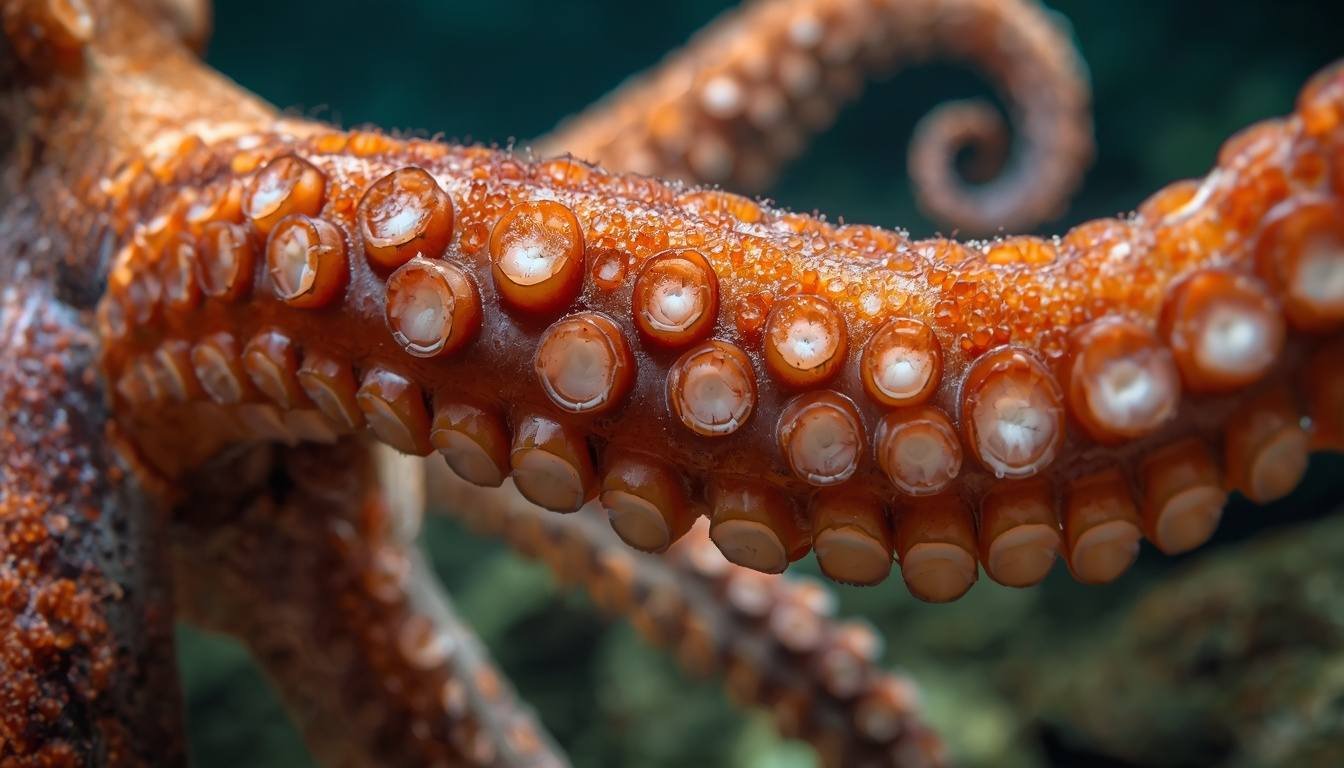
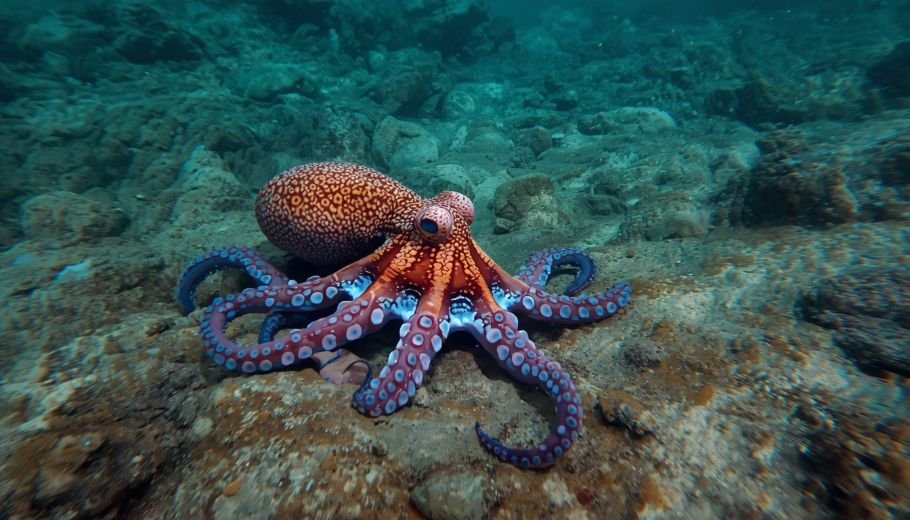
Specialized skin cells called chromatophores, along with other pigment cells and light-reflecting structures, allow octopuses to rapidly shift color and pattern. Many species can also alter the texture of their skin, raising bumps or ridges to mimic rocks, coral, or other surfaces.
Octopuses Appear to Be Colorblind, Despite Their Color Displays
Studies of octopus eye structure suggest most species lack the ability to distinguish colors the way many other animals do, which is somewhat surprising given their elaborate color-changing displays. Some researchers have proposed that unusual eye shapes might allow octopuses to detect color differently, though this remains an area of ongoing study.
Octopuses Have Excellent Vision for Detecting Shapes and Contrast
While color perception may be limited, octopus eyes are well developed for detecting shapes, contrast, and movement, which helps them spot predators and prey in complex reef and seafloor environments.
Behavior and Intelligence
Octopuses Are Considered Among the Most Intelligent Invertebrates
Octopuses have demonstrated problem-solving abilities in laboratory settings, including opening jars to reach food and navigating mazes. Researchers are cautious about directly comparing octopus intelligence to that of vertebrates, since their nervous systems are organized very differently.
Some Octopuses Use Objects as Tools
Certain species, notably the veined octopus, have been observed collecting and carrying coconut shell halves to later use as a portable shelter, a behavior some researchers consider a form of tool use. This behavior appears to be specific to particular species and situations rather than universal across all octopuses.
Octopuses Are Typically Solitary Animals
Most octopus species live and hunt alone, coming together mainly to mate. This is different from many other cephalopods, and it means observed “social” behaviors in octopuses are generally limited compared to group-living animals.
Habitat and Range
Octopuses Live in Nearly Every Ocean Environment
Octopus species are found from shallow tide pools and coral reefs to the open ocean and the deep sea, with different species adapted to different depths, temperatures, and habitat types.
Many Octopuses Live in Dens
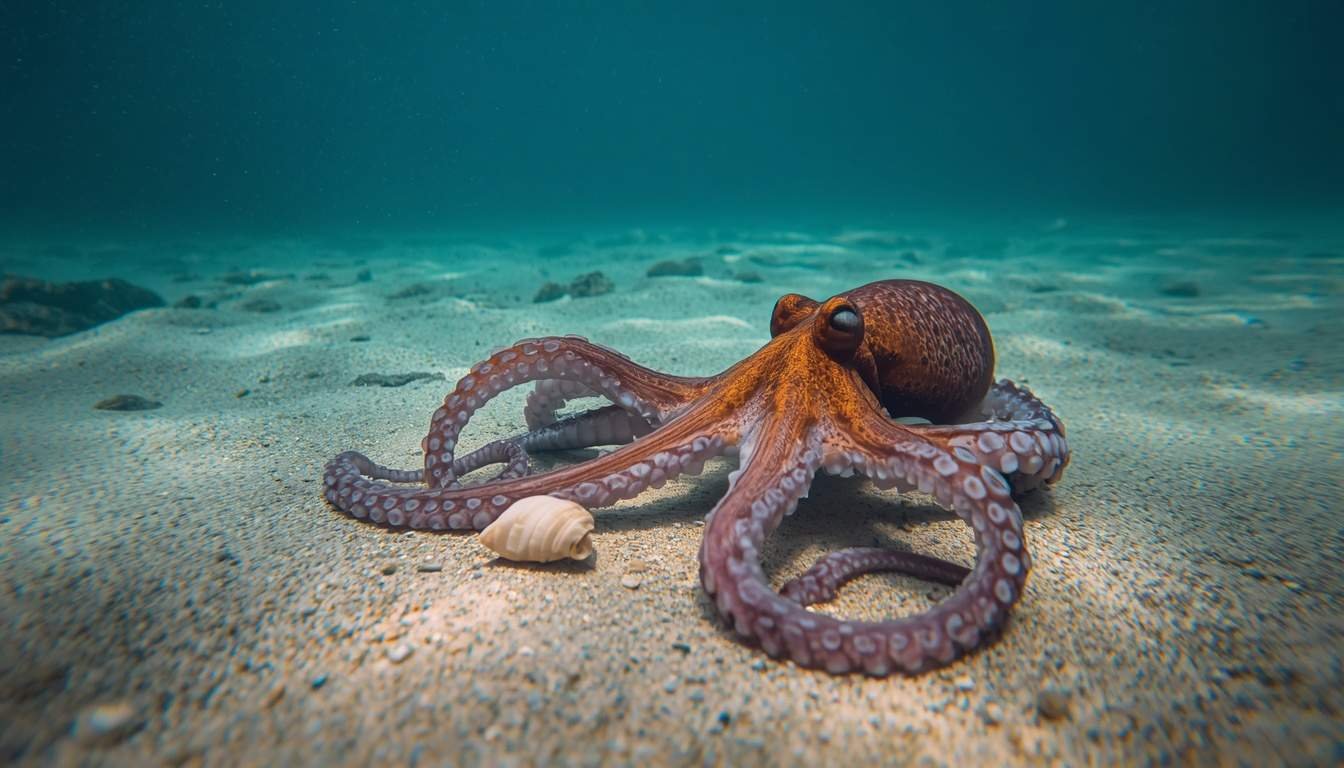
Octopuses frequently occupy dens, such as rock crevices or abandoned shells, which they use for shelter, hunting ambushes, and protection from predators. Some species are known to arrange shells or debris near den entrances.
Deep-Sea Octopus Species Are Less Studied
Species living at great depths, such as Dumbo octopuses, are harder to observe directly, so less is known about their behavior and biology compared to shallow-water species that are easier to study or keep in captivity.
Read This 40+Shark Facts: Interesting Facts About Sharks[2026]
Reproduction and Life Cycle
Most Octopuses Die Shortly After Reproducing
In most octopus species, males typically die within weeks to months after mating, and females generally die shortly after their eggs hatch, often without eating during the incubation period. This short reproductive lifespan is a defining feature of most octopus species, though not universal to every species.
Female Octopuses Guard Their Eggs Closely
A female octopus typically stays with her eggs throughout incubation, cleaning them and protecting them from predators, often without leaving to feed. Incubation length varies considerably by species and water temperature.
Baby Octopuses Receive No Parental Care After Hatching
Once octopus eggs hatch, the young are independent immediately and receive no further parental care, since most mothers do not survive past hatching. Survival rates for young octopuses in the wild are generally low, as they face many predators.
Read This 30+Dolphin Facts: Interesting Facts About Dolphins[2026]
Defense and Survival
Ink Is a Key Defense Mechanism
Most octopus species can release a cloud of dark ink when threatened, which is thought to help confuse predators and mask the octopus’s scent, giving it time to escape. Some research suggests ink may also have mild irritant properties for certain predators.
Camouflage Is an Octopus’s Primary Defense
Beyond ink, an octopus’s main defense against predators is its ability to blend into its surroundings using color and texture changes, making avoidance and hiding more common strategies than direct confrontation.
Octopuses Can Lose and Regrow Arms
If an arm is caught or damaged, some octopus species can detach it and later regenerate a new one. This ability is well documented, though the length of regrowth and how fully function is restored can vary by species and circumstance.
Conservation
Most Octopus Species Are Not Currently Considered at High Risk
Many common octopus species are not classified as threatened, though comprehensive population data is lacking for numerous species, particularly those in the deep sea or remote regions. Conservation status should be checked against current IUCN assessments for specific species.
Commercial Fishing Affects Some Octopus Populations
Octopus fishing supports significant commercial and artisanal fisheries in many parts of the world, and some regional populations have faced pressure from overfishing. Management practices vary considerably by country and fishery.
Ocean Conditions May Affect Octopus Populations
Changes in ocean temperature and chemistry can affect octopus prey availability and reproduction, and researchers continue to study how shifting conditions might influence different octopus populations over time.
Read This 45+Whale Facts: Interesting Facts About Whales[2026]
Interesting and Lesser-Known Facts
The Blue-Ringed Octopus Carries a Potent Toxin
Blue-ringed octopuses, found mainly in tide pools and coral reefs of the Indo-Pacific, carry a powerful neurotoxin called tetrodotoxin, the same toxin found in pufferfish. Despite their small size, their bite can be dangerous to humans, though bites are rare and the octopus generally avoids confrontation.
The Giant Pacific Octopus Is Among the Largest Octopus Species
The giant Pacific octopus is often cited as one of the largest known octopus species by weight, though exact maximum size figures vary between sources and individual animals, so specific records should be treated cautiously.
Some Octopuses Can Walk on Two Arms
Certain species, including the veined octopus and the coconut octopus, have been observed moving across the seafloor using just two arms while holding the rest of their body upright, a behavior researchers believe may help them look less like an octopus to potential predators.
Frequently Asked Questions
What do octopuses eat?
Most octopuses eat crabs, mollusks, and small fish, using their beak to crack open shells and their arms to manipulate prey. Diet varies by species and habitat.
How long do octopuses live?
Most octopus species have short lifespans, often around one to a few years, with many individuals dying shortly after reproducing. Some larger species may live somewhat longer, though exact figures vary by species.
Are octopus facts intelligent?
Octopuses show notable problem-solving abilities and have been observed using objects in tool-like ways in some species. Their intelligence is organized very differently from that of vertebrates, so direct comparisons are difficult.
How many hearts does an octopus have?
An octopus has three hearts: two smaller hearts that pump blood through the gills, and one larger heart that circulates oxygenated blood through the rest of the body.
Are octopuses dangerous to humans?
Most octopus species pose little danger to humans. The blue-ringed octopus is a notable exception, carrying a toxin that can be dangerous, though bites are rare and typically occur only when the animal is handled or threatened.
Conclusion
Octopuses combine an unusual body plan with striking behavioral flexibility, from their three-hearted circulatory system to their instant color-changing camouflage. Their distributed nervous system and documented tool use in some species continue to challenge assumptions about intelligence in invertebrates. At the same time, most octopus species live remarkably short lives, dying shortly after reproducing, which stands in contrast to how long-lived and adaptable they appear across the rest of their biology.

Ethan Carter is a nature enthusiast and educational writer at Wonderexplained. He creates well-researched articles about animals, oceans, weather, and the natural world, making complex topics easy to understand. His goal is to provide accurate, engaging, and reader-friendly content that inspires curiosity and lifelong learning.
