

Have you ever wondered why do sharks keep swimming instead of stopping like many other fish? For many shark species, swimming helps them breathe by moving oxygen-rich water across their gills while also helping them stay afloat.
But not every shark needs to swim constantly. Some species can rest on the seafloor and pump water over their gills, so the reason sharks keep moving depends on their body structure and how they breathe.
Quick Answer
Many sharks must keep swimming because they breathe through a process called ram ventilation, where forward motion forces oxygen-rich water over their gills. These species lack the muscles needed to actively pump water while still, so stopping can suffocate them. Not every shark works this way, though — some, like nurse sharks, can rest on the seafloor and pump water manually.
Key Takeaways
✔ Many sharks rely on ram ventilation, using forward motion to push water over their gills.
✔ These “obligate ram ventilators” cannot pump water on their own and must stay in motion to breathe.
✔ Other sharks have spiracles or cheek muscles that let them rest without swimming.
✔ Sharks also lack a swim bladder, so movement helps keep them from sinking.
✔ Even resting or “sleep-swimming” sharks stay in gentle motion, often relying on ocean currents to help.
Table of Contents
- Why Some Sharks Never Stop Moving
- What Is Ram Ventilation?
- Not Every Shark Has to Keep Swimming
- The Buoyancy Problem: Why Sharks Sink If They Stop
- How Sharks “Sleep” Without Actually Stopping
- Myth vs Fact
- Quick Tips for Understanding Shark Behavior
- Frequently Asked Questions
Why Some Sharks Never Stop Moving
Fish, in general, have an easier time breathing than most people realize. Water carries oxygen, and gills pull that oxygen out as water passes over them. The tricky part is getting the water moving in the first place.
Most bony fish solve this with a simple trick: buccal pumping. They open and close their mouths, actively drawing water in and pushing it across the gills, even while sitting perfectly still. A goldfish in a bowl doesn’t need to swim to breathe.
Sharks are built differently. Their cartilage skeletons, gill structure, and lack of the same cheek and throat musculature mean many species simply can’t create that pumping motion on their own. For them, water only moves across the gills if the shark itself is moving forward through it.
What Is Ram Ventilation?
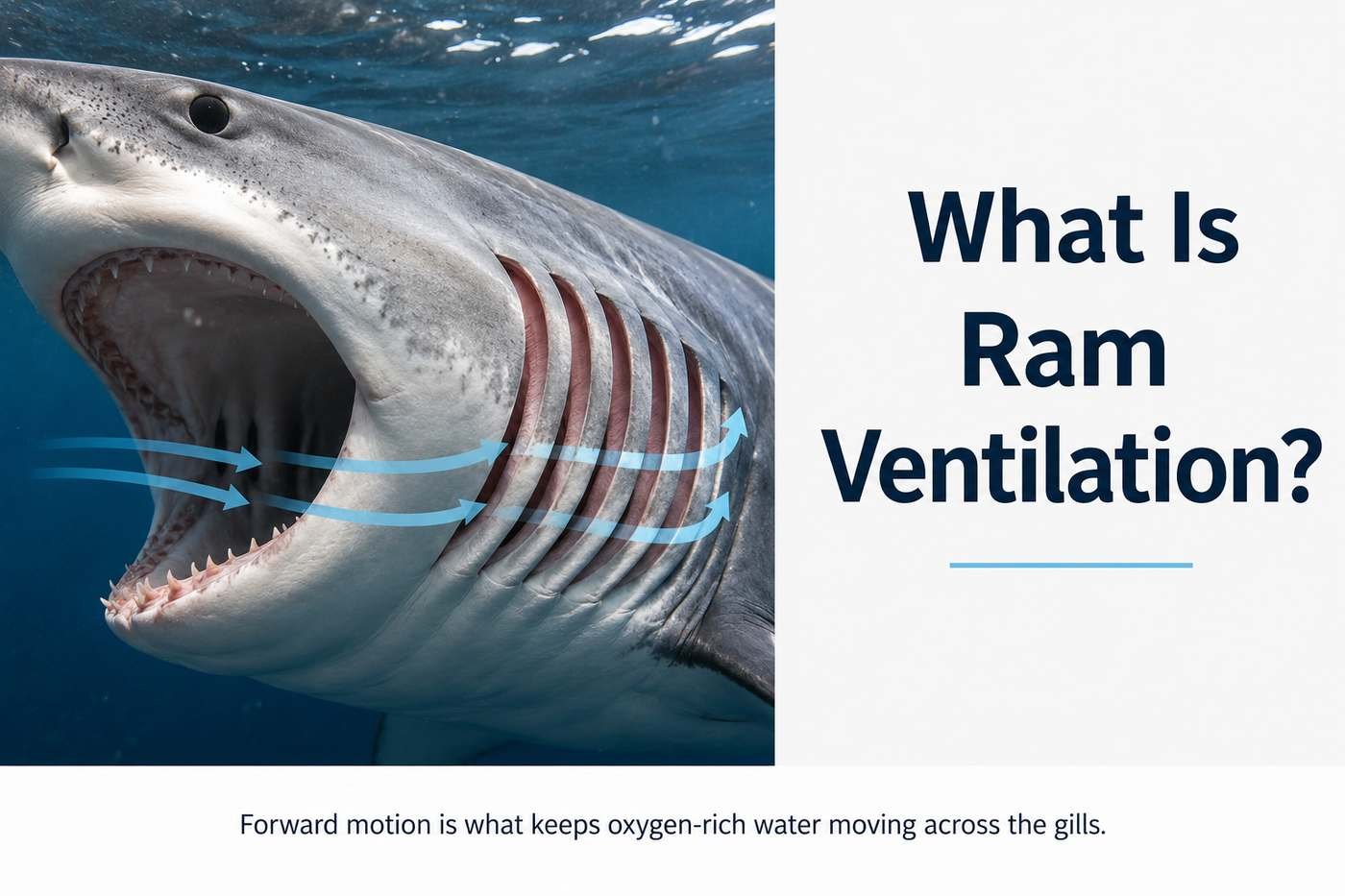
This method of breathing is called ram ventilation, and it works almost exactly like it sounds. As the shark swims forward, water gets rammed into its open mouth, flows across the gill filaments where oxygen is extracted, and exits through the gill slits.
Species that depend entirely on this process are known as obligate ram ventilators. Great white sharks, mako sharks, and whale sharks fall into this category. If one of these sharks stops swimming completely, oxygen-rich water stops flowing, and the shark can suffocate within minutes, even though it’s surrounded by water.
That’s the part people usually find surprising. Drowning is normally associated with too much water. For an obligate ram ventilator, the danger runs the opposite way — not enough water moving past the gills.
Not Every Shark Has to Keep Swimming
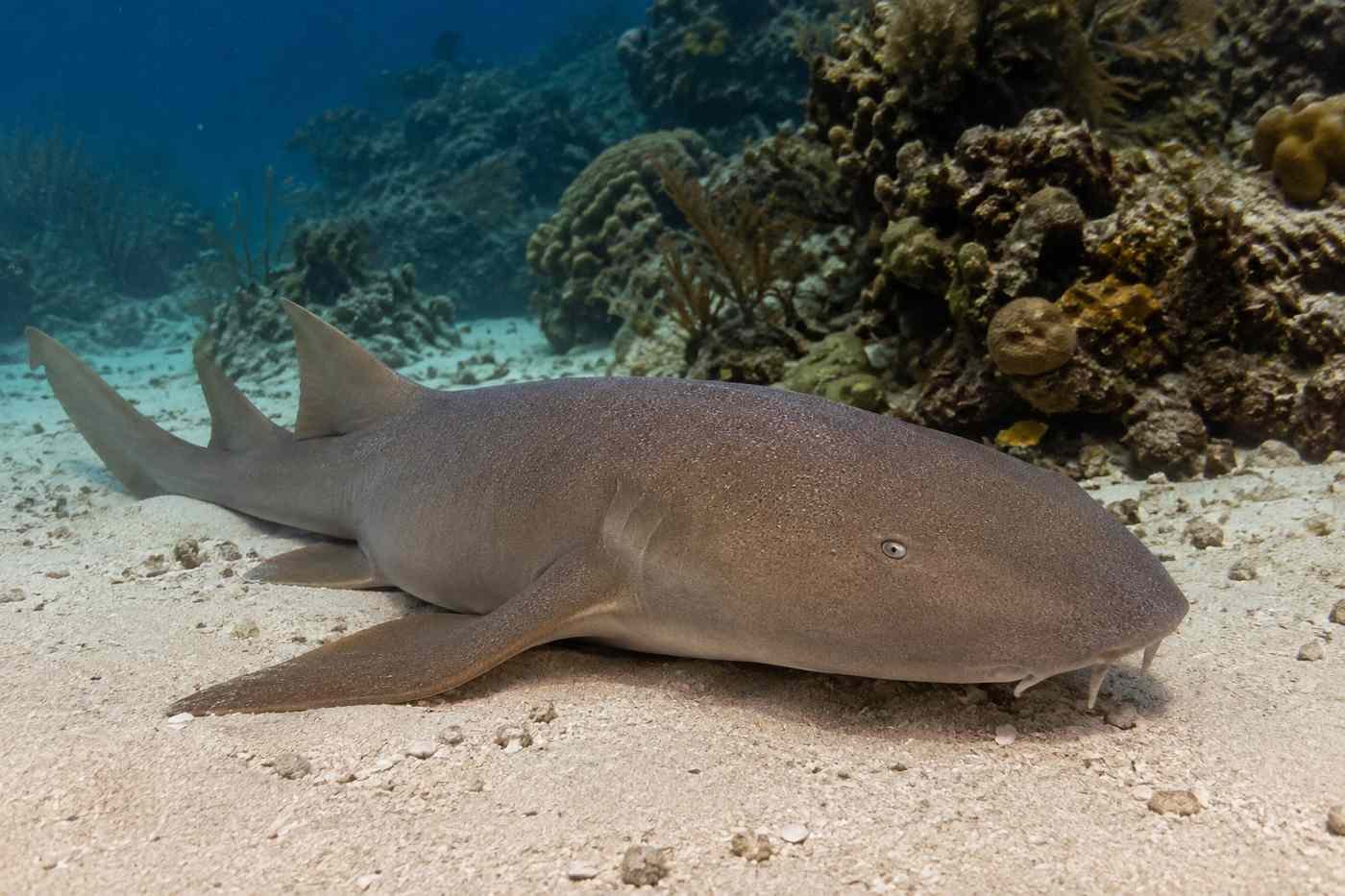
Here’s where the popular idea that “all sharks must swim constantly or die” starts to fall apart. Roughly half of known shark species aren’t obligate ram ventilators at all.
Bottom-dwelling species like nurse sharks and many species of catshark have spiracles — small openings behind the eyes — along with cheek and throat muscles strong enough to actively pump water over their gills. This lets them settle motionless on the seafloor for hours, tucked into a reef crevice or resting in a sandy patch, without any risk of suffocating.
Some sharks even use a hybrid approach. They swim when actively hunting or covering distance, then switch to muscular pumping when they want to rest. It isn’t an all-or-nothing system across the entire species — it depends heavily on gill and mouth anatomy.
Read This Why Are Whales Endangered? The Real Reasons Explained
The Buoyancy Problem: Why Sharks Sink If They Stop
Breathing isn’t the only reason movement matters to a shark. There’s a second, equally important factor: staying at the right depth in the water column.
Most bony fish have a swim bladder, a gas-filled organ that works like an internal float, letting them hover at a chosen depth without expending much energy. Sharks don’t have one of these. Instead, their livers are packed with a low-density oil called squalene, which provides some lift, along with their broad, flattened pectoral fins, which act similarly to wings.
Even with those adaptations, most sharks are still slightly negatively buoyant, meaning they naturally sink if they aren’t moving forward. Swimming generates lift the same way a plane’s wings do — forward motion pushes water under the pectoral fins, angling the shark’s body just enough to counteract gravity. Stop swimming, and that lift disappears.
Read This How Long Do Whales Live? Lifespan by Species (Full Guide)
How Sharks “Sleep” Without Actually Stopping
Since obligate ram ventilators can’t simply lie still to rest, researchers have found they enter a state closer to what’s sometimes called “sleep-swimming.” The shark keeps moving through the water, often along a steady, repetitive path, while much of its brain activity slows down.
Some species take advantage of ocean currents to make this easier, positioning themselves so the current itself pushes water across their gills, letting the shark’s swimming muscles relax slightly while breathing continues. It’s less like human sleep and more like cruise control — enough automatic movement to stay alive and breathing, with reduced active effort layered on top.
Myth vs Fact
| Myth | Fact |
|---|---|
| All sharks will die if they stop swimming | Only obligate ram ventilators, like great whites and makos, are at risk. Species like nurse sharks can rest motionless. |
| Sharks never sleep | Many sharks enter low-activity, sleep-like states while still swimming slowly or drifting with currents. |
| Sharks swim constantly purely out of instinct or aggression | The behavior is driven by respiratory and buoyancy needs, not temperament. |
Quick Tips for Understanding Shark Behavior
✓ If you see a shark resting motionless on the seafloor, it’s very likely a species with spiracles, like a nurse shark, not an obligate ram ventilator.
✓ Fast open-ocean hunters like makos and great whites are the sharks most dependent on constant forward motion.
✓ Slow, gliding movement in a shark you’re observing is often a resting or low-energy state, not necessarily active hunting.
✓ A shark’s need to keep moving is about gill function and buoyancy, not restlessness or stress.
Frequently Asked Questions
Do all sharks have to swim to breathe?
No. Only obligate ram ventilators, such as great white sharks and mako sharks, depend entirely on forward motion to breathe. Many other species, including nurse sharks, can pump water over their gills using cheek muscles and don’t need to keep swimming.
What happens if an obligate ram ventilator stops swimming?
Without forward motion, water stops flowing over its gills, and the shark can’t extract enough oxygen. If this continues for more than a few minutes, the shark can suffocate, even while fully submerged in oxygen-rich water.
Do sharks sleep?
Sharks don’t sleep the way mammals do, but many enter a lower-activity state where brain activity decreases while the body continues slow, steady swimming, sometimes assisted by ocean currents.
Why don’t sharks just float in place like other fish?
Most sharks lack a swim bladder, the gas-filled organ many bony fish use to hover at a chosen depth. Without it, sharks rely partly on oil-rich livers and partly on the lift created by swimming to avoid sinking.
Conclusion
A shark’s constant motion isn’t restlessness — it’s a direct consequence of how its body handles two basic survival needs: breathing and staying at the right depth. For species built around ram ventilation, swimming and breathing are the same act. For others, evolution found a workaround, letting them rest without ever risking suffocation. Once you see it this way, a shark cruising endlessly through open water stops looking anxious and starts looking exactly like what it is — an animal doing precisely what its biology requires.
Related Article
Why Do Whales Breach? The Leading Theories Explained
Why Are Whales Endangered? The Real Reasons Explained

Ethan Carter is a nature enthusiast and educational writer at Wonderexplained. He creates well-researched articles about animals, oceans, weather, and the natural world, making complex topics easy to understand. His goal is to provide accurate, engaging, and reader-friendly content that inspires curiosity and lifelong learning.

2 thoughts on “Why Do Sharks Keep Swimming? The Real Science Behind It”