

A shark’s smile isn’t really a smile at all, it’s more like a rotating dental assembly line. Where a human gets exactly two sets of teeth over an entire lifetime, a single shark can go through tens of thousands. Why Do Sharks Have So Many Teeth is a fascinating question, especially when you consider how often sharks lose and replace their teeth. That’s not a random quirk of nature; it’s the result of a specific biological system that has kept sharks hunting effectively for hundreds of millions of years, long before most modern animal groups even existed.
This article breaks down why sharks have so many teeth, how their replacement system actually works, and what happens to all those teeth they leave behind.
The Conveyor Belt System: How Shark Teeth Keep Growing
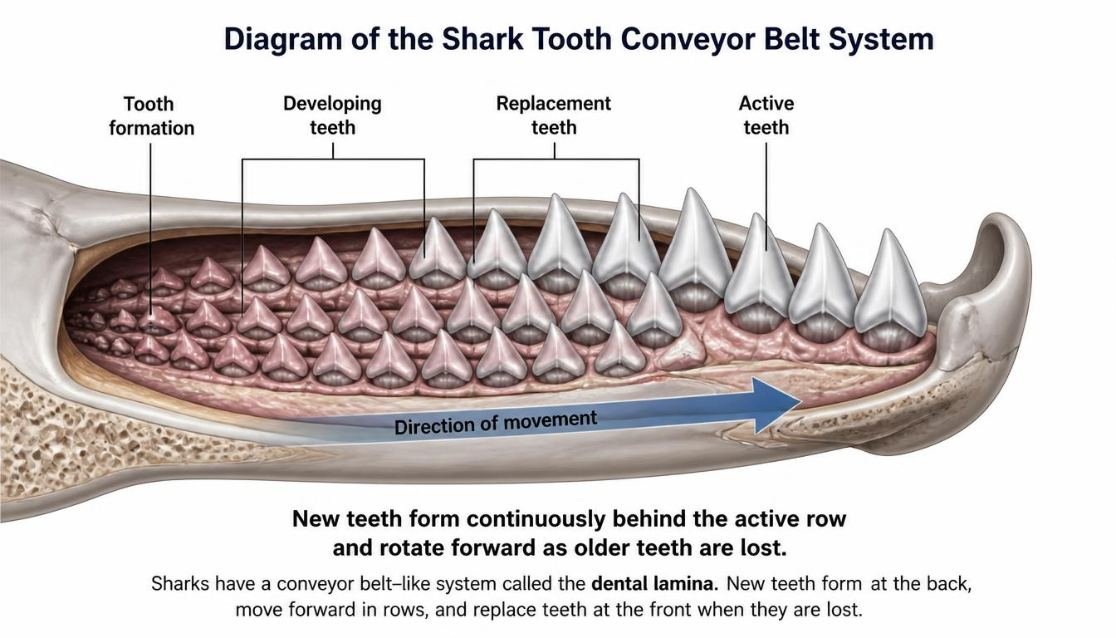
Sharks are what scientists call polyphyodonts, meaning they replace their teeth continuously throughout their entire lives rather than growing just one or two fixed sets the way humans and most other mammals do. This continuous replacement system is often nicknamed the “conveyor belt,” since new teeth are constantly forming in rows behind the shark’s functional, visible teeth and gradually moving forward to take their place.
This process is driven by a specialized band of tissue called the dental lamina, tucked along the inside of a shark’s jaw, which continuously produces new teeth throughout the animal’s lifetime. Unlike human teeth, shark teeth aren’t anchored into individual bony sockets; they’re embedded in the surrounding soft connective tissue instead, which allows old or damaged teeth to fall out relatively easily and be replaced by a new tooth rotating into position, sometimes within just a matter of days.
How Many Teeth Does a Shark Lose in Its Lifetime?
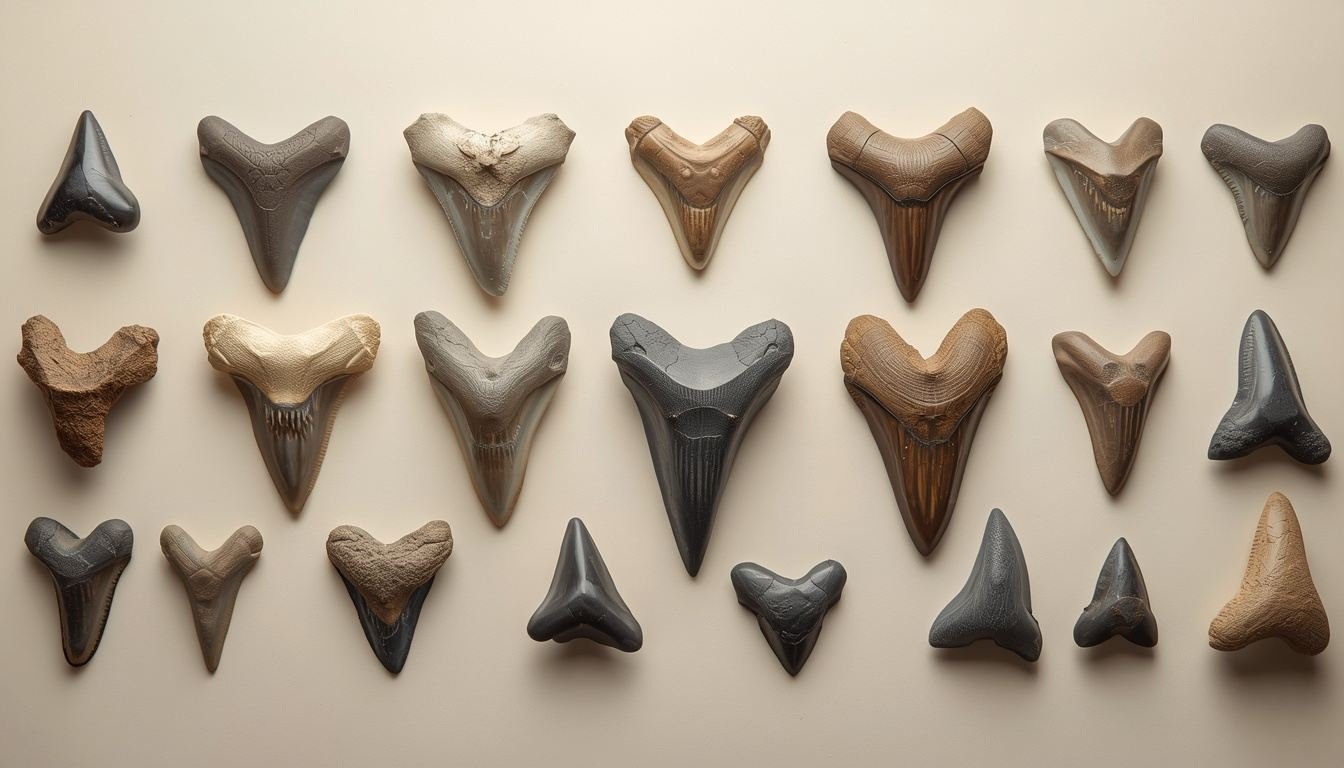
The exact number varies considerably depending on the species, its specific replacement rate, and how long an individual shark lives, but many sharks are estimated to lose and regrow somewhere in the range of 20,000 to 35,000 teeth over a full lifetime. Some particularly fast-replacing or long-lived species have been cited as potentially exceeding 50,000 teeth across their lifespan, though precise lifetime counts are inherently difficult to verify with full certainty given the challenges of tracking wild shark populations over decades.
At any single point in time, most sharks carry somewhere between roughly 50 and 300 teeth arranged across multiple rows, with the exact number depending heavily on species. Because of this rapid, continuous replacement, sharks don’t experience the same kind of permanent tooth loss or dental decay that many other animals, including humans, can develop over time, since a damaged or worn tooth is simply shed and replaced rather than repaired.
Why Do Different Sharks Have Different Shaped Teeth?
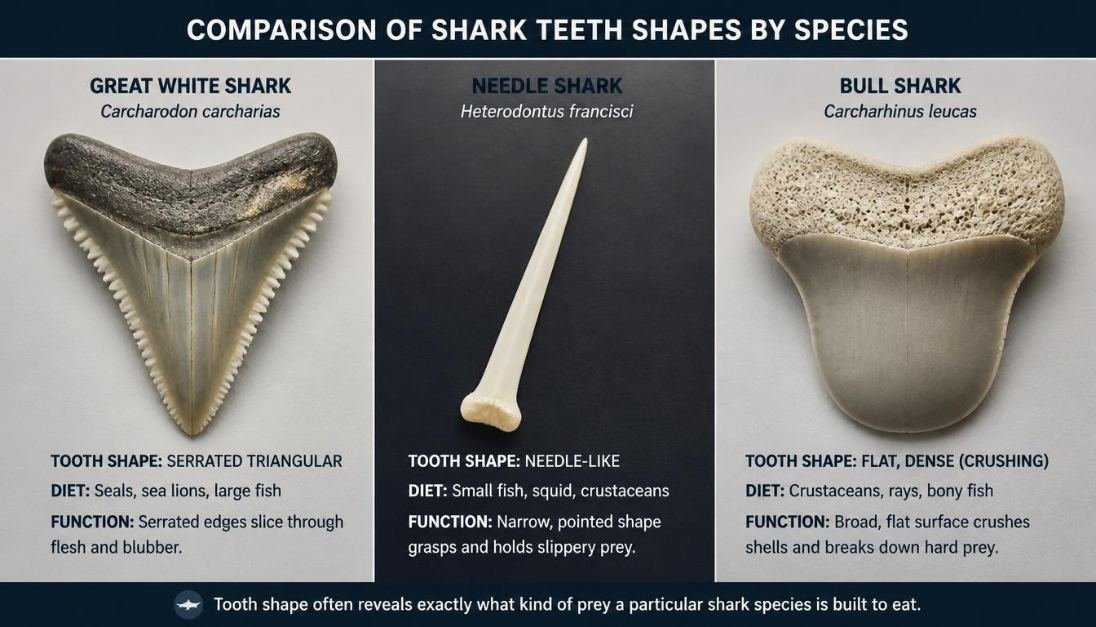
Tooth shape in sharks is closely tied to diet and feeding strategy, which is part of why paleontologists and marine biologists can often identify a shark species, living or extinct, just from an isolated fossilized tooth. Sharks that primarily hunt fish or squid, such as many species with needle-like teeth, tend to have thin, pointed teeth well suited for gripping slippery prey. Species that regularly feed on larger, tougher prey, like seals or large fish, such as great white sharks, typically have broad, triangular, serrated teeth designed for cutting and sawing through flesh.
Bottom-dwelling species that feed on hard-shelled prey like crustaceans and mollusks, such as nurse sharks, often have flatter, denser teeth adapted for crushing rather than slicing. At the other end of the spectrum, filter-feeding species like whale sharks and basking sharks have thousands of extremely small, non-functional teeth that play essentially no role in feeding at all, since these species rely on specialized gill structures to filter plankton and small organisms from the water instead.
It’s also worth noting that tooth shape can change within a single shark’s lifetime. Research on great white sharks has found that juveniles typically have narrower, more slender teeth suited for catching fish and squid, while their teeth become noticeably broader and more heavily serrated as the sharks grow larger and begin incorporating marine mammals into their diet.
Read This Why Are Clownfish Orange and White? The Science of Their Colors
Do Sharks Use Their Teeth to Taste Their Food?
Sharks’ teeth appear to serve at least some sensory function beyond simply cutting or gripping prey, though describing this specifically as “tasting” isn’t entirely accurate in the way humans typically understand taste. Some research and observation suggests that certain sharks, including great whites, may use an initial “test bite” partly to gather sensory information about a potential food source, helping the shark assess whether something is worth continuing to eat.
It’s worth being careful here, since sharks’ primary taste-related sensory structures are located in their mouth and throat rather than specifically embedded in tooth structure itself, and some species’ tongues have been described as lacking meaningful taste receptors. Rather than functioning as taste organs in a direct sense, teeth more likely contribute to this test-bite behavior through touch and texture sensitivity, working alongside other sensory systems a shark uses to evaluate potential prey before committing to consuming it.
Read This Why Do Jellyfish Glow in the Dark? Bioluminescence Explained [2026]
Which Shark Has the Most Teeth in the World?
There isn’t one single, universally agreed-upon “most teeth” record, since the answer depends on whether you’re measuring teeth present at one time, total rows in the jaw, or teeth accumulated over an entire lifetime. In terms of active rows at any given moment, some species, including certain bull sharks, have been described as carrying an unusually high number of tooth rows compared to other shark species, sometimes cited as up to several dozen rows.
Whale sharks present an interesting case as well: despite being filter feeders that don’t use their teeth for capturing prey, they possess an extremely high total number of small, non-functional teeth, sometimes cited in the thousands, far more than most actively predatory shark species carry at once. Because “most teeth” can reasonably be measured in several different ways, and because comprehensive counts aren’t available for every one of the more than 500 known shark species, it’s most accurate to say that several species stand out as having an unusually high tooth count by one measure or another, rather than pointing to one definitive record-holder across the board.
What Happens if a Shark Loses All Its Teeth?
Given how the shark tooth replacement system works, a healthy shark isn’t generally at risk of running out of teeth entirely, since new teeth are continuously produced and ready to rotate into position throughout the animal’s life. Even if a shark loses several teeth at once, such as during an aggressive feeding event, replacement teeth are typically already developing in the rows behind them, ready to move forward relatively quickly.
This continuous supply is one of the key evolutionary advantages of the polyphyodont system: rather than needing to protect a single, irreplaceable set of teeth from damage the way many other animals must, sharks can afford some tooth loss and damage as a normal part of hunting and feeding, since a fresh replacement is essentially always on the way.
Read This Why Do Sharks Keep Swimming? The Real Science Behind It
7 Scary Facts About Shark Teeth
A single shark can go through tens of thousands of teeth in its lifetime. Estimates for many species range from around 20,000 to 35,000 teeth over a full lifespan, with some estimates for certain species running even higher.
Shark teeth aren’t rooted in bone the way human teeth are. They’re embedded in soft tissue instead, which is part of why they can be shed and replaced so easily.
New teeth can be ready to replace a lost one within days. The dental lamina keeps a steady supply of developing teeth waiting just behind the active row.
Tooth shape can reveal exactly what a shark eats. Flat, dense teeth signal a shellfish-crushing diet, while long, serrated teeth point to a shark built for slicing through larger prey.
Some sharks carry dozens of tooth rows at once. Certain species maintain far more backup rows in reserve compared to others.
A shark’s teeth can change shape as it grows up. Some species develop noticeably different tooth structures as juveniles compared to fully grown adults, tracking a shift in diet over time.
Even the biggest sharks in the ocean might have essentially useless teeth. Whale sharks, the largest fish in the sea, have thousands of tiny teeth that play no real role in how they actually eat.
Frequently Asked Questions
Do baby sharks have the same teeth as adult sharks?
Not always; some species, including great white sharks, have noticeably different tooth shapes as juveniles compared to adults, often tied to a shift in diet as the shark grows larger.
How fast can a shark replace a lost tooth?
Replacement speed varies by species, but many sharks can move a new tooth into position within a matter of days, since replacement teeth are typically already developing before the old tooth is lost.
Do all sharks have sharp, dangerous teeth?
No, tooth shape depends heavily on diet, with some species having flat, crushing teeth for shellfish and others, like filter-feeding whale sharks, having thousands of tiny, non-functional teeth.
Can scientists identify a shark species just from a single tooth?
Often, yes; tooth shape, size, and serration pattern vary enough between species that a single well-preserved tooth can provide strong clues about which shark species, or even which extinct species, it came from.
Why don’t sharks get cavities the way humans do?
Because damaged or worn shark teeth are simply shed and replaced through the ongoing polyphyodont system, there’s little opportunity for the kind of long-term decay that can affect teeth meant to last a lifetime.
Conclusion
A shark’s seemingly endless supply of teeth isn’t a strange evolutionary accident, it’s a highly effective system built around continuous replacement, a tissue called the dental lamina, and tooth shapes finely tuned to each species’ specific diet. Whether a shark is slicing through a large fish with serrated, blade-like teeth or filtering plankton with thousands of tiny, functionally useless ones, that rotating dental conveyor belt has helped sharks remain some of the ocean’s most consistently effective predators for hundreds of millions of years.

Ethan Carter is a nature enthusiast and educational writer at Wonderexplained. He creates well-researched articles about animals, oceans, weather, and the natural world, making complex topics easy to understand. His goal is to provide accurate, engaging, and reader-friendly content that inspires curiosity and lifelong learning.

1 thought on “Why Do Sharks Have So Many Teeth? 3000+ Teeth Secret Revealed [2026]”