

Foxes have a reputation for being clever, and one of the clearest signs of that cleverness is what they do with extra food. Rather than eating everything right away, a fox will often dig a small hole, drop a piece of food inside, and cover it back up with dirt or leaves. This isn’t random digging — it’s a well-documented survival behavior called caching, and it plays a real role in how foxes get through lean periods. Understanding fox food caching helps explain a lot about how these animals think, hunt, and plan ahead.
Quick Answer
Foxes bury food to save it for later, especially when they catch more prey than they can eat in one sitting. This caching behavior helps them survive periods when food is harder to find.
Quick Facts
- Caching (also called scatter-hoarding) is common in red foxes and has also been observed in Arctic foxes.
- Foxes rely mainly on memory, along with landmarks and scent, to relocate buried food.
- Not every cache gets recovered — some are stolen by other animals, and some are simply forgotten.
Why Do Foxes Bury Their Food?
Foxes are opportunistic hunters, meaning they don’t always catch food at a steady, predictable rate. Some days bring more prey than a fox can eat in one sitting — a sudden abundance of rodents, insects, or eggs, for example. Instead of letting that surplus go to waste, a fox will bury the extra food to eat later.
This behavior is especially useful because food availability in the wild is unpredictable. By caching, a fox effectively spreads its food supply across time, giving itself a buffer during colder months or stretches when hunting is unsuccessful. It’s less about hoarding out of habit and more about managing an inconsistent food supply.
How Do Foxes Store Food for Later?
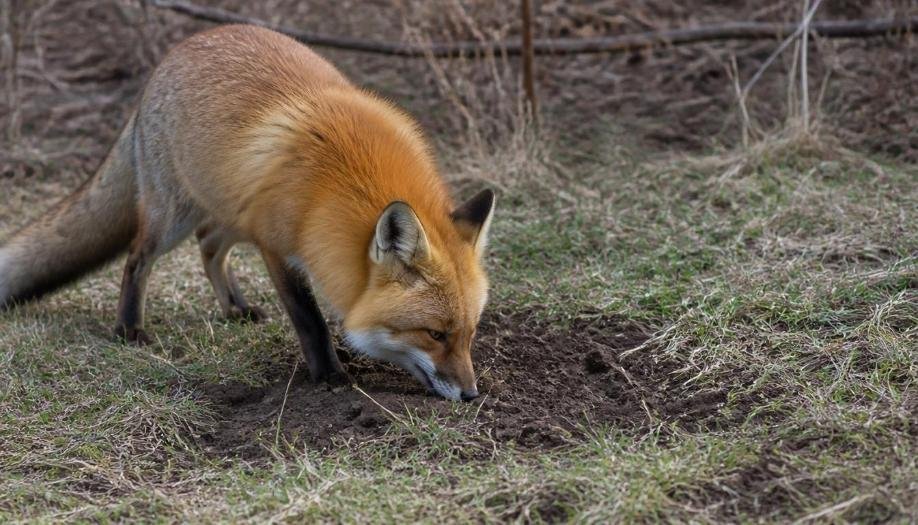
The general process is fairly consistent across observations. A fox digs a shallow hole with its front paws, places the food inside, and then uses its nose to push soil, grass, or leaves back over the spot to conceal it. This is often called scatter-hoarding, because rather than storing everything in one large stockpile, a fox spreads smaller caches across its territory.
Spreading food out this way has an advantage: if one cache is discovered and raided by another animal, the fox doesn’t lose its entire food supply at once. This strategy reduces overall risk even if it means more effort spent creating multiple hiding spots.
Why Do Foxes Hide Food Instead of Eating It Right Away?
It might seem simpler for a fox to just eat until it’s full and leave the rest, but that isn’t always the safer option. Uneaten food left out in the open can attract scavengers or competitors, or it may simply spoil before the fox needs it again.
By burying food, a fox reduces the chance that another animal will notice and take it, and it slows down decomposition slightly by keeping the food cooler and out of direct sunlight. In short, caching is a way of protecting a food source until the fox actually needs it, rather than risking losing it immediately.
Read This Why Do Foxes Scream at Night? The Real Reason Behind Their Eerie Calls
How Do Foxes Find Their Buried Food Again?
This is one of the more impressive parts of the behavior. Foxes rely heavily on spatial memory to relocate their caches, remembering the general area where they buried food relative to nearby landmarks like rocks, trees, or changes in terrain.
Memory isn’t perfect, though. Researchers who study caching behavior in canids note that recovery rates vary, and not every cache is successfully found again later. Some caches are forgotten entirely, which is part of why caching isn’t treated as a flawless storage system so much as a helpful backup strategy.
Do Foxes Use Scent to Find Their Food Caches?
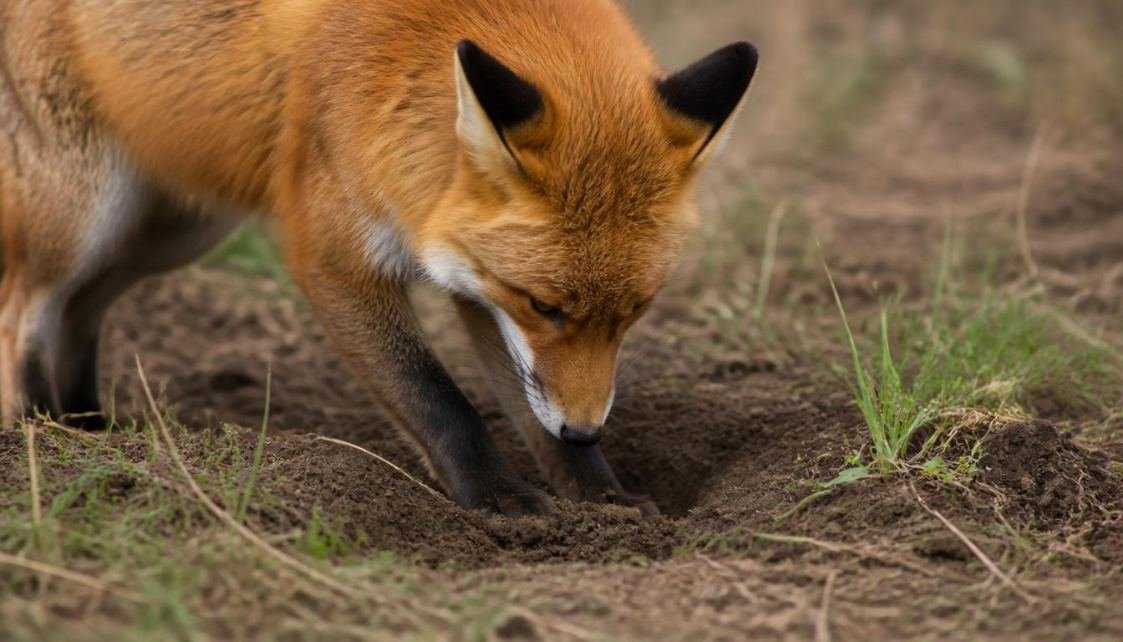
Scent plays a supporting role alongside memory. Foxes are known to scent-mark locations, including caches, using urine. Some researchers suggest this marking may help a fox recognize which caches have already been emptied, preventing wasted effort digging up a spot it already used.
It’s worth noting that the exact way scent contributes to relocating caches — versus simply marking territory in general — is still an area researchers continue to study, and conclusions can vary depending on the specific study and fox population observed.
Do Foxes Bury All Types of Food?

Foxes are omnivorous and opportunistic, so what ends up cached can vary quite a bit. Small prey like rodents, insects, and eggs are commonly cached, and in some cases, foxes have also been observed burying fruit or other plant matter when it’s abundant.
Not everything a fox catches gets buried, though. Immediate hunger, the size of the prey, and the conditions in that moment all influence whether a fox eats right away or sets food aside for later.
Do Other Foxes Steal Buried Food?
Yes — cache theft, sometimes called pilferage, does happen. Other foxes, as well as different scavenging animals, can locate and raid a cache that isn’t theirs. This is actually one reason scatter-hoarding — spreading food across many small caches rather than one big stash — is thought to be advantageous, since it limits how much a fox can lose to a single thief.
Some behavioral researchers have also suggested that foxes may adjust their caching locations or behavior if they sense they’re being watched by another fox, though this kind of behavior is complex to study and conclusions should be treated as an area of ongoing research rather than settled fact.
Read This Why Do Foxes Have Bushy Tails? The Reason Behind Their “Tails”
Do All Fox Species Bury Their Food?
Caching behavior is best documented in red foxes, which are the most widely studied fox species. However, it isn’t unique to them. Arctic foxes have also been observed catching food, particularly during seasons when prey like eggs or small mammals are temporarily abundant, allowing them to prepare for harsher months ahead.
Documentation is less extensive for some of the smaller or less-studied fox species, so it’s more accurate to say caching is a known behavior across at least several fox species rather than a universal trait confirmed in every one.
Read This Why Do Elephants Have Big Ears? 7 Fascinating Science Facts [2026]
Frequently Asked Questions
Why do foxes bury food instead of storing it in a den?
Burying food in multiple separate spots lowers the risk of losing an entire food supply to theft or spoilage compared with one central stockpile.
How long can buried food stay fresh?
This depends on temperature, soil conditions, and the type of food, so foxes generally return to caches within a relatively short window rather than leaving them for extended periods.
Do foxes forget where they bury food?
Yes, memory isn’t perfect, and some cached food is never recovered by the fox that buried it.
Is caching unique to foxes?
No, many animals, including squirrels and some birds, also use caching, though the specific methods vary by species.
Does caching mean foxes are highly intelligent?
Caching does reflect strong spatial memory and adaptive behavior, though intelligence in animals is a complex trait that shouldn’t be reduced to a single behavior.
Conclusion
Fox food caching is a practical answer to an unpredictable problem: food isn’t always available when a fox needs it most. By burying surplus food, relying on memory and scent to relocate it, and spreading caches across their territory, foxes give themselves a better chance of getting through lean periods. It’s a behavior shaped by necessity, and it offers a small but telling window into how adaptable these animals really are.

Ethan Carter is a nature enthusiast and educational writer at Wonderexplained. He creates well-researched articles about animals, oceans, weather, and the natural world, making complex topics easy to understand. His goal is to provide accurate, engaging, and reader-friendly content that inspires curiosity and lifelong learning.

1 thought on “Why Can Foxes Bury Their Food? The Science Behind Their Food-Caching Behavior”